Contents
- Scope and method
- What happened in Singapore in March 2024?
- What did the concerts add to Singapore?
- Strengths
- Weaknesses and risks
- Four accounts, kept apart
- Expert commentary
- Residents, recreation and the precinct
- How transferable is the model?
- What is the reading for destination marketers?
- Analysis result
- Frequently asked questions
- Sources
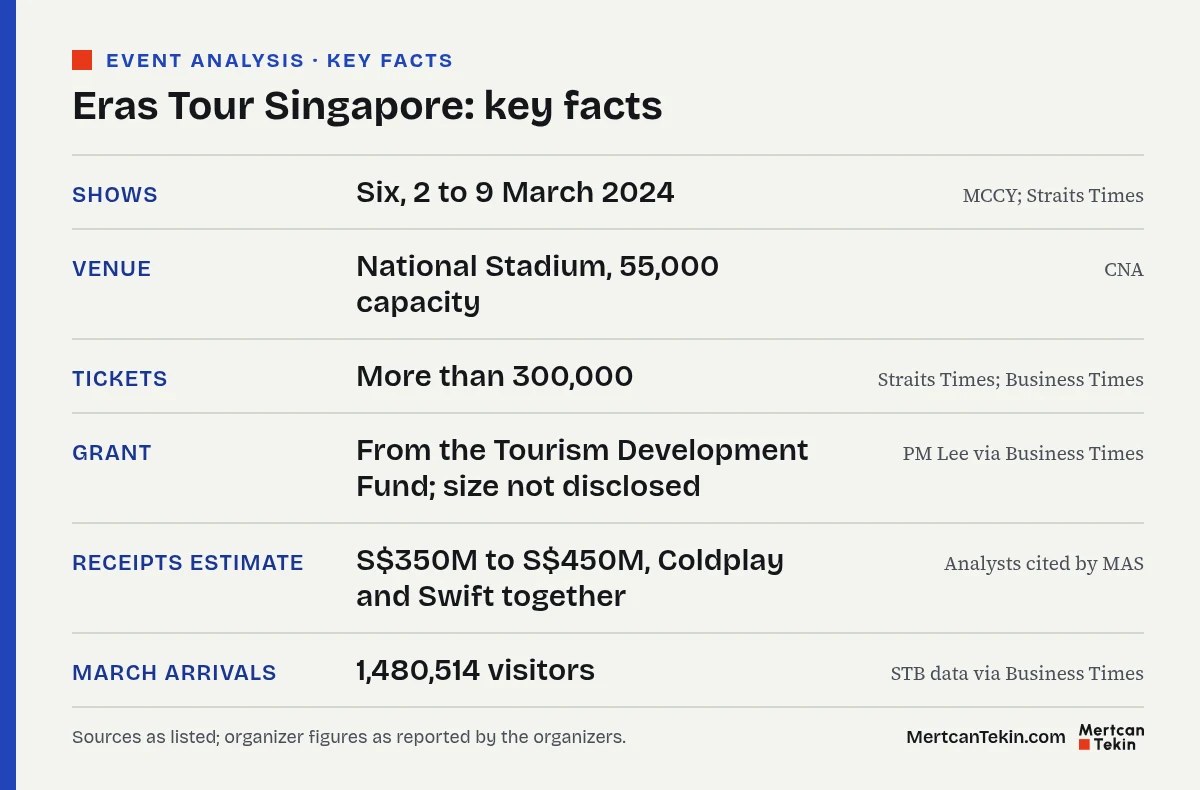
Singapore offered a tourism grant to secure six Eras Tour shows at the National Stadium from 2 to 9 March 2024, as the only Southeast Asian stop. More than 300,000 tickets were sold. The grant size and conditions were not disclosed. Analysts cited by MAS estimated S$350 to 450 million in receipts from these and Coldplay’s concerts [1][4][8].
In early March 2024 the walkways around Kallang Basin carried more people in a week than the Sports Hub had seen in months. Six sold out nights at one stadium, and a deal that made Singapore the only stop in Southeast Asia, turned a concert run into a national tourism story and a regional political one.
My conclusion first. As a destination play, the Eras Tour run worked on every indicator that is public: arrivals, hotel rates and occupancy all rose in March, and the central bank linked the quarter’s tourism surge to concerts [4][7]. As a model for public funding, it is harder to judge, because the one figure that would let us compute a return, the grant, is confidential [1][2]. The transferable parts of the model are the speed and the venue strategy; the published evidence is thinner than the result.
Scope and method
This analysis uses parliamentary answers from the culture ministry, statements by the then Prime Minister, the Monetary Authority of Singapore (MAS) review of April 2024, Singapore Tourism Board (STB) data reported by the Business Times, and press reports. Analyst receipt estimates are model estimates, not measured spending, and I keep them apart from official statistics. No ex post study of the concerts has been published in the sources I could verify.

What happened in Singapore in March 2024?
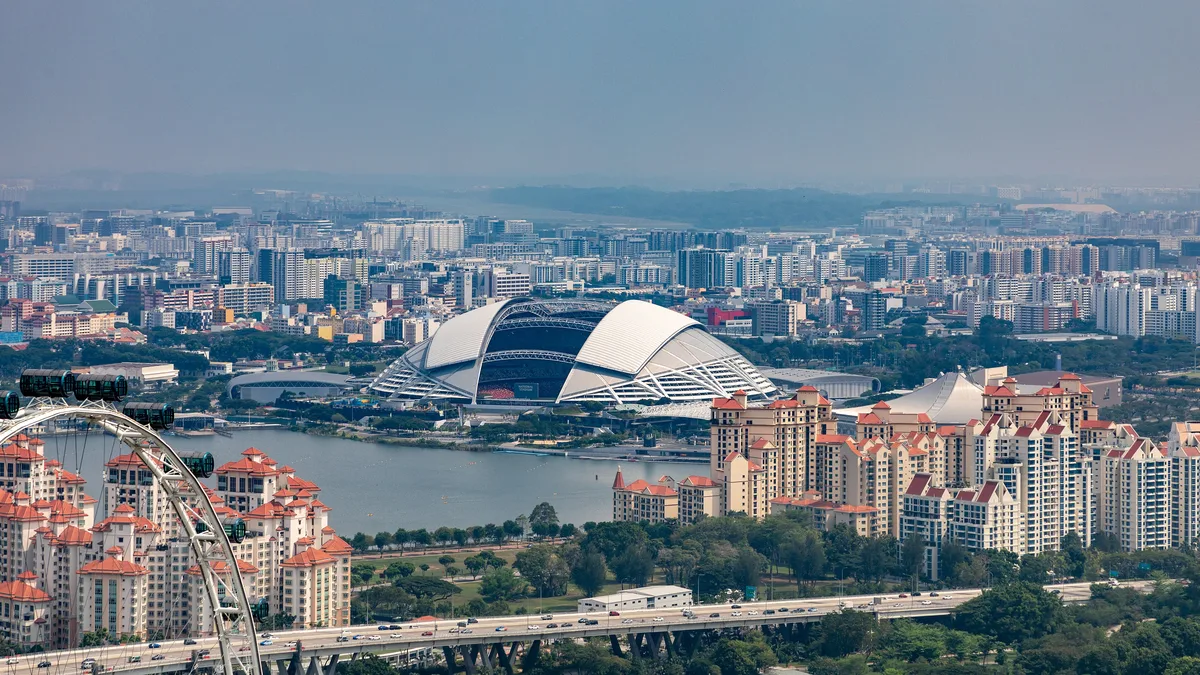
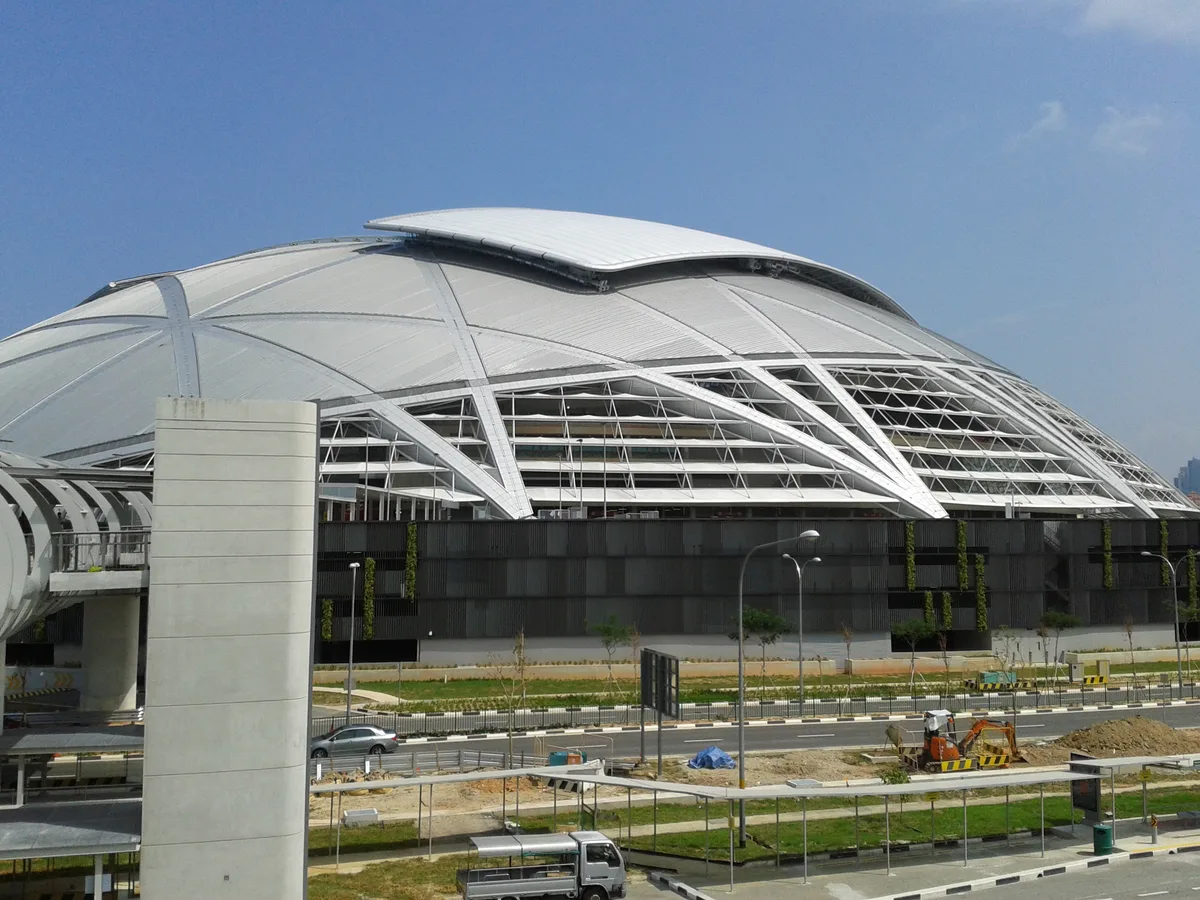
Taylor Swift played six shows at the 55,000 seat National Stadium between 2 and 9 March 2024 and sold more than 300,000 tickets [5][8]. Coldplay had played the same stadium in January, selling more than 200,000 tickets; together the two acts filled 12 days, and MAS judged that more than half of the audience likely came from abroad [4][5].
The deal itself began earlier. The government took over the Sports Hub in December 2022 and gave its operator, Kallang Alive Sport Management (KASM), a brief to bring in content rather than rent out dates [1]. The culture minister told Parliament that officials raised the Swift concerts during a study trip to the United States in February 2023, reached an agreement, and then brought in STB, which ran its own assessment and offered a grant to the promoter [1].
| Question | On the record | Status |
|---|---|---|
| Who paid | Singapore Tourism Board, to the concert promoter | Stated in Parliament |
| From which fund | Tourism Development Fund | Stated by the Prime Minister |
| How much | Not disclosed; the minister said reports were "not anywhere as high as speculated" | Confidential |
| Figure quoted by Thailand's Prime Minister | Up to US$3 million per show | Claim, not confirmed |
| Figure reported by CNA | Closer to US$2 million to US$3 million for all six shows | Unconfirmed report |
| Conditions | Not disclosed; a confidentiality agreement exists | Confidential |
| Assessment | Benefits assessed to be significant and to outweigh the grant | Government statement, method not published |
The size of that grant is the gap in the record. The minister said speculation was "not anywhere as high" as the real figure but that confidentiality prevented disclosure [1]. The then Prime Minister confirmed the money came from STB’s Tourism Development Fund, which received a S$300 million top up in Budget 2024 [3]. Thailand’s Prime Minister had been quoted saying Singapore paid up to US$3 million per show; CNA reported that it understood the total was closer to US$2 to 3 million for all six [2][5]. Neither figure is confirmed, and I do not use either as a fact.
What did the concerts add to Singapore?
The best regional contribution evidence is indirect. In the first quarter of 2024, international arrivals were up 26% on the previous quarter and 50% on a year earlier, and MAS attributed a surge in tourism activity to the Coldplay and Swift concerts [4]. It cited private estimates of S$350 to 450 million in tourism receipts, equal to a 6% injection above average quarterly receipts in the first three quarters of 2023 [4].
Three estimates, three scopes
Unit: S$ million, tourism receipts. Ranges reflect assumptions on foreign share of the audience and length of stay. Estimates made before or soon after the shows.
| Estimate by | Scope | Low | High |
|---|---|---|---|
| Maybank (Erica Tay) | Six Swift shows | 350 | 500 |
| DBS (Chua Han Teng) | Six Swift shows | 300 | 400 |
| Private analysts cited by MAS | Coldplay and Swift concerts, 12 days | 350 | 450 |
The estimates vary by scope as much as by method. Maybank’s S$350 to 500 million and DBS’s S$300 to 400 million cover the Swift shows alone, while the MAS figure covers both artists [4][6]. The ranges depend on two assumptions MAS names directly: the share of foreign visitors in the audience and their length of stay [4]. Those are exactly the numbers a ticketing and visitor survey could have confirmed, and none has been published.
Arrivals around the concert month
Unit: international visitor arrivals per month, all purposes. January and April are rounded figures as reported.
| Indicator | March 2024 | Comparison |
|---|---|---|
| International visitor arrivals | 1,480,514 | 1,436,574 in February |
| Arrivals from Southeast Asia | 534,342 | Up 24.1% on February |
| Average room rate | S$301.49 | Up 14.3% year on year |
| Average occupancy | 84% | 83% in February |
| Revenue per available room | S$252.79 | Up 20.5% year on year |
| Hotel room revenue | S$493.8M | Up 37% year on year |
The hotel data are firmer. In March 2024, STB figures showed occupancy at 84%, the average room rate at S$301.49, up 14.3% year on year, and room revenue of S$493.8 million, up 37% [7]. Arrivals from Southeast Asia rose 24.1% from February to 534,342 [7]. Chinese arrivals fell in the same month after the Chinese New Year peak, which is a reminder that monthly totals mix several effects [7].
Strengths
The model had three real strengths. First, the venue and precinct were ready: the Sports Hub had a stadium of the right size, a metro connection and walking routes, and the ministry says event days rose 30% after the takeover compared with the best year before the pandemic [1]. Second, the run was short and dense. Six nights in one week concentrated demand, and the minister said the tour’s setup made one or two nights unworkable, so length was part of the negotiation [2]. Third, the state acted as one client. The ministry, the sports agency, KASM and STB worked as a single team, which the minister describes as a whole of government approach [1].

The spread of spending also looks wider than for some other events. The minister contrasted the concerts with the Formula 1 race, where the impact is concentrated in high end hotels and dining, and said bead and craft shops sold out during the Swift week [8]. That is an observation, not a measured distribution, but it is a testable claim.
Weaknesses and risks
The main weakness is transparency of public funding. Singapore’s position is that STB weighs benefits case by case and that the benefits outweigh the grant [1][2]. That may well be true. Yet without the amount, the conditions and the method, no one outside government can check it, and the reasoning cannot be reused by other cities or by the next review in Singapore.
The second risk is neighbour relations. A Philippine lawmaker was reported as saying "this isn’t what good neighbours do", and the Thai Prime Minister’s remarks put the deal in regional headlines [5]. The then Prime Minister answered that sometimes one country makes a deal and sometimes another does, and that without the arrangement she might or might not have played elsewhere in the region [3]. I read this as a reputational cost to monitor, not a dispute between governments.
The third is repeatability. MAS itself warned that concerts of this scale were unlikely to recur within the year, so the first quarter boost was a one off rather than a new baseline [4].
Four accounts, kept apart
| Account | Question it answers | Singapore figure | Source |
|---|---|---|---|
| Public grant | What did the state commit? | Not disclosed | MCCY, March 2024 |
| Tourism receipts | How much did visitors spend? | S$350M to S$450M, analyst estimate for Coldplay and Swift | MAS, April 2024 |
| Wider activity | Did the economy feel it? | Arrivals up 50% year on year in Q1; retail and F&B sales up in January and February | MAS, April 2024 |
| Social return | What did residents gain? | Tickets for lower income families and community activations; no count published | MCCY, March 2024 |
The receipts estimate is often quoted as if it were a return on the grant. It is not. Receipts are gross visitor spending, part of which would have happened anyway, while a return would require the grant, the share of spending that is new to Singapore, and the cost of public services on show nights.
Expert commentary
Erica Tay, director of macroeconomic research at Maybank, based her range on the assumption that most concertgoers would fly in from elsewhere in Asia [6]. DBS economist Chua Han Teng put his estimate at about 0.2% of first quarter GDP [6]. Song Seng Wun of CGS International attributed much of March’s arrivals growth to the concerts [7]. After the shows, the culture minister told the Straits Times that the outcome was "probably in the ballpark" of private estimates, subject to STB’s evaluation [8]. That evaluation is the document I would most like to read.
Residents, recreation and the precinct
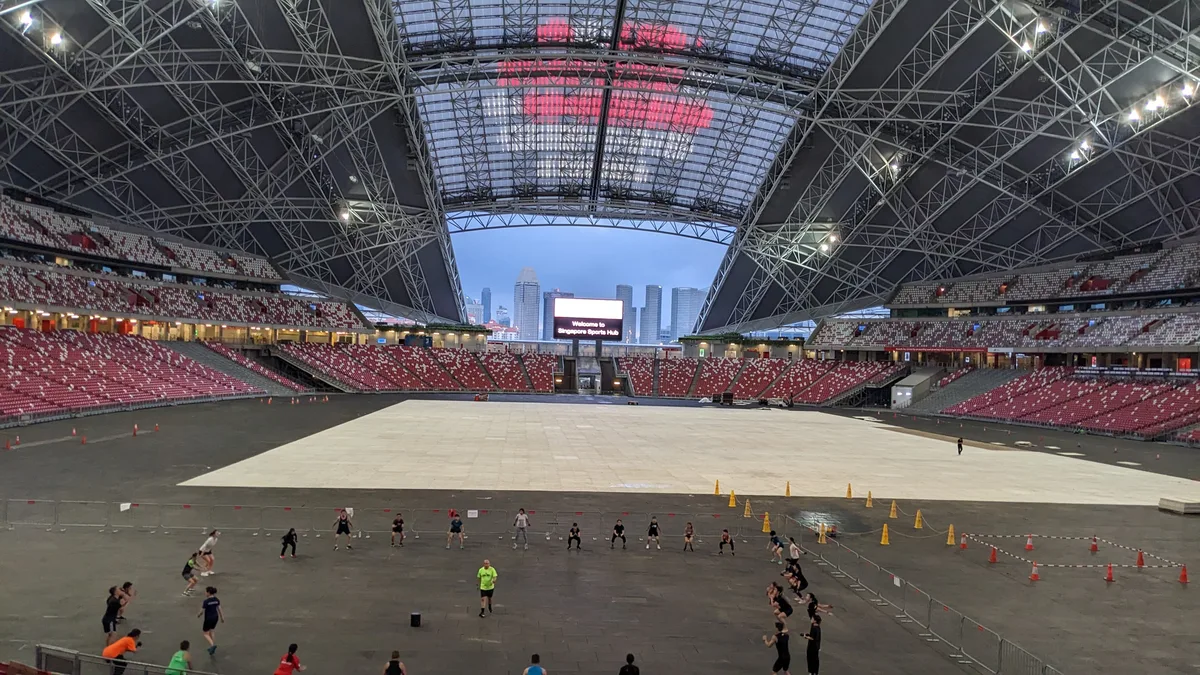
For residents, the ministry points to tickets held back for lower income and at risk families through SportCares and community partners, and to open areas in the precinct where people without tickets could take part [1]. No number of tickets or participants was published. The Sports Hub drew more than one million visitors in the first three months of 2024, against 700,000 in the second half of 2023, with about 840,000 of them at the four concert series [8]. That is a large load on a precinct that is also a public park and waterfront, and I found no published data on crowding, noise or travel times for residents of Kallang.

The visitor’s time budget matters here too. A concertgoer from Jakarta or Kuala Lumpur who flies in for one night and leaves the next morning adds a hotel night and a ticket, and little else. The receipt ranges depend almost entirely on whether visitors stayed longer and went beyond the stadium [4]. Packaging the concert with museums, hawker centres and day trips, and measuring whether it worked, is where a destination team earns its share.
On the environment, I found no verified data on travel emissions or venue waste for these shows. Given that most of the audience likely travelled by air, that is a material gap.
How transferable is the model?
Only partly. The exclusivity was possible because of a venue the state controls, a fund built for this purpose and an artist whose tour format needed a long run. A city that lacks those conditions would be buying the headline without the base. For a city that has them, the open question is which indicators are agreed before signing and published afterwards.
| Indicator | What it shows | When to publish |
|---|---|---|
| Grant terms | Amount, fund, conditions and clawback, published after the event | Within 12 months |
| Audience origin | Share of ticket buyers from abroad, by country, from ticketing data | Within 1 month |
| Length of stay and spending | Nights and spending outside the venue, from a visitor survey | Within 3 months |
| Hotel performance | Occupancy and rate on show nights against a matched baseline | Within 1 month |
| Displacement | Visitors who postponed or avoided the city on show dates | Within 3 months |
| Resident access | Tickets for residents and community programmes, with numbers | After each run |
| Precinct effects | Crowding, transport loads and noise near the venue | During the run |
| Footprint | Travel emissions by origin market and venue waste | Within 12 months |
What is the reading for destination marketers?
A concert like this works as a short tourism season, not a single night. The relevant questions are the ones a convention bureau asks about a congress: who comes, from where, for how many nights, and what they do outside the venue. Singapore’s own figures show the size of the prize. In January to September 2024, sightseeing, entertainment and gaming was the fastest growing spend category, up 25% year on year, and STB credited concerts by Coldplay, Ed Sheeran and Swift with spillovers into retail, dining and hotels [9]. The leisure events STB supported drew 25 to 30% of their audience from abroad on average, according to a minister of state, which puts the Eras Tour’s likely majority foreign audience well above the usual level [3][4]. That difference is the real case for paying for exclusivity, and it can be measured at the ticket gate.
Analysis result
On the sources used, Singapore secured six Eras Tour shows and more than 300,000 ticket sales, and the concert month coincided with record post pandemic arrivals, a 14.3% rise in room rates and 84% hotel occupancy [7][8]. MAS cited S$350 to 450 million in receipts for the Coldplay and Swift concerts combined, a credible but unverified range [4]. The grant came from the Tourism Development Fund and its size remains confidential [1][3]. The balanced reading is that the destination case is strong and the public accountability case is incomplete. Singapore’s full year results show that concerts were one driver among several in a record year for receipts [9]; publishing the grant and STB’s evaluation would turn a successful deal into a reusable method.
Frequently asked questions
How many shows were held? Six, from 2 to 9 March 2024 at the National Stadium, with more than 300,000 tickets sold [1][8].
Was the grant amount disclosed? No. The culture minister told Parliament the size and conditions could not be revealed for reasons of business confidentiality [1][2].
Where did the grant come from? From the Singapore Tourism Board’s Tourism Development Fund, according to the then Prime Minister [3].
What did MAS say about the impact? MAS cited private analyst estimates of S$350 to 450 million in tourism receipts from the Coldplay and Swift concerts, about a 6% injection over average quarterly receipts [4].
Did hotels benefit? STB data show March 2024 occupancy at 84% and the average room rate up 14.3% year on year [7].
Sources
- Ministry of Culture, Community and Youth, response to parliamentary questions on marquee acts, 15 March 2024
- CNA, Edwin Tong on revenue and social return from top tier events, 4 March 2024
- Business Times, PM Lee on the exclusive Southeast Asia deal, March 2024
- Monetary Authority of Singapore, Macroeconomic Review, April 2024, chapter 2 (PDF)
- CNA, Singapore economy boosted by Taylor Swift and Coldplay shows, 26 April 2024
- Business Times, economists’ estimates for the six shows, February 2024
- Business Times, hotels’ average room rate and arrivals in March 2024, 3 May 2024
- Straits Times, top tier concerts drew over a million visitors to the Sports Hub, May 2024
- Singapore Tourism Board, historical high in tourism receipts in 2024, 4 February 2025