Contents
- Scope and method
- What were the key facts of AFCON 2025?
- What did the tournament give Morocco?
- What is the reading for destination managers?
- Strengths
- Weaknesses and risks
- Four accounts, kept apart
- Expert commentary
- Residents, environment and the visitor’s day
- What the record shows for 2030
- Analysis result
- Frequently asked questions
- Sources
BBC Sport described AFCON 2025 in Morocco as a largely well organised finals with strong stadiums and pitches. CAF said ticket revenue rose from about US$11 million in 2023 to US$55 million. BBC also reported crushes outside stadiums, fewer than 4,000 tickets for Senegal at the final and long VAR delays [1][3].
Rain fell on several match days of the 2025 Africa Cup of Nations, and the pitches held. That small fact, noted by BBC Sport Africa, says a lot about what Morocco built for this tournament: venues and surfaces ready for the 2030 World Cup it will cohost with Spain and Portugal [1]. The scenes at the Rabat railway station before the final and around some stadium gates say the rest.
My conclusion first. On infrastructure and commercial results, Morocco set a new level for the tournament: nine venues in six cities, record ticket revenue for the organizer and a clear lift in hotel nights in host cities [1][3][8][9]. On operations, the record is mixed. Crowd control outside stadiums, the allocation of tickets to a finalist’s supporters and long video review delays are the areas where the record left the most open questions for 2030 [1]. None of these is about the quality of the stadiums. All of them are about people moving through systems.
Scope and method
This analysis uses BBC Sport’s assessment of the finals, CAF releases and statements, Court of Arbitration for Sport (CAS) releases, official tourism data from Morocco’s tourism ministry and its finance ministry’s studies directorate, and Wikipedia as a secondary source for venue and attendance totals. CAF figures are organizer figures. I found no published figure for Morocco’s public investment in the tournament, so cost and benefit cannot be compared here.

What were the key facts of AFCON 2025?
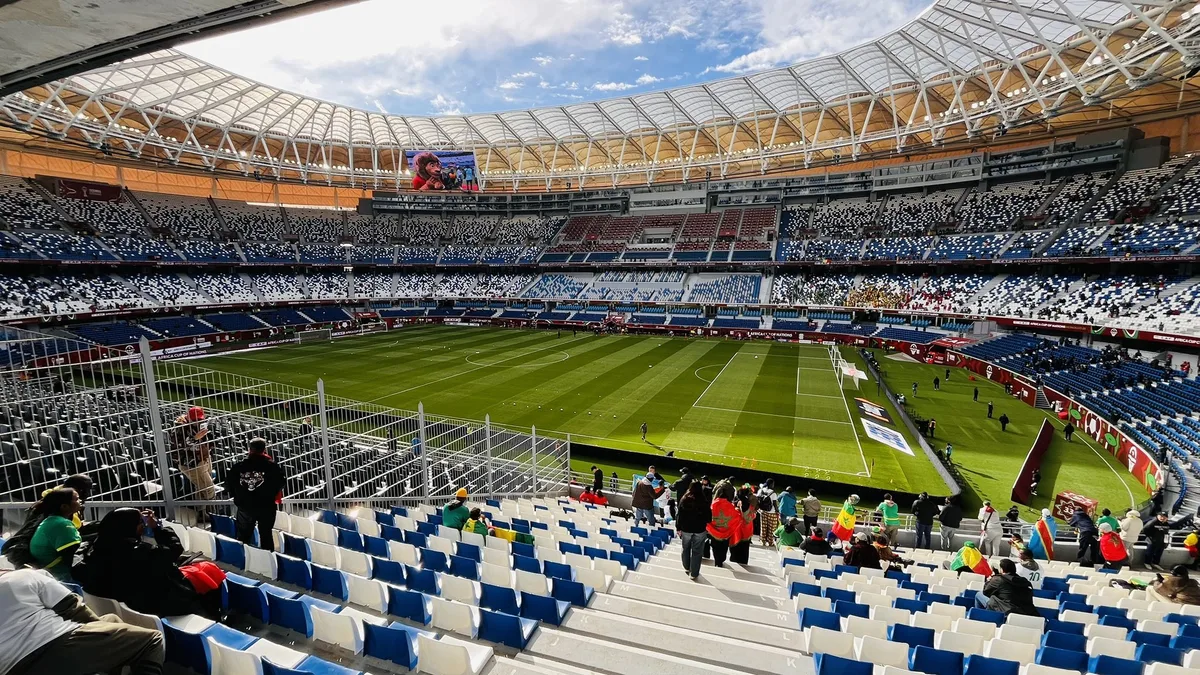
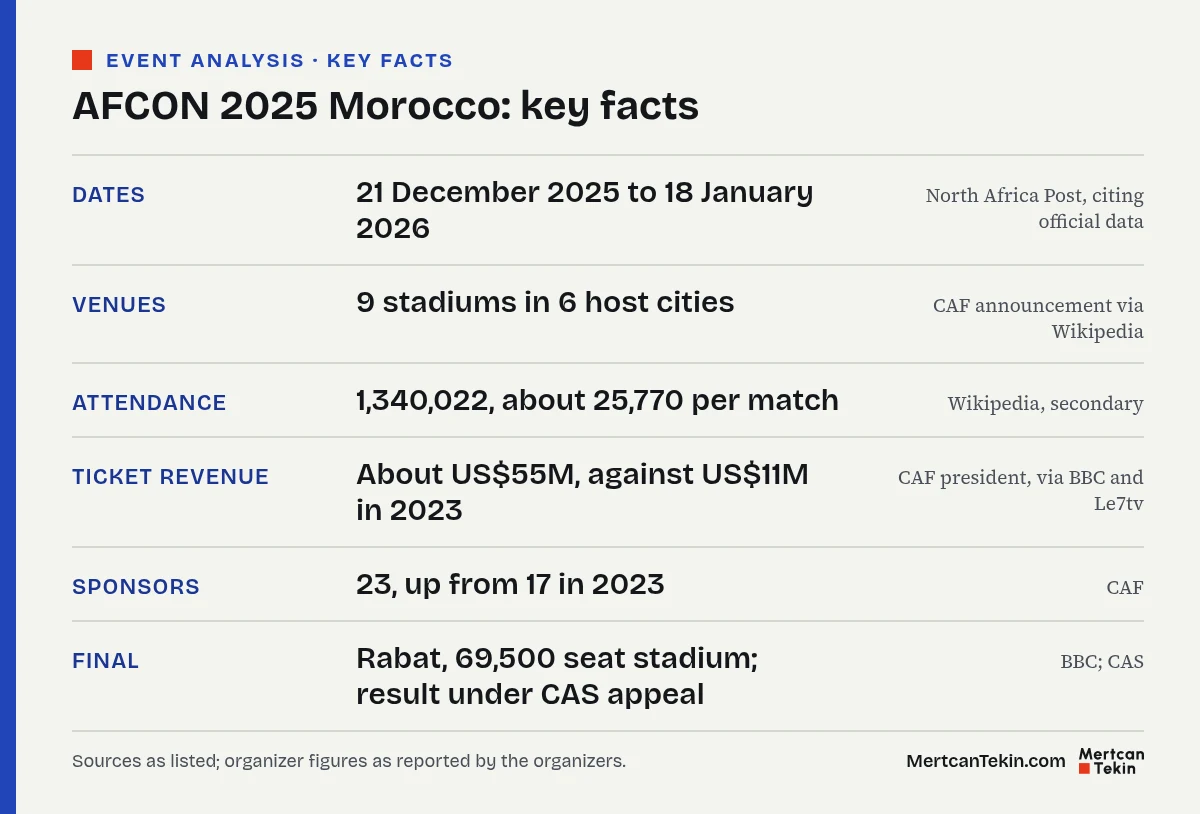
CAF, with the Royal Moroccan Football Federation (FRMF) and the local organizing committee, staged the finals from 21 December 2025 to 18 January 2026 [8]. Matches were spread across nine stadiums in Rabat, Casablanca, Tangier, Marrakesh, Fez and Agadir, from the 75,500 seat Tangier Grand Stadium to smaller grounds in Rabat [9]. Secondary records put total attendance at 1,340,022, about 25,770 per match [9]. The tournament produced a record 121 goals [1].
The final’s result is still open. Senegal beat Morocco 1 to 0 after extra time on 18 January in Rabat, after a delay of more than 16 minutes that followed a late penalty award and a walk off [1][6]. On 17 March the CAF Appeal Board ruled that Senegal had forfeited the match and recorded a 3 to 0 win for Morocco; Senegal’s federation appealed to CAS on 25 March [4][6]. CAS heard the case behind closed doors on 8 October and said on 19 October that it expects to issue its award at the end of November 2026 [5]. I take no position on the outcome.
What did the tournament give Morocco?
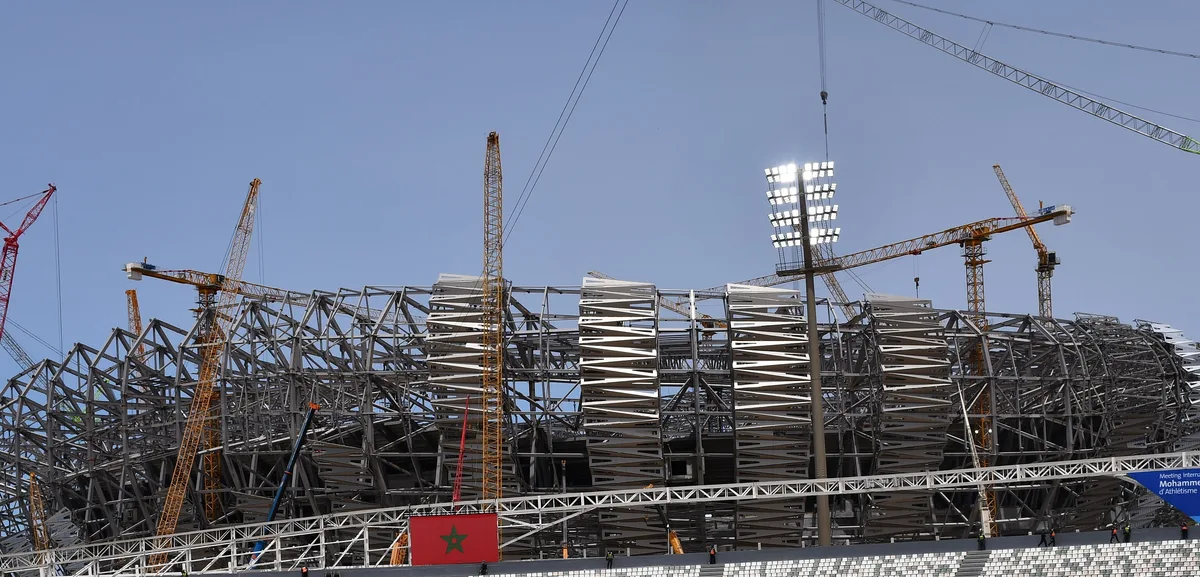
The clearest gain is a tested venue network for 2030. BBC Sport called the Prince Moulay Abdellah Stadium in Rabat the stand out example, and reported that the Stade Mohammed V in Casablanca and stadiums in Fes, Marrakesh and Agadir are set for renovation, while work continues on a 115,000 seat stadium near Benslimane [1]. FRMF’s Omar Khyari told the BBC that the pitch technology came from Moroccan companies [1].

The second gain is commercial, and it belongs to the organizer first. CAF said competition revenues rose by more than 90%, sponsors grew from 17 at the 2023 edition to 23, and its president said ticket revenue reached about US$55 million against about US$11 million in Côte d’Ivoire [2][3]. CAF had forecast a net profit of more than US$114 million, up from US$75 million two years earlier [1].
The organizer's account
Units differ by group: US$ million for revenue and profit, count for sponsors. Profit for 2025 is a forecast made before the tournament.
| Indicator | 2021 Cameroon | 2023 Côte d'Ivoire | 2025 Morocco |
|---|---|---|---|
| Ticket revenue, US$ million | not reported | 11 | About 55 |
| Net profit, US$ million | not reported | 75 | More than 114, forecast |
| Sponsors and partners | 9 | 17 | 23 |
| Competition revenue growth | Over 90%, CAF |
The regional contribution shows in accommodation. Official data reported by North Africa Post show overnight stays in classified accommodation up 12% year on year in January 2026, with Rabat up 42%, Casablanca 36% and Tangier 31%, partly attributed to the tournament [8]. Travel revenue in January reached 11.7 billion dirhams, up 19.3% [8]. These are national statistics that include all travellers; they show the direction, not the share caused by football.
Where the nights went
Unit: % change in overnight stays in classified accommodation, January 2026 against January 2025. National figure: +12%.
| City | Change | Host city |
|---|---|---|
| Rabat | +42% | Yes |
| Casablanca | +36% | Yes |
| Ouarzazate | +35% | No |
| Tangier | +31% | Yes |
| Errachidia | +29% | No |
| Agadir | +11% | Yes |
| Fez | +10% | Yes |
| Marrakech | +7% | Yes |
| Essaouira | +7% | No |
| Morocco, all classified accommodation | +12% |
Two details in that chart matter for destination managers. Ouarzazate and Errachidia, which hosted no matches, grew faster than Marrakech and Fez, which did [8]. That suggests visitors combined matches with desert and mountain itineraries, or that other drivers were at work. A visitor survey could tell which.
Rabat carried four of the nine venues, which helps explain why its accommodation grew fastest [8][9]. Concentrating matches in the capital shortened team and media travel; it also concentrated fan flow on one rail hub and one road network, which matters for the crowd issues below.
| City | Stadium | Capacity |
|---|---|---|
| Tangier | Tangier Grand Stadium | 75,500 |
| Rabat | Prince Moulay Abdellah Stadium | 69,500 |
| Rabat | Moulay El Hassan Stadium | 22,000 |
| Rabat | Rabat Olympic Stadium | 21,000 |
| Rabat | Al Medina Stadium | 18,000 |
| Marrakesh | Marrakesh Stadium | 45,240 |
| Agadir | Adrar Stadium | 46,000 |
| Fez | Fez Stadium | 45,000 |
| Casablanca | Stade Mohammed V | 45,000 |
The tournament also sits inside a strong national trend. Morocco recorded 19.8 million tourist arrivals in 2025, up 14%, and 124 billion dirhams in tourism receipts to the end of November, up 19%, according to the tourism ministry [7].
What is the reading for destination managers?
The January 2026 arrival data add a market view. Arrivals rose 3% to more than 1.3 million, while air passenger traffic across national airports rose 14.7% to more than 3.1 million, with routes to the rest of Africa up 28.9% and to the Americas up 30.7% [8]. Arrivals from France rose 14%, while Spain fell 16% and the United Kingdom 6% [8]. A football tournament that draws African supporters and diaspora visitors does not replace the leisure markets; it adds a different segment with different routes, budgets and lengths of stay.
The ministry’s target of 26 million visitors a year by 2030 makes this segment relevant [8]. If Morocco wants event visitors to come back as leisure visitors, the useful data are the ones nobody has published yet: where AFCON visitors came from, how many nights they stayed, and how many visited a non host region. Ticketing and visa data can answer that within weeks, without a new survey.
There is also a seasonality question. The finals ran from late December to mid January [8]; the 2030 World Cup will be played in summer. Whether extra event demand fills empty rooms or displaces other visitors depends on the month, which means the 2030 effect can only be read by comparing event nights against the same period in a normal year, city by city.
Strengths
The venues and pitches are the first strength: persistent rain did not damage play, which the BBC notes has long been a challenge for hosts [1]. The commercial model is the second. CAF says it used audience analysis after the 2023 edition to target markets in China, Japan, Brazil and Europe, which helped widen its sponsor base [2]. The third is the visible readiness for 2030, which the King described as "a world class level of readiness", a phrase the BBC reported alongside its own assessment [1].
Weaknesses and risks
Crowd control is the main operational weakness. Senegal’s federation raised concerns about a lack of security when its squad arrived by train in Rabat, where players were mobbed at the station, and BBC Sport Africa witnessed fans outside stadiums caught in crushes or penned into tight spaces [1]. The BBC adds that crowd problems are not limited to African football, citing incidents at Euro 2020 and the 2022 Champions League final [1]. That comparison is fair, and it is also the reason to plan fan flow at stations and gates as carefully as the stadiums.
Fan allocation was the second. Senegal’s federation complained that it received fewer than 4,000 tickets for a final in a 69,500 seat stadium [1]. Whatever the allocation rules, a host country in the final and a visiting nation with a small share of seats raise the safety stakes inside the stadium.
Officiating process was the third. The BBC reported long delays for several VAR reviews, questionable calls and no semi automated offside system despite the investment in venues [1]. This is a CAF operational choice, not a host one, but it shaped the final and the dispute that followed.
The last risk is governance time. An appeal lodged in March and an award expected in late November leave the record of the final open for more than ten months [4][5].
Four accounts, kept apart
| Account | Question it answers | Figure in the sources | Source |
|---|---|---|---|
| Public investment | What did Morocco spend on stadiums, transport and security? | No verified total | none |
| Organizer income | What did CAF earn? | Revenue up over 90%; tickets about US$55M; 23 sponsors | CAF; BBC |
| Tourism activity | Did visitor activity rise? | January 2026 nights +12%, travel revenue +19.3% | North Africa Post, official data |
| Long term use | What do residents keep? | Renovated and new stadiums for 2030; no use plan published in the sources | BBC |
The largest account, public investment, is the one without a verified figure. Until Morocco publishes what it spent on stadiums, transport and security for the tournament, CAF’s revenue and the hotel data describe benefits without a matching cost.
Expert commentary
Kenya’s football federation president told the BBC that Morocco had set "a new standard" for hosting and that "key steps" were being taken to improve infrastructure ahead of 2027, when Kenya, Tanzania and Uganda cohost [1]. BBC Sport questioned whether CAF can generate similar value outside Morocco as it moves to a four year cycle from 2028 [1]. Nigeria’s Asisat Oshoala called Morocco the "new headquarters" of African football [1]. The concentration of events in one country is efficient for CAF; it is also a risk to the competition’s spread. For the 2027 cohosts, the most relevant part of the record is not the scale of Morocco’s stadiums but its process: tested pitches, a revenue model built on audience data, and early publication of venues, which CAF and the FRMF announced eleven months before kickoff [2][9].
Residents, environment and the visitor’s day
For residents, the lasting asset is the venue network and the transport around it, including the Rabat Salé tramway that links central districts [1]. Whether renovated stadiums host community sport and regular events after 2030 is not covered in any plan I found.
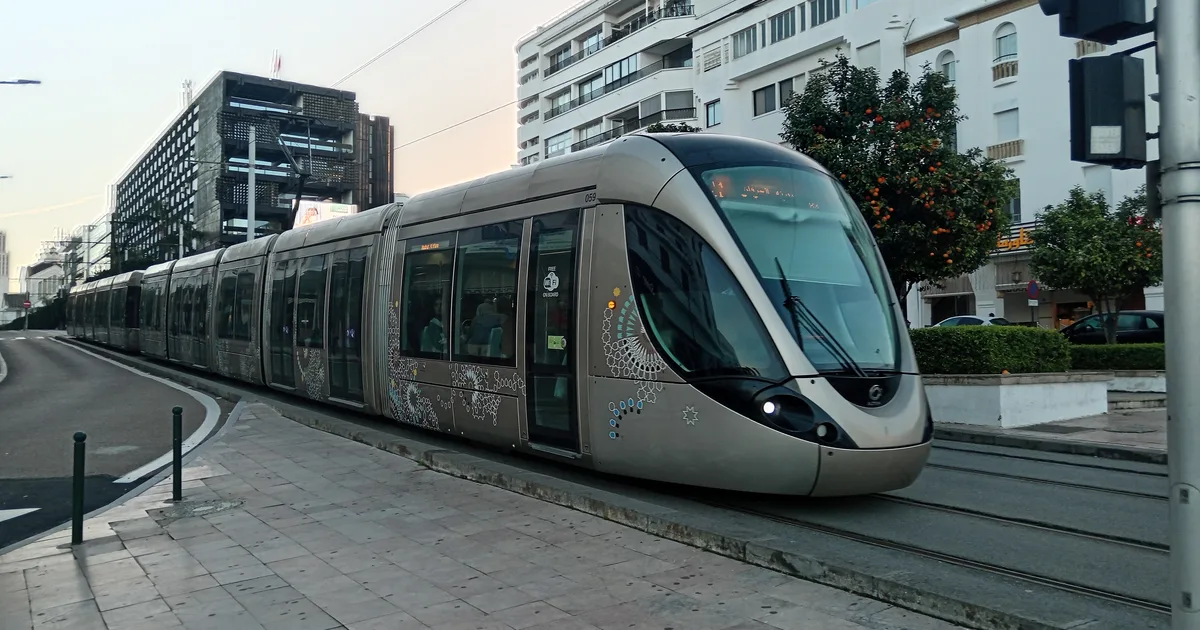

The visitor’s day in Morocco was shaped by trains and gates. A supporter arriving in Rabat by rail, walking to a stadium and leaving with 60,000 others needs clear routes, staged entry and enough stewards at the pinch points where crushes occur [1]. On the environment, I found no verified data on emissions, waste or water use for the tournament.
What the record shows for 2030
The record points to three open areas: fan flow at stations and gates as one system, ticket allocation rules for visiting supporters before the knockout rounds, and measurement. The indicators below track each of them.
| Indicator | What it shows | When to publish |
|---|---|---|
| Public investment | Capital spending on venues, transport and security by budget line | Within 12 months |
| Fan flow at stations and gates | Peak queue times and density at transit hubs and gates | During the event |
| Crowd incidents | Incidents and injuries outside and inside venues, by site | Within 1 month |
| Visiting fan allocation | Tickets allocated to each finalist and sold through their federations | Before each knockout match |
| Visitor origin | International visitors attending, by country, from ticketing | Within 1 month |
| Accommodation by city | Nights and rates in host and non host cities against a baseline | Within 3 months |
| Officiating process | Average VAR review time and technology in use | Within 1 month |
| Venue use after the event | Event days and community use per stadium per year | Annually |
Analysis result
On the sources used, AFCON 2025 showed that Morocco has stadiums, pitches and a venue network ready for 2030 [1]. CAF reported revenue growth of more than 90%, about US$55 million in ticket revenue and 23 sponsors [2][3]. Hotel nights rose 12% nationally in January 2026 and 42% in Rabat [8]. The weaker results were operational: crushes outside stadiums, a small allocation for a finalist’s fans and slow video reviews [1]. The final’s result awaits a CAS award expected at the end of November 2026 [5]. The 2025 record suggests that the next gains for 2030 lie in moving people, not in building more seats.
Frequently asked questions
Where was the final played? At the Prince Moulay Abdellah Stadium in Rabat on 18 January 2026, in a 69,500 seat stadium [1].
How much did ticket revenue grow? CAF’s president said ticket revenue reached about US$55 million, against about US$11 million at the 2023 edition [1][3].
Who won the final? Senegal won 1 to 0 after extra time on the pitch. On 17 March 2026 the CAF Appeal Board awarded the match to Morocco 3 to 0; Senegal appealed to CAS, which expects to issue its award at the end of November 2026 [4][5][6].
Did the tournament lift tourism? Overnight stays in classified accommodation rose 12% in January 2026, with Rabat up 42% and Casablanca 36%, according to official data reported by North Africa Post [8].
Sources
- BBC Sport, What we learned from Afcon 2025, 19 January 2026
- CAF, AFCON 2025 commercial success leads to over 90% surge in competition revenues and 23 sponsors
- Le7tv, Patrice Motsepe: AFCON 2025 generates record ticket revenues, 17 January 2026
- Court of Arbitration for Sport, hearing date for the AFCON 2025 final procedure, 24 July 2026 (PDF)
- Court of Arbitration for Sport, procedural update on the AFCON 2025 final, 19 October 2026 (PDF)
- Anadolu Agency, CAS ruling on the Senegal and Morocco AFCON final expected in late November, 19 October 2026
- Ministry of Tourism, Handicrafts and Social and Solidarity Economy, Morocco reaches nearly 20 million tourists in 2025
- North Africa Post, Morocco tourism kicks off 2026 with over 1.3 million arrivals in January
- Wikipedia, 2025 Africa Cup of Nations (secondary source)