
Contents
European hotels, France included, recorded RevPAR of €120 in September 2026, up 7.5% on a year earlier, according to MKG Consulting data published by Extendam on 15 October 2026. Occupancy reached 79.2%, up 1.4 points, and the average rate rose 5.6% to €151.6. Spain, Germany and Belgium posted the strongest country gains.
September is often the month when hotel markets show what business travel and events are worth. In 2026 it showed plenty. MKG Consulting data, published in Extendam’s hotel barometer on 15 October 2026, show RevPAR for European hotels, France included, up 7.5% on a year earlier [1]. Spain, Germany and Paris led, and MKG points to large trade fairs and sports events as support for the growth [1]. For planners and hotels, the figures say a lot about pricing in peak event weeks.

What do the September 2026 figures show?
MKG reports that occupancy for Europe including France reached 79.2% in September 2026, up 1.4 points on September 2025 [1]. The average daily rate rose 5.6% to €151.6, and RevPAR, revenue per available room, reached €120, up 7.5% [1]. Rate growth contributed more than occupancy growth. MKG describes the growth as widely shared across Europe [1].
Excluding France, the European benchmark shows occupancy of 81.7%, up 1.1 points, average rates up 5.5% and RevPAR of €126.8, up 7.0% [1]. The barometer links this to the return of business travel and to large professional and cultural events in several European cities [1]. In France, RevPAR rose 8.1% to €113, with occupancy of 76.6%, up 1.8 points, and an average rate of €147.6, up 5.6% [1]. Rate growth again did more of the work than occupancy.
The country figures show the spread. MKG names Spain (+11.0%), Germany (+8.7%) and Belgium (+6.7%) as the strongest RevPAR gains [1]. In occupancy, Italy led at 86.0%, up 1.6 points, followed by Portugal at 84.9% and Spain at 84.5% [1]. Portugal and the United Kingdom were the only countries in the table where occupancy fell, by 0.1 and 1.0 points [1].
Where hotel revenue per room grew most in September 2026
Unit: percentage change in revenue per available room (RevPAR) against September 2025. Light bars: European totals.
| Event | City and dates | Organizer figure |
|---|---|---|
| Automechanika | Frankfurt, 8 to 12 September | Over 112,000 trade visitors from 173 countries; 4,400 exhibitors |
| IFA | Berlin, release dated 8 September | 240,000 visitors from 155 countries; over 2,000 exhibitors |
| InnoTrans | Berlin, 22 to 25 September | 175,591 trade visitors from 128 countries; 3,190 exhibitors |
| Spanish Grand Prix, MADRING | Madrid, race weekend 11 to 13 September (MKG) | 352,618 cumulative attendances over four days |
| Paris calendar | Paris, September | Concerts, IFTM, Retail's Big Show Europe, Fashion Week (MKG list) |
| Country | Occupancy | Change |
|---|---|---|
| Italy | 86.0% | +1.6 points |
| Portugal | 84.9% | −0.1 points |
| Spain | 84.5% | +1.9 points |
| United Kingdom | 84.4% | −1.0 points |
| Netherlands | 81.4% | +0.2 points |
| Germany | 78.3% | +1.8 points |
| Belgium | 76.7% | +0.2 points |
| France | 76.6% | +1.8 points |
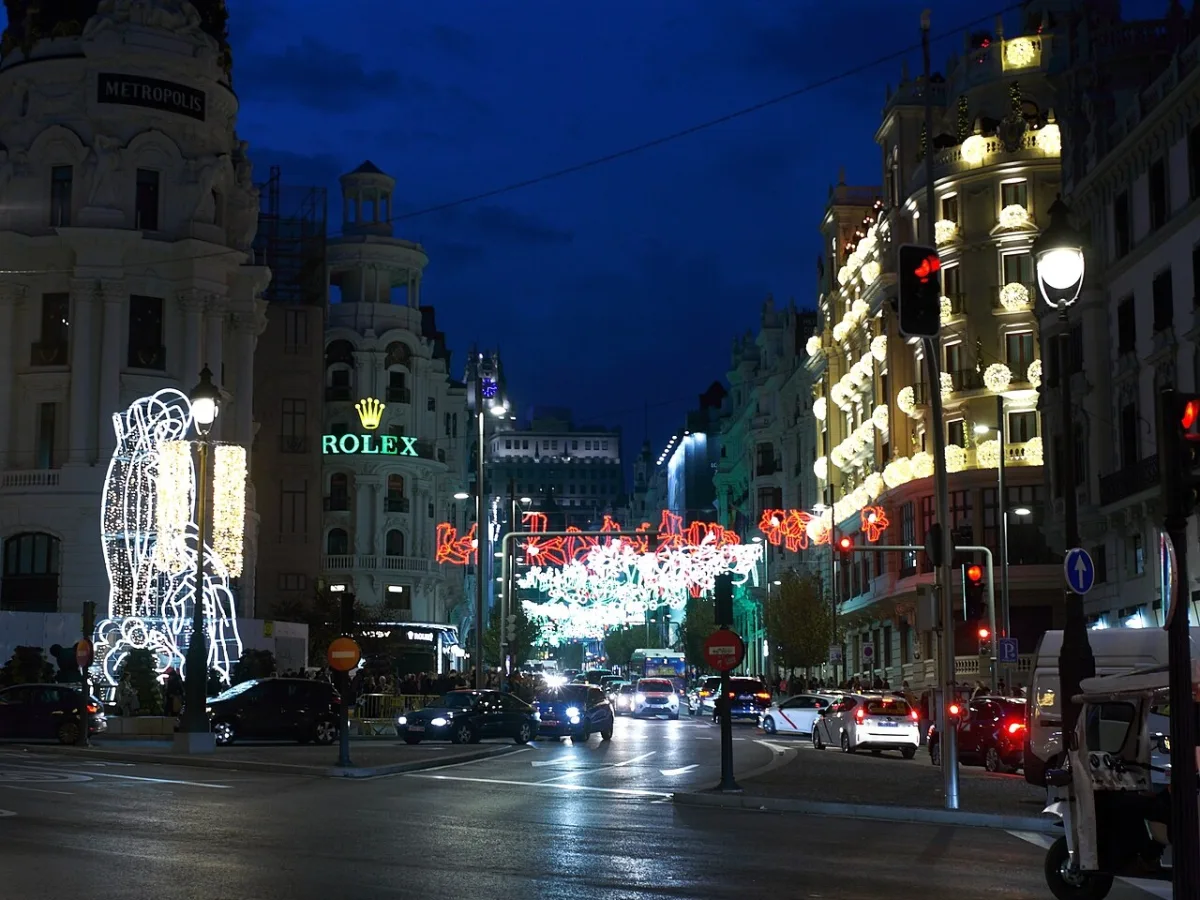
Paris stood out within France. RevPAR in Paris rose 11.2% to €245.8, and Île de France rose 10.6% to €156.9, with occupancy up 3.2 points to 81.7% [1]. The barometer cites eight Céline Dion concerts at the venue the barometer calls the Plénitude Arena, trade shows including IFTM and Retail’s Big Show Europe, and the start of Fashion Week at the end of the month [1]. In the French regions, RevPAR rose 5.9% to €90, driven mainly by rates [1].
The barometer also gives some detail on who filled French rooms. Citing booking data from a distribution provider, it reports that demand in Île de France was 81% international, while in the French regions the split was 53% international and 47% domestic [1]. It adds Flightradar figures showing commercial flight volumes in September up 2.4% on 2025, and SNCF figures showing TGV ridership up 3.4% [1]. These transport figures give context rather than a full explanation of hotel results.
Which events did MKG point to?
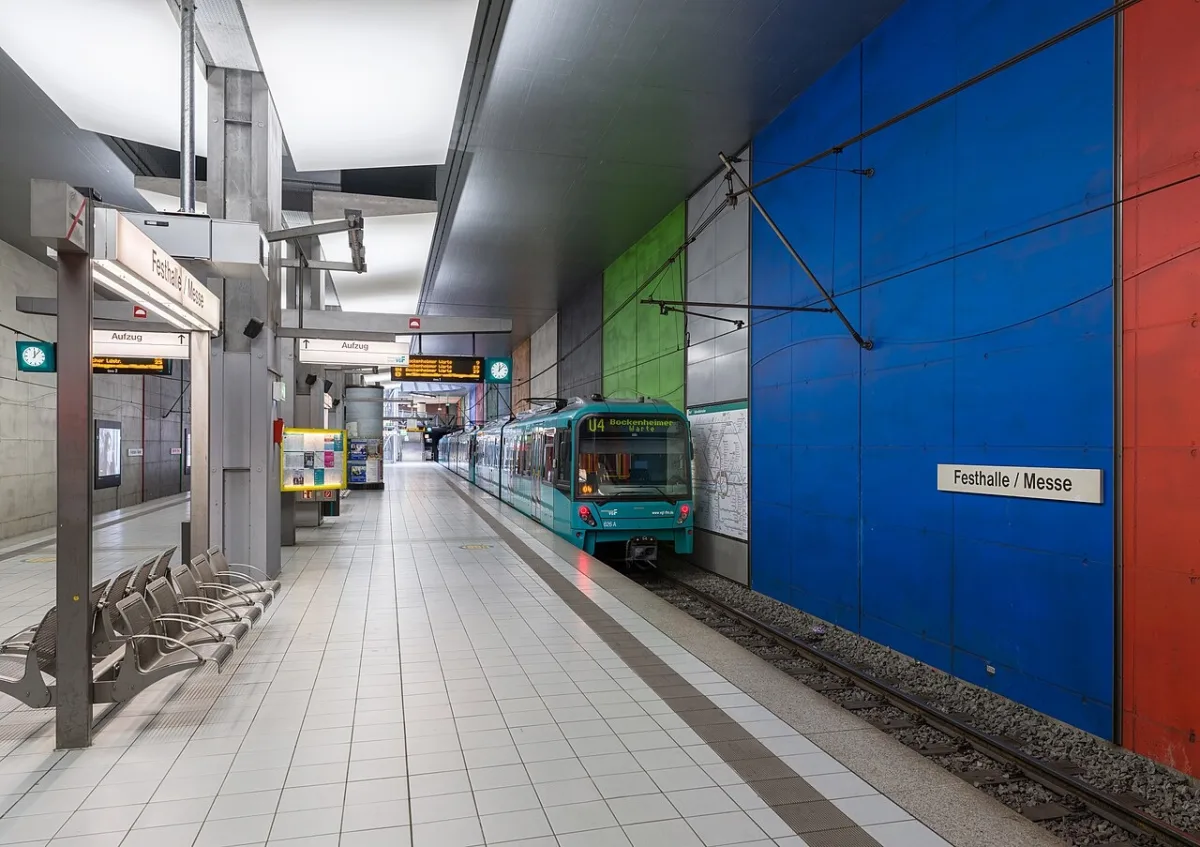
MKG ties growth in Germany and Spain to large international events [1]. In Frankfurt, Automechanika ran from 8 to 12 September. Messe Frankfurt reported over 112,000 trade visitors from 173 countries and 4,400 exhibitors from 80 countries, up from 104,750 visitors in 2024 [2]. The next edition is set for 5 to 9 September 2028 [2].
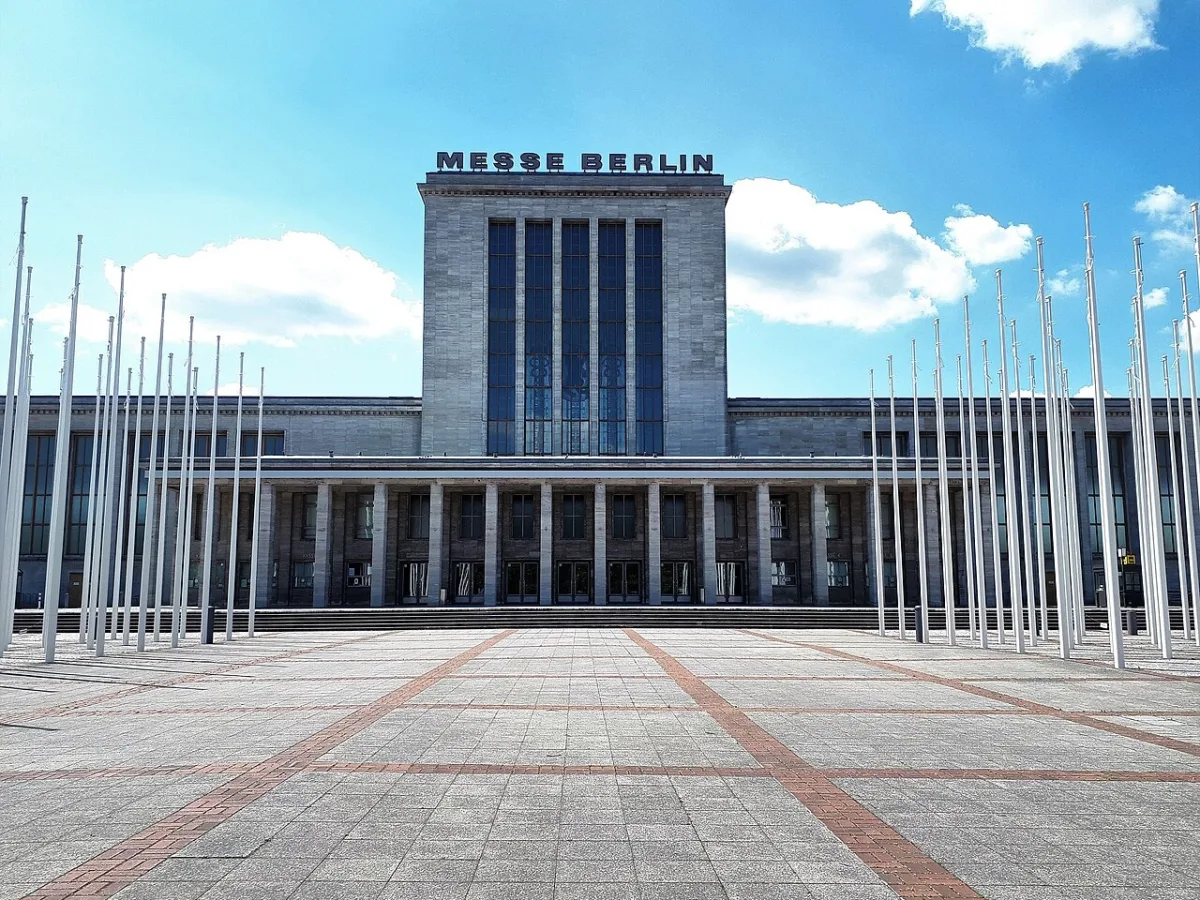
Berlin had a busy month. IFA reported 240,000 visitors from 155 countries and over 2,000 exhibitors in a release dated 8 September 2026 [3]. InnoTrans followed from 22 to 25 September, with 175,591 trade visitors from 128 countries and 3,190 exhibitors from 59 countries, according to Messe Berlin [4]. MKG also mentions the Berlin Marathon at the end of the month [1].
In Madrid, the first Spanish Grand Prix at MADRING was held over a weekend that MKG dates from 11 to 13 September [1]. The organizer reported 352,618 cumulative attendances over four days, with 128,183 on race day [5]. Eight in ten fans arrived by public transport, according to the organizer [5]. MKG cites a figure of nearly 353,000 spectators [1].

Do events explain all of the growth?
The data do not support that conclusion, and MKG does not claim it. MKG says the rise in RevPAR in Germany and Spain was supported by large international events [1]. The barometer also cites the return of business travel and higher average rates across many markets [1]. In the French regions, RevPAR grew 5.9%, mainly through rates, with Provence Alpes Côte d’Azur up 10.1%, Grand Est up 10.0% and Brittany up 8.2% [1]. Those markets did not depend on one large trade fair.
Airport traffic points to a mixed picture before September. ACI EUROPE reported passenger growth of 3.9% in July and 3.1% in August across its network [6]. Frankfurt fell 0.3% and Munich 0.5% in August, while Madrid grew 4.9% [6]. ACI EUROPE named Italy and Spain the most dynamic of the large EU+ markets over the summer, with France, Germany and the United Kingdom below the European average [6].
Airline data add one more layer. IATA reported that European carriers’ traffic rose 2.1% in August, with the Europe and Asia corridor up 12.2% and transatlantic routes down 2.4% [7]. These are August figures, so they describe the summer rather than September. They show that hotel growth in Germany came with flat air traffic at its two largest airports in the previous month [6]. Event visitors also arrive by rail and road, which airport data do not capture.
What does it mean for the sector?
For hotels, the data point to pricing in peak weeks. Rates grew faster than occupancy in Europe, France and Paris [1]. For hotels in trade fair cities, these figures set the reference for 2027 event week rates. Contracts that include room block attrition terms protect hotels when groups shrink, and give planners clarity on what they owe.
For agencies and DMCs, the strong September makes allocations harder to secure. Group requests for event weeks in Frankfurt, Berlin, Madrid or Paris need lead time. Nearby cities and shoulder weeks are the alternatives left when event weeks fill. Clients who understand the economic impact of events on hotel pricing will expect higher rates in peak weeks.
For airlines, the hotel numbers point to demand that air capacity may not follow at the same pace. ACI EUROPE reported flat August traffic at Frankfurt and Munich [6]. For 2027 trade fair weeks, the comparison is between event calendars and scheduled capacity. That is a question of matching supply to peaks rather than overall growth.
For congress and event organizers, September 2026 shows how events and hotel rates move together. Large shows drew visitors to Frankfurt and Berlin in the same weeks [2][3][4]. Just before, the ESC reported on 2 September that 33,800 professionals from 170 countries had attended its congress in Munich, and its 2027 congress moves to Milan from 27 to 30 August 2027 [8]. For organizers planning a trade show programme for 2027, competing dates in the same city are a cost factor. The MICE tourism calendar now sets the pace for hotel pricing in many cities.
For destination management, the September data are an argument for event calendars. Where events are spread across the year, compression is less concentrated in a few weeks. Data on rates by night, alongside event dates, help show where capacity is short.

What is my reading of September?
My reading is that September 2026 was a strong month driven by both rates and business demand, with events adding peaks on top. Occupancy grew by 1 to 2 points in most markets, while average rates rose more than 5% [1]. That mix suggests hotels priced confidently against a calendar they knew well in advance. It is a sign of firm demand, not only of event weeks.
The one cautionary point is about measurement. Monthly RevPAR averages hide the nights that drive growth, such as the days of a trade fair or a race weekend. The barometer does not publish nightly data, so the effect of each event cannot be measured from it. I would like to see more market studies that pair nightly hotel data with event attendance, which would help planners and cities alike.
Investment data in the barometer support a similar reading. BNP Paribas Real Estate counted €1.9 billion of hotel investment in France over nine months, 2% less than a year earlier, but across 111 transactions against 85 [1]. More, smaller deals point to steady interest from buyers, even if total volume did not grow.
I also note that the data come from a single provider and sample. MKG and other providers, such as CoStar, use different samples, so their figures are not directly comparable. Comparing September 2026 with the same provider’s earlier months is the most reliable way to read trends.
What does this commentary cover?
What to watch next
| Indicator | What it shows | When to publish |
|---|---|---|
| MKG October barometer | Whether event driven growth continues into autumn | Mid November 2026 |
| Rate against occupancy split | How much growth comes from price rather than volume | Monthly |
| Trade fair final reports | Visitor and exhibitor counts for autumn shows | After each show |
| Room block pickup for 2027 fairs | Whether planners book earlier for peak weeks | Contract cycle |
| Hotel pipeline in Europe | Whether slower new supply keeps rates firm | Quarterly |
| Air capacity into trade fair cities | Whether flights keep up with event peaks | Seasonal schedules |
The first indicator is October. The barometer reports that French hotels entered October with occupancy already on the books of 45%, a good level and one point higher than a year earlier, led by Île de France at 62% [1]. MKG’s next barometer will show whether the autumn pace holds.
The second is supply. The barometer cites Natixis data showing that hotel openings in Europe are being revised down, with 307 projects expected in 2026 and 303 in 2027 [1]. Slower new supply alongside firm demand tends to keep rates high in peak weeks. The third is the 2027 calendar, including IFA from 3 to 7 September 2027 in Berlin [3].
Analysis result
MKG data show European hotel RevPAR up 7.5% to €120 in September 2026, with occupancy at 79.2% and average rates up 5.6% [1]. Spain (+11.0%), Germany (+8.7%) and Belgium (+6.7%) led, and Paris rose 11.2% [1]. Automechanika, IFA, InnoTrans and the first MADRING Grand Prix supported demand, alongside the return of business travel and higher rates more widely [1][2][3][4][5]. For planners, the figures show peak weeks in event cities priced well ahead, which puts early pressure on 2027 room blocks.
Are your 2027 room blocks set for the peak weeks your events bring?
Frequently asked questions
How did European hotels perform in September 2026? According to MKG, RevPAR for Europe including France rose 7.5% to €120, with occupancy at 79.2%, up 1.4 points, and an average rate of €151.6, up 5.6% [1].
Which countries grew most? MKG named Spain (+11.0%), Germany (+8.7%) and Belgium (+6.7%) as the strongest RevPAR gains in September 2026 [1].
Did events cause the growth? MKG says major international events supported RevPAR in Germany and Spain. The data do not show how much of the growth came from events alone [1].
Which country had the highest occupancy? Italy, at 86.0%, according to MKG’s country table for September 2026 [1].
How did Paris do? Paris RevPAR rose 11.2% to €245.8, with MKG and Extendam citing a dense event calendar and the return of business travel [1].
Sources
- Extendam with MKG Consulting, Baromètre de l’hôtellerie No 73, 15 October 2026
- Messe Frankfurt, Automechanika Frankfurt 2026: More exhibitors and visitors, 12 September 2026
- IFA Berlin, IFA 2026 reports record breaking results, 8 September 2026
- Messe Berlin, Anniversary Records: InnoTrans 2026 Concludes on a High Note, September 2026
- MADRING, MADRING closes its first edition with 352,618 attendances, 17 September 2026
- ACI EUROPE, Passenger traffic strengthens over summer despite geopolitical and economic headwinds, 30 September 2026
- IATA, Air passenger demand slips in August, 30 September 2026
- European Society of Cardiology, Record breaking ESC Congress 2026, 2 September 2026