Contents
- Scope and method
- What were the key facts of ICCA Porto 2025?
- What did the congress give Porto and the region?
- What worked in the multivenue format?
- What are the risks of a multivenue congress?
- Who paid, and who benefits?
- What do organisers and analysts say?
- When does this format fit a destination?
- Residents and the city
- What is the reading for convention bureaus?
- Analysis result
- Frequently asked questions
- Sources
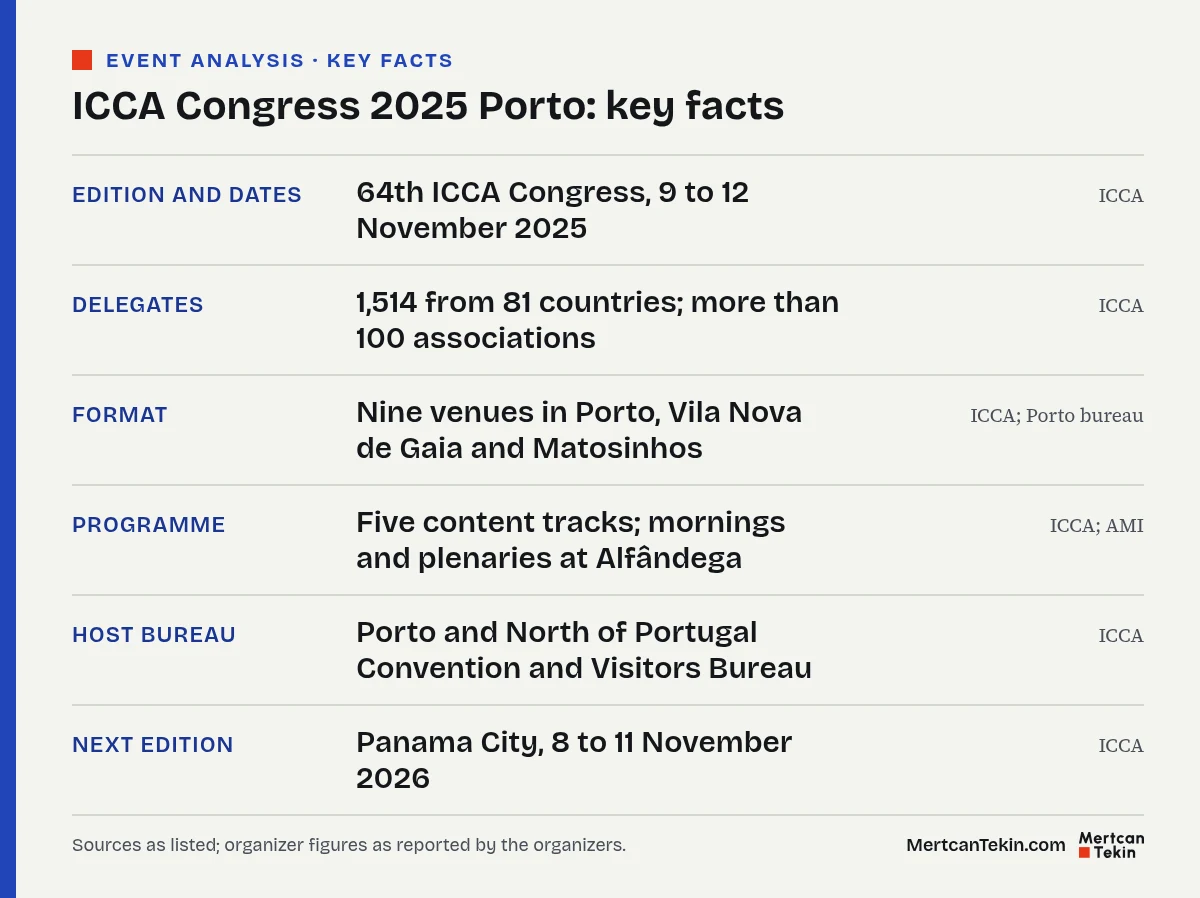
ICCA’s 64th Congress in Porto was its first multivenue edition, using nine venues across Porto, Vila Nova de Gaia and Matosinhos, according to ICCA. It drew 1,514 delegates from 81 countries, which ICCA called a record for continental Europe. The next congress is in Panama City from 8 to 11 November 2026 [1].
Most congresses ask one building to do everything. The 64th ICCA Congress in Porto asked a city to do it. Mornings and plenaries ran at the Alfândega Congress Centre; afternoons scattered delegates across wine cellars, a cruise terminal and an innovation centre on both sides of the Douro and up the coast to Matosinhos [1][5]. For the association that represents the meetings industry, testing a format on its own members is a useful signal.
My conclusion first. The format worked by the measures that were published: 1,514 delegates from 81 countries, about 200 more than expected when Porto won the bid, and positive reporting from the trade press [1][3][5]. It also moved pressure off a single venue that had known limits in wayfinding and traffic [5]. What was not published is the operational data that would show how transferable it is: transfer times, accessibility, delegate spend by municipality and the extra coordination cost. That gap is the main finding.
Scope and method
This analysis uses ICCA’s releases and congress page, the Porto bureau’s statements, trade press reports from TTGmice, AMI and Event Point, ICCA’s GlobeWatch rankings, and Porto municipal tourist tax data reported by ECO. Delegate numbers are organizer figures. No economic impact study for the congress was found, and no delegate satisfaction data were published.

What were the key facts of ICCA Porto 2025?
The International Congress and Convention Association (ICCA) chose Porto and Panama City for its 2025 and 2026 congresses in the same board decision; Porto’s dates were 9 to 12 November 2025 [2]. The bid was led by the Porto and North of Portugal Convention and Visitors Bureau with Turismo de Portugal, the city council, the regional development commission, Alfândega and the ICCA Iberian Chapter [3]. The year also marked the bureau’s 30th anniversary [2].
ICCA reported 1,514 delegates from 81 countries and called it the largest ICCA Congress held in continental Europe [1]. Its congress page adds more than 100 associations among the attendees [6]. The theme was "Charting the Course", and the programme ran in five tracks, among them Impact and Sustainability, Future Leadership and Resilience, Purposeful Business Models and Start Ups, and Innovation and Technology [1].
Forecast against result
Unit: participants. The forecast is the bureau's figure at the time of the award; the result is ICCA's reported delegate count.
Nine venues, three municipalities
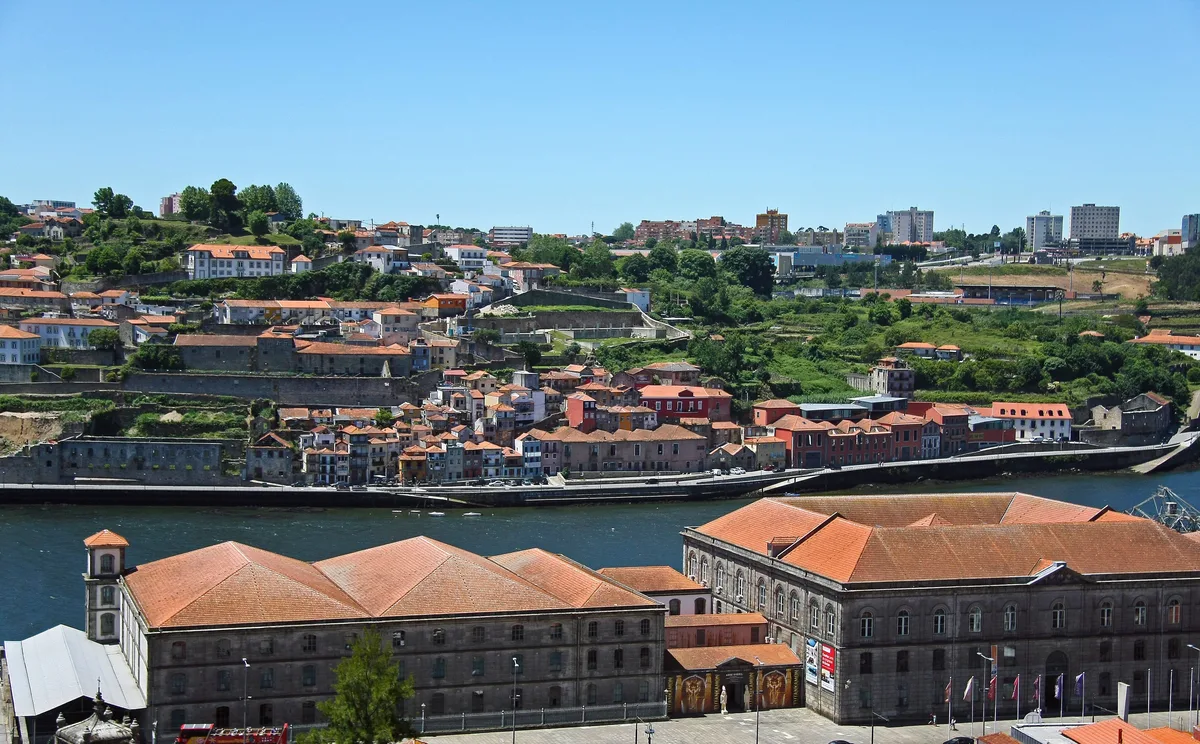
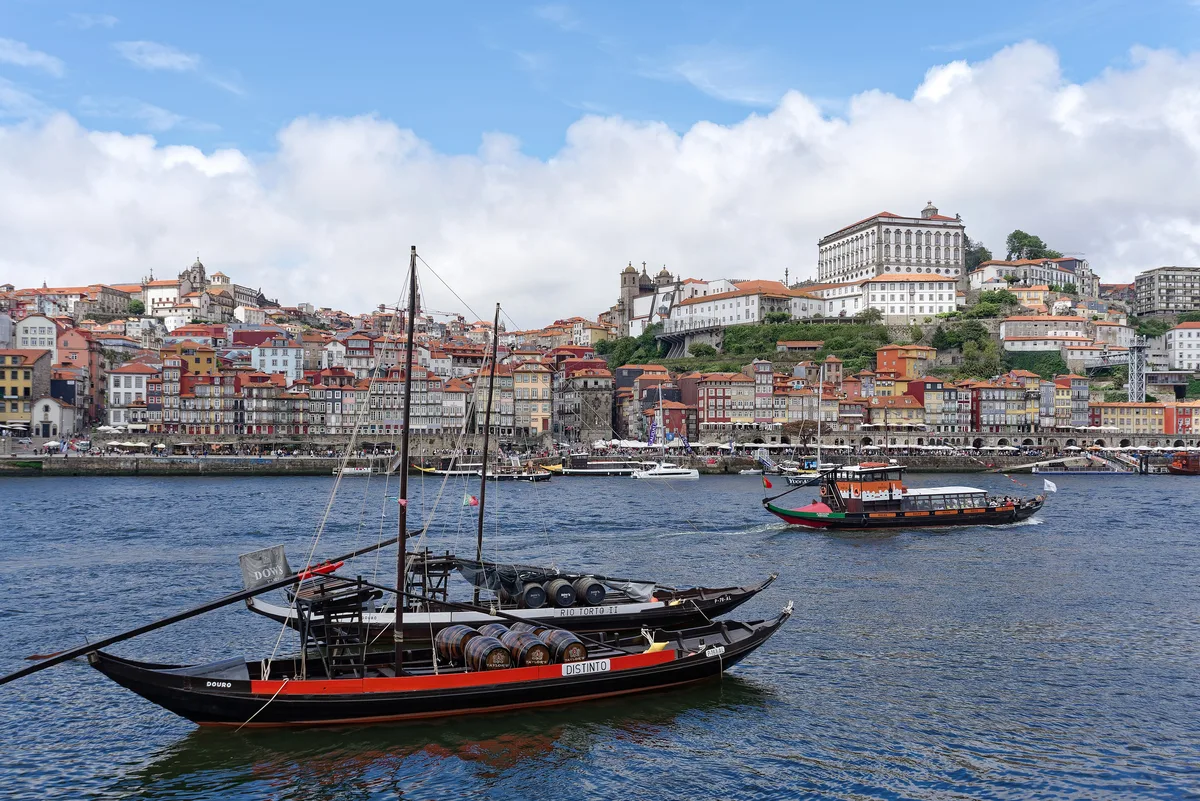
According to AMI, talks and workshops ran in five venues on either side of the Douro, with four more used for social functions [5]. Delegates chose two tracks, which ran on rotation over two afternoons; everyone met at Alfândega in the morning [5]. Where venues were beyond walking distance, delegates moved by ferry or electric bus [5]. Published reports name seven of the nine venues.
| Venue | Municipality | Role reported | Source |
|---|---|---|---|
| Alfândega Congress Centre | Porto | Basecamp: mornings and plenaries | AMI; ICCA |
| Stock Exchange Palace | Porto | Welcome reception | TTGmice |
| Super Bock Arena | Porto | Programme venue | TTGmice |
| World of Wine (WOW) | Vila Nova de Gaia | Fifth programme track | AMI |
| Ferreira Cellars | Vila Nova de Gaia | Leadership and resilience track | AMI |
| Porto Leixões Cruise Terminal | Matosinhos | Impact and sustainability track | AMI |
| CEiiA Innovation Centre | Matosinhos | Technology and innovation track | AMI |
What did the congress give Porto and the region?
Visibility with association buyers
The congress gathers the people who choose where association meetings go. Porto’s position in that market was rising before the congress and kept rising: ICCA counted 59 international association meetings in Porto in 2024, rank 34 worldwide, and 84 in 2025, rank 25 [7][8]. ICCA’s 2025 rankings report names Porto’s hosting of the congress as an example of a secondary city delivering "a high impact, future facing event model" and notes Porto’s ninth place globally for science meetings [9]. The congress is one event among 84, so the rise cannot be credited to it; it can be read as part of a longer national push that includes Turismo de Portugal’s Portugal Events incentive programme, which received 238 applications in 2024 [11].
Porto in the association meetings market
Unit: international association meetings meeting ICCA criteria (regular, rotating between at least three countries, at least 50 in person participants).
| Destination | 2024 meetings | 2024 world rank | 2025 meetings | 2025 world rank |
|---|---|---|---|---|
| Porto | 59 | 34 | 84 | 25 |
| Lisbon | 153 | 2 | 188 | 1 |
| Portugal | 290 | 9 | 356 | 8 |
Spreading activity beyond one district
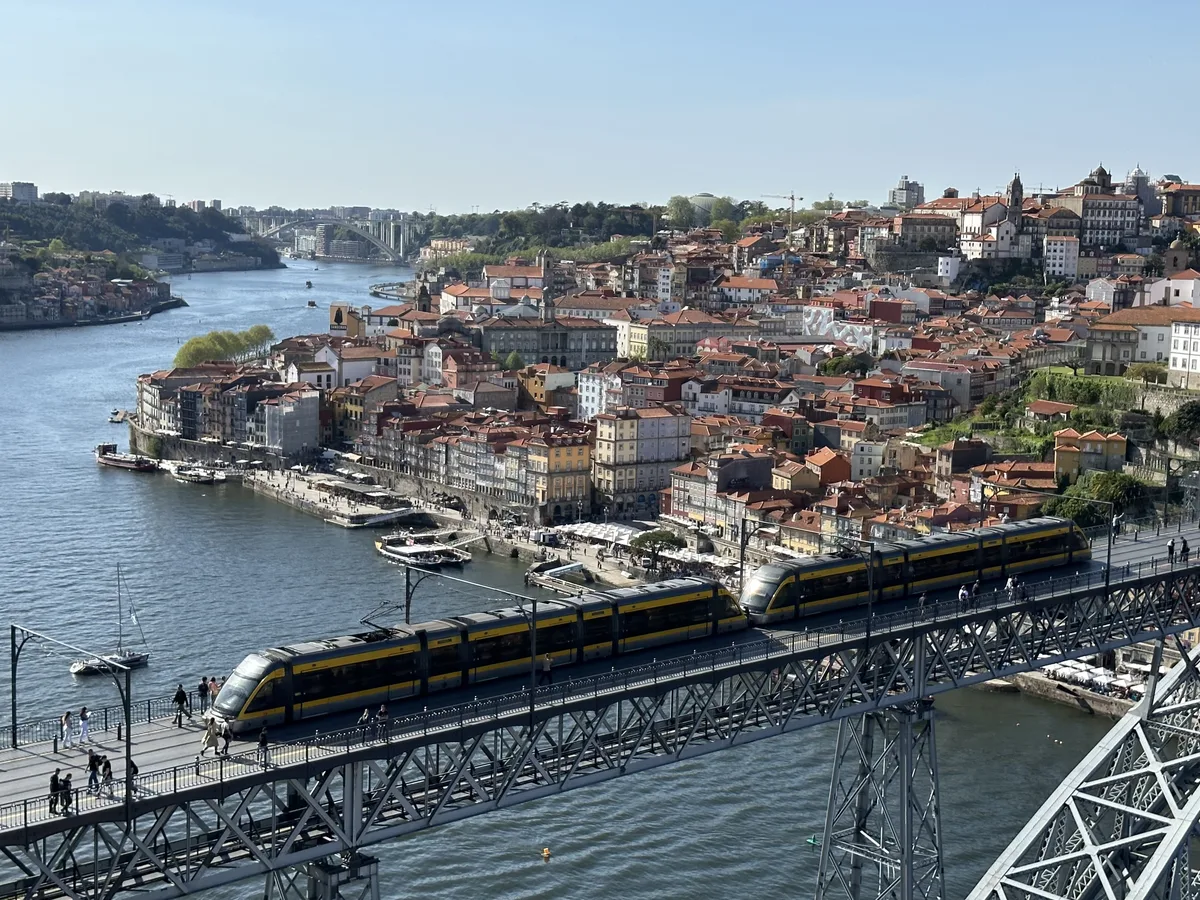
The multivenue format put members of the bureau in front of buyers who would normally see only the main venue. AMI’s reporter noted that the format let the bureau give "more of its members the chance to shine", from wine cellars to ports [5]. Vila Nova de Gaia and Matosinhos hosted programme tracks, not only dinners, which matters for how spend and visibility spread [5]. I found no data on delegate spend by municipality.

What worked in the multivenue format?
The first gain was relief for the main venue. AMI reported that the congress used every available space inside Alfândega, an 18th century customs house with limits in wayfinding and people flow, and that the venue sits on a busy dual carriageway where taxi pickups slowed commuter traffic [5]. Dispersing delegates eased both problems [5].
The second was design for networking. An organiser quoted by AMI explained that everyone met together in the morning and split only for the last session of the day, so the format added new encounters instead of fragmenting the group [5]. ICCA’s CEO Senthil Gopinath told TTGmice that delegates "really got involved and spoke openly about their pain points" [4].
The third was community involvement. The congress launched the Porto and North Forever Pact, a legacy framework developed with the consultancy #Meet4Impact and Vale Consultores, supported by Turismo de Portugal; at the welcome reception in the Stock Exchange Palace, local artists carved traditional masks and made jewellery for guests [4]. Gopinath linked this kind of visible local benefit to political support for business events [4].
What are the risks of a multivenue congress?
No implementation failure in Porto is documented in the sources. The risks below are general risks of the format, with the few signals the sources give.
**Transfer time and session timing.** Every move between venues takes time from the programme. AMI’s reporter walked about twenty minutes along the river to his track venue and enjoyed it [5]; in a larger congress or a less walkable city, the same move becomes a shuttle queue.
**Weather and comfort.** AMI noted "a few grumbles" about the amount of walking and getting caught in the rain [5]. November in a riverside city is not the best season for outdoor transfers; ponchos were advised [5].
**Wayfinding and accessibility.** Hilly, cobbled streets are part of Porto’s appeal and a barrier for delegates with reduced mobility [5]. I found no published information on step free routes or accessible transfers.
**Coordination cost.** Nine venues mean nine sets of technical crews, catering contracts and security plans. The bureau’s president spoke of "four challenging and intense days of work" [1]. No cost comparison with a single venue format was published.

Who paid, and who benefits?
Public money is part of this market. The bid relied on Turismo de Portugal, the city council and the regional development commission [3], and Portugal runs a national incentive programme for association events [11]. None of the sources gives the public contribution to this congress, so the cost side stays empty. The benefit side has one qualitative item, the Forever Pact, and one industry indicator that cannot be attributed to the congress alone. I keep them in separate rows so neither is read as offsetting the other.
| Account | What the sources show | Status |
|---|---|---|
| Public cost of hosting | No figure published for the congress | Not available |
| Public incentive | Portugal Events programme supports association and corporate events; 238 applications in 2024 [11] | Congress amount not published |
| Public partners in the bid | Turismo de Portugal, Porto City Council, regional development commission [3] | Contributions not itemised |
| Social benefit | Porto and North Forever Pact; local artists at the welcome reception [4] | Qualitative, no outcome data yet |
| Industry benefit | Porto rose from rank 34 to 25 in ICCA counts, 2024 to 2025 [7][8] | Not attributable to the congress alone |
| Delegate spend | No survey published | Not available |
What do organisers and analysts say?
Senthil Gopinath, ICCA’s CEO, framed the congress as a design choice for the industry: "Everyone in the meetings industry is looking for a transformation opportunity. As a representative of this industry, we must innovate too" [4]. He also argued that showing policymakers the local impact of business events will help with "funding issues and sustainability contributions by the governments" [4]. That is an advocacy position, and a reasonable one, but it raises the bar for evidence: if the case to governments rests on community impact, the impact has to be measured.
Luís Pedro Martins, president of the Porto bureau, said the congress proved the format "is not only possible but highly successful" [1]. The evidence for "possible" is solid. The evidence for "highly successful" is mainly reported atmosphere and the delegate count. AMI’s reporter, who attended, called it "an ambitious experiment in destination placement" and judged it worth the risk [5].
ICCA’s own 2025 rankings report adds a market view. It says the future of the European sector depends on "greater coordination between public policy, investment and industry positioning" and describes a broadening ecosystem in which cities such as Porto, Valencia and Poznan gain ground [8][9]. For a second tier city, a multivenue congress is a way to show capacity it does not have under one roof.
When does this format fit a destination?
The Porto case suggests four conditions: a compact core where most venues are walkable or linked by frequent transport, a main venue large enough for everyone at once, partners outside the core willing to host substantive sessions, and a bureau able to coordinate many suppliers. Gopinath said the 2026 congress in Panama City will move discussions to a higher level with governments and ministries [4]. The 2026 congress page says 60% of the programme will be given to networking [6]. Whether Panama keeps the multivenue model is not stated.
Residents and the city
For residents, the multivenue format trades one congestion point for several smaller ones. AMI’s report suggests that dispersal reduced the traffic problem outside Alfândega [5]. The wider context is tourism pressure. Porto’s municipal tourist tax raised €32.3 million in 2025, up 54.5% from €20.9 million in 2024, after the rate rose from €2 to €3 a night in December 2024 [10]. The mayor said the city is studying a rise to €4 and using the revenue to fund free public transport, so that residents "feel directly" the benefits tourism brings [10]. Business events in the off season fit that balance better than summer leisure peaks, but the data to show it per event do not exist yet.
What is the reading for convention bureaus?
The format sells the city as well as the venue, and it spreads opportunity to members. For destination management, it is also a tool for distributing visitor flows: delegates in Gaia and Matosinhos are delegates not queuing outside one building in the historic centre. For recreation planners, a walking route between venues doubles as a guided introduction to the riverside, which raises the stakes for pavements, signage and rain cover on those routes.
The open variables for any bureau considering the model are transfer distances against the programme grid, accessible options for each venue and the data each partner reports. A professional congress organiser can hold that data together. The indicators below cover the operating data that remain unpublished.
| Indicator | What it shows | When to publish |
|---|---|---|
| Transfer time | Median minutes between basecamp and each venue, by mode | During the event |
| Session start punctuality | Share of sessions starting within five minutes of schedule | During the event |
| Accessibility | Step free routes and accessible transfers available per venue | Before the event |
| Venue spread | Delegate hours by venue and municipality | Within 1 month |
| Delegate spend | Spend by category and municipality, from a survey | Within 3 months |
| Supplier spread | Number of local suppliers and partners contracted | Within 3 months |
| Transfer emissions | Emissions of shuttles, ferries and taxis per delegate | Within 3 months |
| Legacy follow up | Bids, projects or partnerships linked to the congress | After 12 months |
Analysis result
On the sources used, the ICCA Congress 2025 in Porto drew 1,514 delegates from 81 countries, against about 1,300 expected at award [1][3]. It used nine venues in three municipalities, eased pressure on a constrained main venue and involved local partners and artists [4][5]. Porto’s ICCA count rose from 59 meetings in 2024 to 84 in 2025, though the congress is only one part of that rise [7][8]. No economic impact, transfer time or accessibility data were published. The format works when the city is compact and the bureau can coordinate many partners; the proof for other hosts will be in the operating data.
Frequently asked questions
How many delegates attended? 1,514 from 81 countries, according to ICCA [1].
How many venues were used? Nine, across Porto, Vila Nova de Gaia and Matosinhos [1]. Five hosted programme sessions and four hosted social functions, according to AMI [5].
Was it the first multivenue ICCA Congress? Yes. ICCA and the Porto bureau described it as the first ICCA Congress held across multiple venues [1].
Where is the next ICCA Congress? Panama City, 8 to 11 November 2026 [1][2].
Sources
- ICCA, The 64th ICCA Congress 2025 wraps up, 17 November 2025
- ICCA, ICCA announces Porto and Panama City will host the next two ICCA Congresses
- Event Point, Porto will host the ICCA Congress in 2025, 29 July 2024
- TTGmice, ICCA Congress 2025 pulls off unique event format and high local engagement, 24 November 2025
- AMI, Into the city: Porto and the 64th ICCA Congress
- ICCA, ICCA Congress page with highlights from Porto
- Event Point, Lisbon retains second place in ICCA ranking, 29 May 2025
- Event Point, Lisbon is the new world leader in congresses according to ICCA, 28 May 2026
- ICCA, GlobeWatch Business Analytics: Country and City Rankings 2025 (PDF)
- ECO, Porto tourist tax revenue rises 54.5% in 2025 to 32.3 million euros, 2 March 2026
- Meetings in Portugal, Portugal maintains position in ICCA’s global top ten ranking