
Contents
- What did SATSA and Joburg Tourism announce?
- How does the programme work?
- What do the visitor figures show?
- Why is geographic spread part of the argument?
- What happened after the launch?
- How does the national picture frame the launch?
- What does it mean for the sector?
- What is my reading of the partnership?
- What does this commentary cover?
- What to watch next
- Analysis result
- Frequently asked questions
- Sources
The Welcome2Joburg Experience, launched by SATSA and Joburg Tourism on 17 September 2026, links the city’s Welcome to Joburg campaign to bookable itineraries. It has four elements: market ready offers, demand generation, an Experience Hub and consumer insights. Phase one is free for SATSA members. No results have been published.
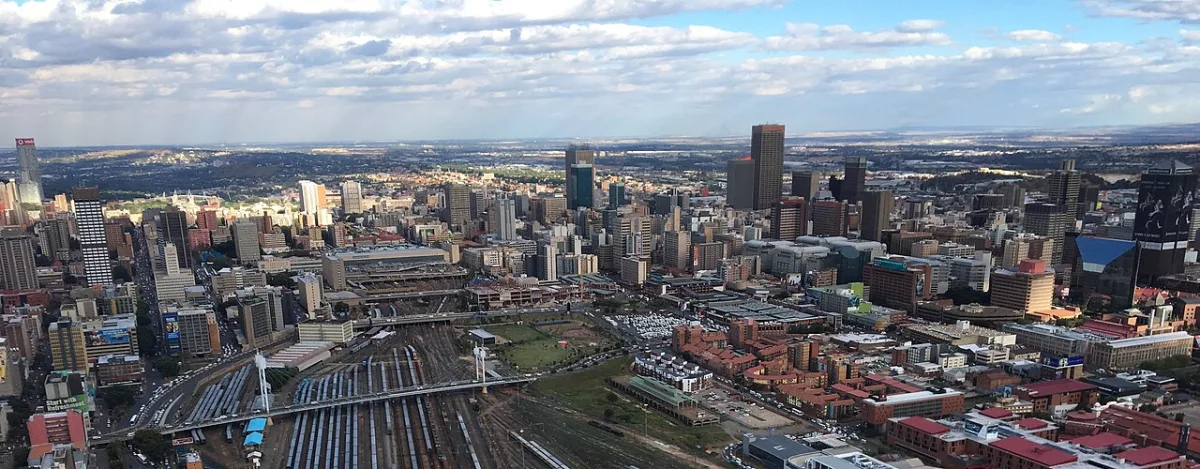
A traveller lands at OR Tambo on a Thursday afternoon for a meeting in Sandton the next morning, and has a free weekend before the flight home. That weekend is the gap a new partnership in Johannesburg wants to fill. On 17 September 2026, the Southern Africa Tourism Services Association (SATSA) and Joburg Tourism launched the Welcome2Joburg Experience, a programme to turn the city’s destination campaign into itineraries that travellers can actually book [1]. The aim, in the words of both partners, is to move from awareness to sales.

What did SATSA and Joburg Tourism announce?
The Welcome2Joburg Experience builds on Joburg Tourism’s existing Welcome to Joburg campaign, which positions Johannesburg as an all year, value for money city for business and leisure travellers, with a focus on the first 72 hours of a visit [1]. SATSA describes the programme as the first of its kind, linking a destination campaign directly to bookable products [1]. That description is the association’s own claim, and I have not found an independent comparison that tests it.
SATSA chief executive David Frost said that Johannesburg has been underrepresented in travel itineraries. "Our tour operators want to book Johannesburg; they just need the itineraries and packages to do it," he said [1]. Belu Mabandla, executive head for destination marketing and events at Joburg Tourism, said the partnership marks a shift "from destination brand awareness to conversion" [1]. The trade press coverage a week later repeated the same structure and figures, which suggests the release is the single primary account so far [2].
How does the programme work?
The programme has four elements [1][2]. SATSA members package 72 hour, longer stay and shorter stay itineraries. Joburg Tourism promotes those offers through its campaigns. An Experience Hub, a consumer facing booking platform, connects travellers directly with the products. Consumer insights from the programme are then used to refine both the offers and the marketing.
| Element | What it involves | Who leads |
|---|---|---|
| Market ready offers | 72 hour, longer stay and shorter stay itineraries | SATSA member tour operators and DMCs |
| Consumer demand generation | Promotion through ongoing city campaigns | Joburg Tourism |
| Conversion via the Experience Hub | A consumer facing booking platform linking travellers to products | Joint programme |
| Consumer insights | Data used to refine offers and marketing | Joint programme |
Participation runs in two tracks, one for DMCs and tour operators and one for experience providers, and the second track does not require SATSA membership [1]. Phase one is open to SATSA members, and phase two is planned to open beyond the membership [1]. There is no cost to take part, and entry is by expression of interest [1]. SATSA says it represents more than 500 inbound tour operators, all of whom pass its annual verification process, which gives the city a ready base of vetted partners [1][2].
What do the visitor figures show?
The partners cite S&P Global data showing that visitors to Johannesburg, domestic and international combined, grew from just over 4.5 million in 2024/25 to 5 million in 2025/26 [1][2]. Joburg Tourism adds that the city generated more than R106 billion in tourism spend in the most recent year [1][2]. The S&P Global report itself is not public, so I could not check its method, and the release gives the earlier year only as just over 4.5 million.
Visitors to Johannesburg grew by about half a million in a year
Unit: visitors in millions, domestic and international markets combined, financial years. The underlying S&P Global report is not public.
The release also says the bulk of visits to the city are trips to visit friends and relatives, and it treats this as an opportunity to convert those visitors into leisure customers [1]. National data supports the pattern. South African Tourism’s 2025 annual report records 4,465.6 thousand international arrivals to Gauteng, up 17.4% on 2024 and 42.5% of the national total [4]. Visiting friends and relatives accounted for 50.9% of Gauteng’s arrivals, and the province generated ZAR 47.0 billion in foreign direct spend, 45.9% of the national figure [4].
| Measure | Gauteng | South Africa | Owner of the figure |
|---|---|---|---|
| International arrivals | 4,465.6 thousand, up 17.4% | 10.5 million, up 17.7% | South African Tourism |
| Share of national arrivals | 42.5% | 100% | South African Tourism |
| Foreign direct spend | ZAR 47.0 billion (45.9% of total) | ZAR 102.2 billion | South African Tourism |
| Visiting friends and relatives share | 50.9% | 56.1% | South African Tourism |
| Visitors to two or more provinces | Not stated | 8.9% | South African Tourism |
These figures do not measure the same thing. The city figure combines domestic and international visitors over a financial year, while the provincial figures cover international arrivals over a calendar year [1][4]. The Gauteng Tourism Authority reported over 3.8 million international arrivals for 2024/25 and R41 billion in international tourism revenue, using its own period and method [5]. Each series is comparable only with itself.
Why is geographic spread part of the argument?
Frost framed the model as a national one. He said it should be taken to the rest of the country and called it a way to "start addressing the real problem of geographical spread in our tourism economy" [1]. The national data shows why the point matters. South African Tourism reports that only 8.9% of visitors in 2025 travelled to two or more provinces, below pre pandemic levels, with overseas visitors above 30% and regional land visitors at about 2% to 3% [4].
The same report shows how visitors stay. Friends and relatives accommodation accounted for 75.6% of all bed nights in 2025, while hotels accounted for 8.5% [4]. For a city where visits to friends and relatives dominate, that gap is the commercial opportunity. A visitor who already has a bed for the night may still buy a guided day, a dinner or a short trip outside the city, and those purchases are what the Experience Hub is meant to capture.

What happened after the launch?
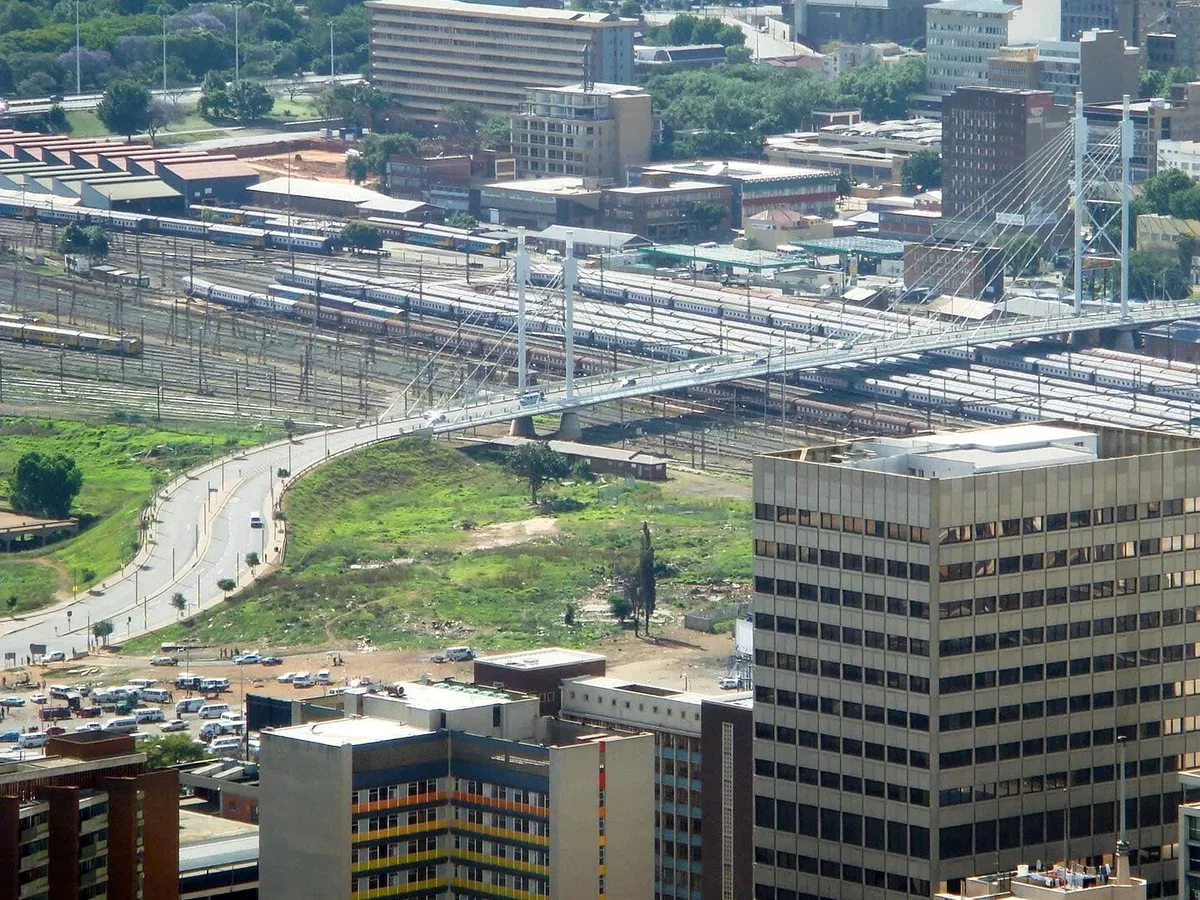
On 8 October 2026, SATSA issued a call for prize sponsors for a Welcome2Joburg consumer competition covering the City of Johannesburg, Muldersdrift and the Cradle of Humankind [3]. The association said packages had already been received from participating businesses and that the online form had been streamlined [3]. The competition aims to grow a consumer audience that has given permission to be contacted, which is the raw material of the insights element.
SATSA pointed to its previous Western Cape Adventure Competition, sponsored by Wesgro, which it says produced 36,000 direct consumer contacts and 6,000 participant consumer insights feeding a consumer trends report [3]. Those are SATSA’s figures for an earlier campaign, not results for Johannesburg. Sponsors receive trackable links, reporting on valid referred entries and aggregated trend findings, and the top referring sponsor can win a media pack that SATSA values at R38,000 [3].
How does the national picture frame the launch?
The launch arrives in a strong year for arrivals. The Department of Tourism reported 991,696 international tourists in July 2026, up 12.5% on July 2025, and 6,576,169 for January to July, up 12.4% [6]. August brought 1,005,286 international tourists, up 7.4%, and the January to August total reached 7,581,455, up 11.7% [7]. Minister Patricia de Lille linked the growth to "converting that demand into investment, jobs" and to giving visitors "more reasons to stay longer" [7].
| Period | Arrivals | Change on 2025 |
|---|---|---|
| July 2026 | 991,696 | Up 12.5% |
| January to July 2026 | 6,576,169 | Up 12.4% |
| August 2026 | 1,005,286 | Up 7.4% |
| January to August 2026 | 7,581,455 | Up 11.7% |
The global context is softer. UN Tourism estimated that international arrivals grew only 0.4% worldwide in the first half of 2026, with Africa up 4% [8]. The Department of Tourism, citing UN Tourism, describes South Africa as the strongest performer in Africa in that period, with growth of 12% [7]. Rising arrivals help a conversion programme, because more visitors pass through the city, but they also make it harder to attribute any later growth to the programme itself.
What does it mean for the sector?
For DMCs and tour operators, the programme lowers the cost of building a city product. Joburg Tourism carries the consumer marketing, the Experience Hub carries the booking, and participation is free [1]. The trade off is that packages must fit the 72 hour, longer stay and shorter stay formats the programme defines, and that phase one favours SATSA members [1]. Operators outside the association can still join as experience providers [1].
For hotels, the opportunity lies mainly in extended stays. Business visitors who add a weekend, and leisure visitors who add a night after visiting family, are the segments the 72 hour format targets [1]. With hotels holding 8.5% of bed nights nationally, even a small shift from staying with friends to paid accommodation would matter [4]. For airlines, a stronger city product supports demand on routes into OR Tambo beyond pure business travel.
For congress and event organizers, ready made 72 hour itineraries are a practical tool. Delegates can be offered a vetted programme before or after a meeting without the organizer building it. For destination managers elsewhere, the model shows a DMO working through an operator association rather than around it, a division of roles discussed in DMO vs DMC and tourism partnerships.

What is my reading of the partnership?
My reading is that the model is sound in design and unproven in results. Its strength is the division of labour. The city does what a DMO is good at, which is marketing the destination, and the operators do what they are good at, which is building and selling products [1]. The Experience Hub then closes the loop between the two, which is where many campaigns stop. This matches the logic set out in what is destination management.
My second point concerns measurement. The programme promises consumer insights, and the earlier SATSA competition shows the association can collect contacts at scale [3]. What the release does not say is how conversion will be measured, for example bookings made through the hub, nights added or spend per booking [1]. Without those measures, the shift from awareness to conversion remains a stated aim. A published baseline, set against the 5 million visitor figure, would make the destination strategy behind it testable.
What does this commentary cover?
What to watch next
| Indicator | What it shows | When to publish |
|---|---|---|
| Experience Hub launch | Whether the booking platform goes live with packages from SATSA members | From November 2026; no launch date published |
| Consumer competition | Entries and sponsor numbers for the Johannesburg, Muldersdrift and Cradle of Humankind competition | From the sponsor call of 8 October 2026; closing date not published |
| Phase two | Whether the programme opens to businesses beyond SATSA membership | Date not published |
| Visitor data | Whether 2026/27 city visitor figures rise above 5 million | Next annual figure; date not published |
| Geographic spread | Whether the share of visitors to two or more provinces rises above 8.9% | South African Tourism 2026 annual report, 2027 |
The first signal is the Experience Hub itself: when it goes live, how many packages it lists and whether those packages come from a broad group of operators or a few [1]. The second is the consumer competition, whose entry and sponsor numbers will show how large a permission based audience the programme can build [3]. The third is phase two, which would test whether the model works for businesses outside SATSA’s membership [1]. Over a longer horizon, the next city visitor figure and the national share of visitors travelling to more than one province will show whether the programme moves the numbers it was designed to move [1][4].
Analysis result
SATSA and Joburg Tourism launched the Welcome2Joburg Experience in September 2026 to turn a city campaign into bookable itineraries, with four elements, free participation and a phased opening [1]. Johannesburg drew about 5 million visitors in 2025/26 by the partners’ figures, and national data shows a visitor base dominated by trips to friends and relatives and limited travel between provinces [1][4]. For DMCs, hotels and destination managers, the model is one to follow, with the caveat that no results have yet been published. A campaign earns attention; a booking earns the right to claim success.
How would this change your plans for the next twelve months?
Frequently asked questions
What is the Welcome2Joburg Experience? A partnership between SATSA and Joburg Tourism, launched in September 2026, that turns the Welcome to Joburg campaign into bookable itineraries and products [1].
Who can take part? Phase one is open to SATSA members. Experience providers can join without SATSA membership, and participation is free, by expression of interest [1].
How many people visit Johannesburg? About 5 million visitors in 2025/26, domestic and international combined, according to S&P Global data cited by the partners [1][2].
What is the Experience Hub? A consumer facing booking platform that connects travellers directly with Johannesburg tourism products [1][2].
Have results been published? No. The partners have described the programme and a consumer competition, but no booking or visitor results [1][3].
Sources
- SATSA, SATSA and Joburg Tourism launch Welcome2Joburg partnership, turning destination marketing into bookable experiences, 17 September 2026
- Bizcommunity, Joburg Tourism and Satsa launch bookable city itineraries, 23 September 2026
- SATSA, Welcome2Joburg: Call for Prize Sponsors, 8 October 2026
- South African Tourism, International Tourism Annual Performance Report, January to December 2025
- Gauteng Tourism Authority, Gauteng tourism sector generates over R41 billion revenue into the GDP, 10 August 2025
- Department of Tourism, South Africa welcomes nearly 1 million international tourists in July 2026, 27 August 2026
- Department of Tourism, South Africa welcomes more than one million international tourists in August, 2026
- UN Tourism, International tourism holds steady with 0.4% growth in first half of 2026, September 2026