Contents
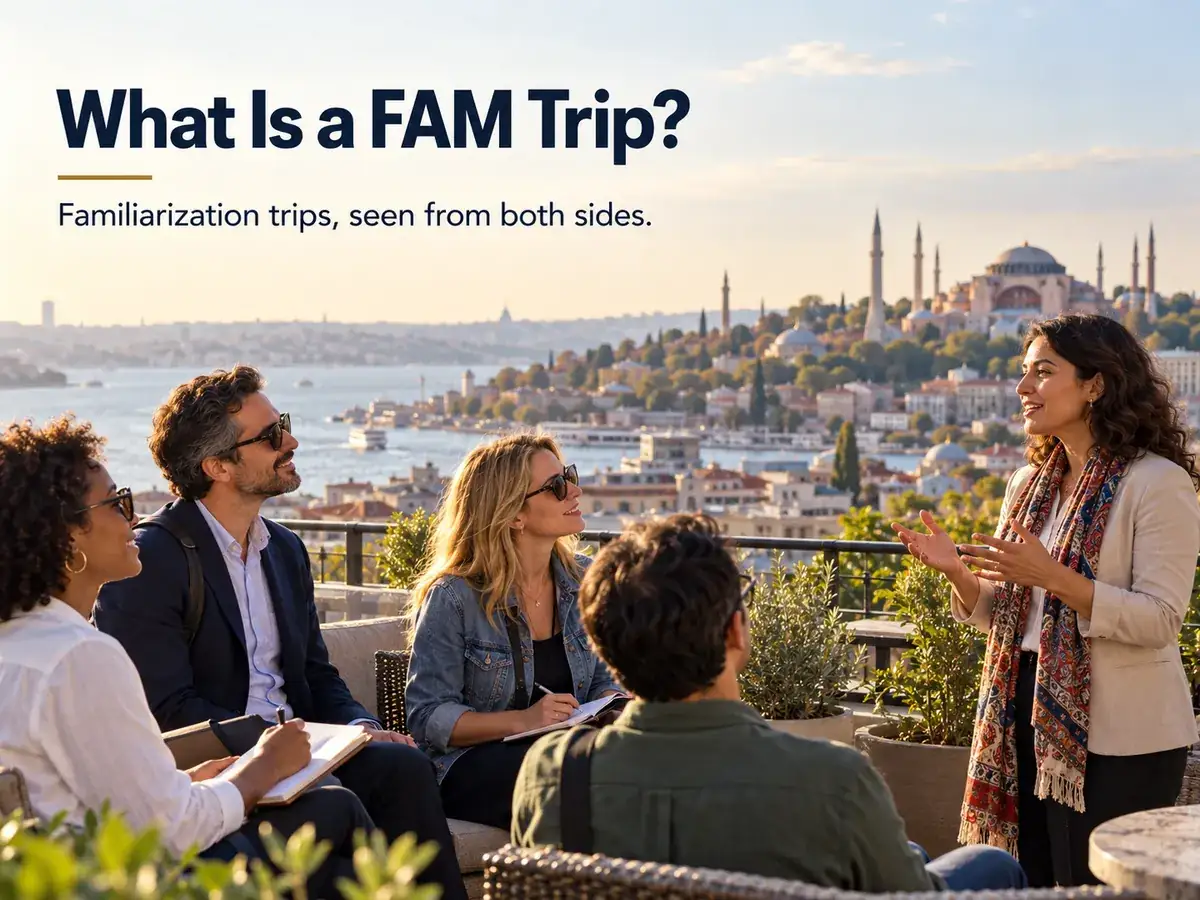
A FAM trip, short for familiarization trip, is a hosted visit that introduces a destination, a hotel, a venue or a tourism product to the people who sell it or bring business to it: travel agents, tour operators, meeting and incentive planners, and sometimes journalists. The host, usually a destination organization, a convention bureau, a hotel group, an airline or a DMC, covers most or all of the costs. In return it hopes that the guests will recommend, sell or book what they have seen.
That exchange is simple, and so is the main risk. A FAM trip is easy to run as a short holiday with a sales presentation attached, and many are. The ones that produce business are organized around a different question: what does this particular buyer need to see to send a group here?
Who hosts them, and why
For a destination, a FAM trip is a way to replace a brochure with an experience. A planner who has stood in the congress centre, eaten in the restaurants and sat in the traffic between the airport and the hotels can sell the place to a client with a confidence that no presentation gives. A destination management organization or a convention bureau usually leads, often with hotels, venues and DMCs sharing the costs and the program.
Hotels and resorts run their own FAM trips for the agents and operators who fill their rooms. Airlines join when they open a new route and need someone to sell it. New venues, newly renovated hotels and destinations trying to enter the meetings market tend to use them most, because they have the most to explain.
Who goes
The guest list decides whether a FAM trip is worth its cost. The strongest groups are small and specific: a small group of planners, often around a dozen, who handle the kind of business the destination wants, from markets with direct flights, and with events or groups in their pipeline. A trip for incentive buyers needs people who actually book incentive travel. A trip for association congress organizers needs people who sit on site selection committees or advise them.
Mixing everyone together, agents who sell weekend breaks with planners who run thousand-person congresses, produces a program that serves nobody. Each group wants to see different things, and both leave thinking the trip was not quite for them.
A FAM trip is only as good as the decisions its guests are in a position to make. The most common weakness I see is a guest list built to fill seats rather than to reach people with real business. Hosts can ask for a short questionnaire before confirming a place: which events or groups the guest is working on, for when, and with what requirements. It looks bureaucratic, and it is the single best predictor of whether the trip will produce anything.
What a useful program looks like
Most FAM programs follow the same pattern: a welcome dinner, a city tour, a hotel visit every few hours, a gala evening and a farewell lunch. Guests end the trip tired and full, with a phone full of photos of hotel rooms that look much alike. What they rarely get is the information they would need to propose the destination to a client with confidence.
A useful program behaves more like a series of short site inspections. It shows the meeting spaces in use, not empty. It includes a transfer at the hour a real group would travel. It introduces the guests to the people they would actually work with, the DMC’s operations team, the venue’s event coordinator, the hotel’s group reservations desk, rather than only the sales managers. It leaves time for questions about prices, availability and contract terms. And it is honest about weaknesses: a planner who learns about a destination’s limits during the FAM trip will still propose it, with the right expectations; one who discovers them during their client’s event will not come back.
A FAM trip is not a site inspection
The two are often confused. A FAM trip introduces a destination or product to buyers who may send business in the future. A site inspection checks one place against one specific event that already exists, with dates, numbers and a program. A FAM trip is broad and paid for by the host. A site inspection is narrow, and the client or its agency often pays at least part of the travel.
The line blurs all the time. A planner with a live request may join a FAM trip and use it as an inspection, and good hosts will make room for that by arranging separate meetings and visits for guests with real projects. Those guests are the reason the trip exists.
Who pays, and what is expected in return
Hosted travel always raises a fair question about obligations. Most FAM trips are paid for by the host on the understanding that the guest is a genuine buyer who will consider the destination. That understanding is worth keeping clear on both sides. Hosts should not expect guaranteed bookings in exchange for a trip, and guests should not accept places on trips to destinations they have no intention of proposing.
Corporate and association planners often work under their own rules on gifts and hosted travel. Some may join only if their employer pays for the flight, or may need to declare the trip. A host that asks about this in advance, and offers a way to comply, makes it easier for exactly the senior buyers it most wants to attend.
Journalist trips work differently and need their own clarity: a press trip is not a purchase of coverage, and honest hosts say so.
How to measure a FAM trip
The usual measure is satisfaction: did the guests enjoy it? That tells the host very little. Better measures look at what happened afterwards. How many guests sent a request for proposal within six or twelve months? How many site inspections followed? How many events or groups were actually confirmed, and what were they worth? These numbers arrive slowly, which is why few hosts collect them, but they are the only ones that justify the next trip.
The other measure, less often written down, is what the guests said about the destination’s weaknesses. A destination that collects that feedback and acts on it, through tourism product development and better tourism partnerships between its hotels, venues and transport, gets more from a FAM trip than any sales result.
Virtual and hybrid versions
Since the pandemic, many hosts have added virtual FAM trips: live video tours of venues, online presentations by hotels and DMCs, and recorded walkthroughs that buyers can watch when they choose. They are cheaper, they reach more people and they suit buyers who cannot spare four days away from the office. They also remove most of what made the format valuable. A buyer watching a screen sees what the camera is pointed at, never the walk from the coach, the noise in the lobby or the way the staff behave when nobody is presenting.
The sensible use is as a first step. A short virtual session can help buyers decide whether a destination deserves a closer look, and the host can then invite the ones with real projects on a smaller, more focused physical trip. Used this way, the virtual format improves the guest list of the physical one, which is where most FAM trips are weakest.
Small destinations, new venues
FAM trips matter most to places that are not yet on buyers’ lists: second cities, newly opened venues, regions that have recently built a congress centre or a group of meeting hotels. For them, a buyer’s first visit is often the only chance to show that the infrastructure exists and works. It is also the moment when overselling does the most harm. A new destination that promises what it cannot yet deliver, more rooms than are ready, transport links still under construction, a venue whose technical team has never run a large event, will lose the buyer’s trust on the first project.
A better approach is to be precise about what is ready now and what will be ready later, to show the kinds of events the destination can already host well, and to let buyers meet the local suppliers who will do the work. Buyers are used to hearing big plans. What they remember is a host who told them plainly what fits and what does not yet.
From the guest’s side
For planners, a FAM trip is worth the time when they arrive with a purpose. Before going, it helps to know which of their current or likely events the destination might suit, and to ask the host in advance for the visits and meetings that would make that assessment possible. During the trip, the most useful conversations usually happen away from the presentations: with the operations people, the transport company, the venue technician. Afterwards, a short written note while the details are fresh makes the trip usable months later, when a client asks about a city the planner saw once.
A FAM trip done well is one of the few moments when a destination and the people who sell it can look at it together with open eyes. Done badly, it is a pleasant few days that both sides forget by the next season.