Contents
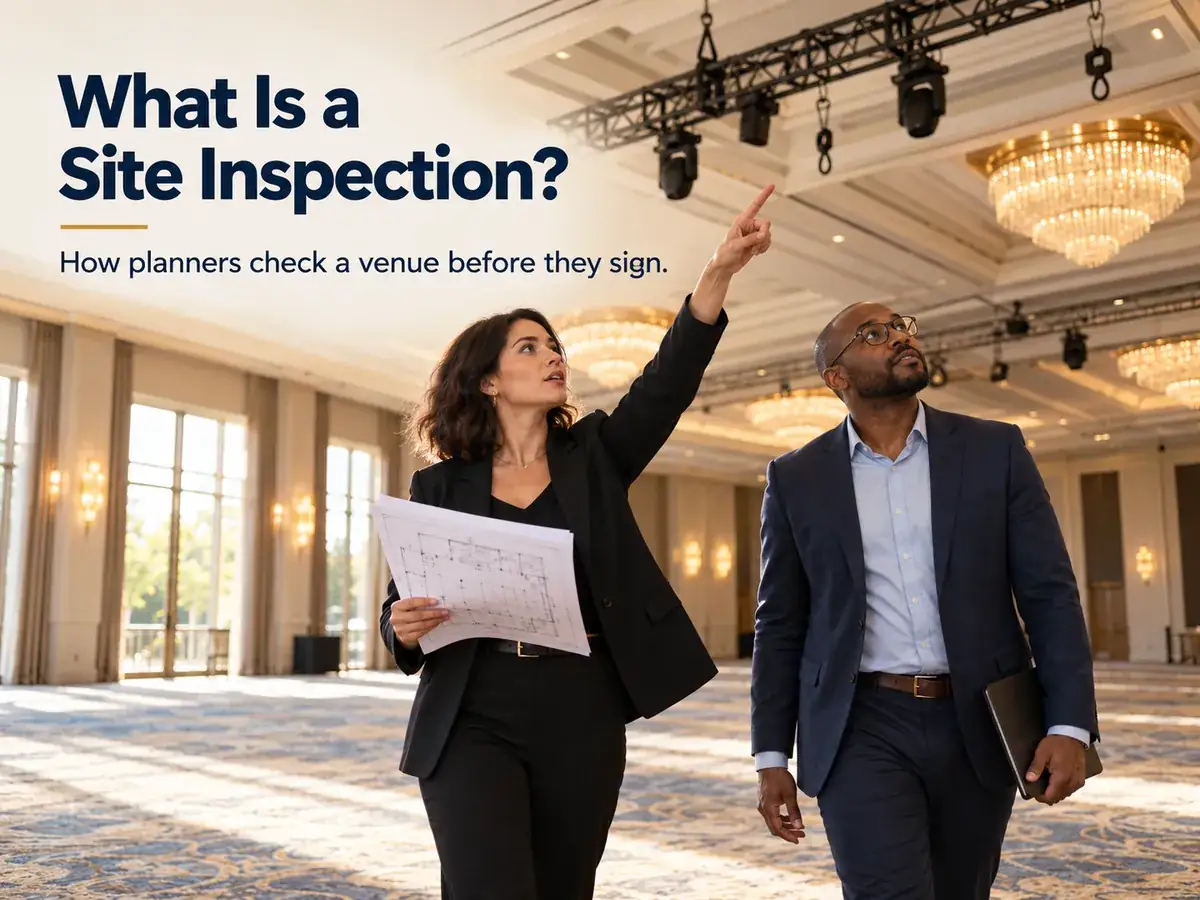
A site inspection is the visit an event planner, an agency or a client makes to a venue, a hotel or a whole destination before signing a contract, to see with their own eyes what the proposal promised. It is sometimes called a site visit or a recce, and in congress work it is usually organized by the venue or the local convention bureau. Its purpose is narrow and practical: to find out whether this place can host this particular event, with these people, on these dates, and to write down everything the contract will later need to cover.
That last part is what separates a real site inspection from a pleasant afternoon. A walk through a ballroom with a sales manager shows you the best version of the room. The inspection is there to find the other versions.
Who goes, and when
On the client side, the people who should go are the ones who will live with the decision: the event owner, the person who will run operations on the day and, for larger events, someone who can sign. Sending only the most senior person often produces a decision about atmosphere. Sending only the operations lead produces a list of problems with no one able to weigh them against the price. The useful group is small, two or three people, each looking for something different.
Timing matters more than it seems. Too early, before the program and numbers are known, and the visit turns into general sightseeing. Too late, after the contract is signed, and the inspection only tells you what you will have to work around. For most events the right moment is when two or three options remain on the shortlist and the draft program is clear enough to walk through.
When possible, visit at the same time of day and the same season as the event. A terrace that is perfect at eleven in the morning in May can be unusable at seven in the evening in October, and a hotel lobby that is calm on a Tuesday may be packed with weddings on the Saturday your gala is booked.
Walk the guest’s day, not the sales tour
The venue will offer a tour that starts in its best room. A better approach is to follow the order of your own program: arrive as a guest would, from the airport or the station, and walk through the day minute by minute. Where does the coach stop? How many minutes does it take to reach the registration desk from the drop-off point, and is there shelter on the way if it rains? Where do two hundred people leave their coats? How long does it take to get from the plenary hall to the breakout rooms, and does that route pass through a corridor that the hotel’s other guests also use?
Walking the program this way exposes the details no brochure includes. The plenary hall may seat the right number of people, but only if the stage is small and nobody uses a rear screen. The breakout rooms may be on another floor, served by two lifts. The dinner venue may be fine for the meal and impossible for the awards ceremony that follows it, because the ceiling is too low for the screen.
What to check
The checklist depends on the event, but a few areas almost always deserve time:
- room dimensions, ceiling height, pillars, load-bearing limits and where power and rigging points actually are;
- access for equipment: loading bay, service lift size, the route from the truck to the room and the hours when deliveries are allowed;
- daylight and blackout, noise from neighbouring rooms, air conditioning that can be controlled per room;
- accessibility for guests and speakers, including the stage, the toilets and the route from the entrance;
- Wi-Fi under real load, mobile coverage in the basement halls, and who in the building handles technical problems;
- kitchen capacity and how many people can be served hot food at the same time;
- other events booked in the building on the same dates;
- emergency exits, assembly points and the venue’s own safety rules, which shape the event safety plan.
The list is not there to be ticked in front of the sales manager. It is there to make sure the questions get asked while someone who knows the building is standing next to you.
The questions venues answer only when asked
Some information never appears in a proposal because nobody volunteers it. Is any renovation planned before the event date? Which suppliers are exclusive, so that the audiovisual company or caterer cannot be your own? What does the venue charge for things that look free, such as power, cleaning, security staff, rigging or the use of the loading bay? What happens to the room rate if fewer people register than expected, and how is the hotel room block released?
The answers often matter more to the budget than the headline room rental. A venue that seems cheaper can turn out to be more expensive once its exclusive suppliers and service charges are added, and the event budget should be updated with what the inspection revealed, not with what the first proposal said.
Would you be comfortable running the event in this building if the person who showed you around were on holiday that week?
It is a useful question to ask yourself on the way out. The sales manager who answered everything so well may not be on duty on the day; the banqueting team, the night technician and the security staff will be. Meeting at least one of them during the visit tells you a great deal.
Inspecting a destination, not only a venue
For congresses, incentive trips and large corporate meetings, the inspection often covers a whole city. The planner visits two or three hotels, the congress centre, possible dinner venues, the airport and the routes between them. A convention bureau or a DMC usually organizes this kind of visit, and the program it prepares is a test in itself: does it show you what your event needs, or what the city likes to show everyone?
Ask for travel times at the hour your transfers will run, not in the quiet afternoon. Ask to see the venues you might use if it rains. Ask what other large events are in the city that week. These are the questions that help you judge a meetings destination on its readiness rather than its reputation.
A site inspection is not the same as a familiarization trip, even though the two are often confused. A FAM trip introduces a destination to buyers who do not yet have a specific event in mind. A site inspection checks one place against one event that already exists.
Who pays for the visit
Practices vary. For congresses, the convention bureau, the venue and the hotels often cover the inspection costs of an association’s decision makers, since it is part of winning the bid. For corporate events, venues and hotels may host the visit, while the client or its agency pays the travel. Agencies sometimes include an inspection trip in their fee. Whatever the arrangement, it should not shape the conclusion: a planner whose visit was paid for by a venue still owes the client an honest report, and good venues expect nothing less.
Virtual inspections have a place, with limits
Video walkthroughs, 360-degree tours and detailed floor plans have made it possible to shortlist venues without travelling, and for repeat venues or small meetings they may be enough. They show layout and finish well. They do not show noise, smell, the walk from the coach, the state of the back corridors or the mood of the staff. For a large or high-stakes event, the virtual tour is best used to decide which places deserve a physical visit, not as a replacement for it.
What should come out of the visit
The inspection is only useful if it produces something written. On both sides of the table, I have found that a short report, written within a day or two, tells the team far more than a folder of photos on someone’s phone: what was seen, what was promised verbally, what still needs to be confirmed, and which of those promises must appear in the contract. Verbal assurances made during a site visit, such as a free upgrade, a late access time or a waived charge, have a way of disappearing when the person who made them changes jobs.
The same notes should feed back into the event brief and the run of show, since a site inspection often changes the program itself: a coffee break moved because the foyer is too small, a session shortened because the walk between halls takes longer than expected. Those small adjustments, made months in advance, are a large part of why some events feel effortless on the day.