Contents
- What happened with EES in September 2026?
- Which countries asked for more time?
- What problems did airports and airlines report?
- Who is checked, and what does a first entry involve?
- How many travellers has EES registered?
- What does it mean for the sector?
- What is my reading of the delays?
- What does this commentary cover?
- What to watch next
- Analysis result
- Frequently asked questions
- Sources
Nine Schengen countries, including France, Greece, Portugal and Italy, delayed full fingerprint checks under the Entry/Exit System after flexibility rules ended on 6 September 2026. Long summer queues and problems at a few border points preceded the move. The EU has said it will not penalise suspensions when queues build.
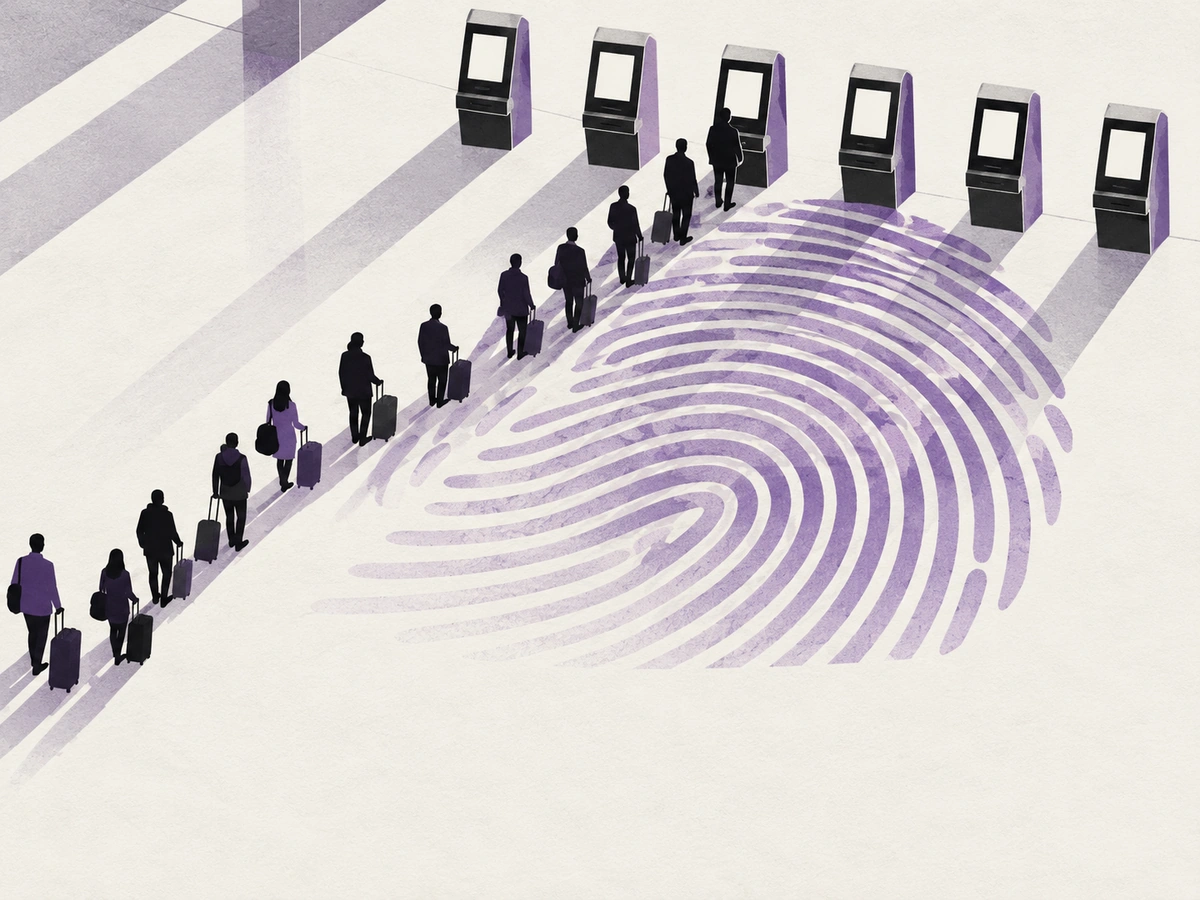
At the start of the summer of 2026, some passengers arriving at European airports queued outside terminal buildings and on exposed aprons because border control could not process arrivals quickly enough. That is the description Europe’s airport and airline associations gave in a letter to the European Commission on 1 July [3]. They reported waits at border control of up to five hours during peak periods [3]. By September, the formal flexibility that let states pause biometric checks had ended, and nine countries were still asking for more time.

What happened with EES in September 2026?
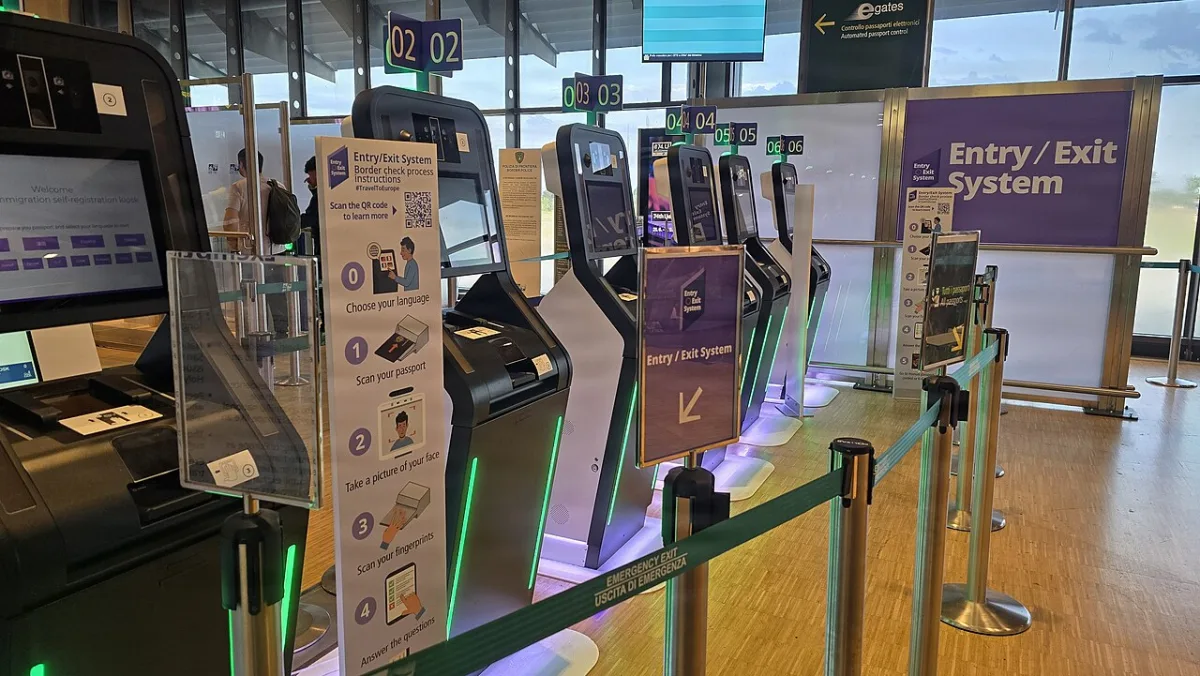
The Entry/Exit System replaces passport stamps with a digital record of entries and exits of non EU nationals on short stays, including fingerprints and a facial image [1]. It began a progressive roll out in October 2025 and became fully operational at all Schengen external border crossing points on 10 April 2026 [1][2]. During the first months, states could suspend the collection of biometric data at busy crossing points. That flexibility ended on 6 September 2026 without an official extension [5].
On 14 September, The Guardian reported that nine countries, including France, Greece, Portugal and Italy, were delaying full fingerprinting for non EU citizens at some border points [6]. The paper said the delays were not countrywide; fingerprinting had started at the Eurostar terminal in Brussels and at Antwerp port, and large hubs such as Frankfurt and Schiphol were taking biometrics [6]. EU sources told the paper that only 12 airports out of 1,500 border crossing points were still having issues [6]. On 13 October, the same paper reported that the EU will not penalise states that suspend the system when queues build [7].
| Date | Step | Source |
|---|---|---|
| October 2025 | Progressive roll out starts | European Commission; eu-LISA |
| 10 April 2026 | Fully operational at all Schengen external border crossing points; carrier checks begin | European Commission; eu-LISA |
| 1 July 2026 | ACI EUROPE, A4E and IATA ask for full suspension powers in July and August | Open letter |
| 7 July 2026 | Nine countries ask the Commission to keep flexibility beyond 6 September | Politico |
| 6 September 2026 | Flexibility period ends without an official extension | The Guardian |
| 14 September 2026 | Nine countries still delaying full fingerprint checks at some points | The Guardian |
| 23 to 24 September 2026 | eu-LISA board reviews EES and ETIAS planning | eu-LISA |
| 13 October 2026 | EU will not penalise suspensions when queues build | The Guardian |
Which countries asked for more time?
In a joint letter dated 7 July and reported by Politico, Belgium, France, Germany, Greece, Italy, Malta, the Netherlands, Portugal and Switzerland asked the Commission to allow the emergency mechanism to continue beyond 6 September [4]. The ministers said they supported the system but that its first months had exposed significant difficulties [4]. A Commission spokesperson replied that the law already contained flexibilities and that the Commission was in close contact with the few member states experiencing difficulties [4].
The Guardian’s September report named Spain as a country that had early problems and was implementing EES fully [6]. It also said France had not introduced checks at the Port of Dover, where French police carry out controls on UK soil [6]. On 6 September, the paper reported that the kiosks procured by Eurotunnel, the Port of Dover and Eurostar at London St Pancras were still not operational, and that Eurostar enrolments were being done manually by border officers [5].
| Group | Countries | Source |
|---|---|---|
| Signed the 7 July letter asking for more flexibility | Belgium, France, Germany, Greece, Italy, Malta, the Netherlands, Portugal, Switzerland | Politico, 8 July 2026 |
| Delaying full fingerprint checks in September, named as holiday destinations | France, Greece, Portugal, Italy | The Guardian, 14 September 2026 |
| Implementing EES fully after early problems | Spain | The Guardian, 14 September 2026 |
What problems did airports and airlines report?
The industry letter of 1 July was signed by ACI EUROPE, Airlines for Europe and IATA [3]. It said waiting times had increased significantly since the full roll out in April, with flight delays, missed connections and pressure on frontline staff [3]. It noted that smaller airports serving tourism destinations were affected as much as large hubs [3]. The associations asked for full suspension powers in July and August and for a permanent flexibility mechanism by September [3].
The letter also listed the conditions the industry wants before suspensions end: adequate staffing at airport border points, a stable central platform and national interfaces, working kiosks and automated gates, and a pre registration app in every member state [3]. On the last point, The Guardian reported in September that the Travel to Europe app was showing as operational only in Sweden and Portugal, with seven countries expected shortly [6]. An EU example cited by the paper described a small regional airport where 3,000 passengers could arrive in an hour at peak but there were only four booths for biometric capture [6].
The Commission’s view has been different. The industry letter quoted a Commission spokesperson saying, as reported by the Financial Times, that long waits were often linked to pre existing factors such as flights concentrated in specific slots [3]. I report both positions because each rests on a different measure: the Commission looks at whether the system is deployed, while airlines look at how long passengers wait.

Who is checked, and what does a first entry involve?
The system applies to non EU nationals coming for short stays, whether they need a visa or not [1]. At the first entry under EES, the border record includes data from the travel document, fingerprints and a facial image, which replace the passport stamp [1][2]. Later crossings use the stored record, so the first trip after the start of EES is the slow one for each traveller. That detail matters for groups, because a delegation of first time visitors will all take the longer route on the same day.
The system also changes what carriers must do. Since 10 April 2026, air, sea and international coach operators must check, before departure, that travellers holding a single or double entry visa still meet the entry conditions, using a web service run by eu-LISA [2]. The agency says the interface does not give carriers access to personal travel histories [2]. For most leisure and business travellers from visa exempt countries, the visible change remains the first registration at the border.
How many travellers has EES registered?
The Commission said on 10 April that more than 52 million entries and exits had been registered, with over 27,000 refusals of entry, of which over 700 people were identified as posing a security risk [1]. In September, EU sources quoted by The Guardian put the totals at about 200 million registrations and 70,000 refusals of entry, up from 43,700 in June [6]. The two sets of figures come from different owners and may not use the same definitions, so I keep them apart in the chart below.
Refusals of entry keep rising
Unit: people refused entry to the Schengen area since EES started in October 2025, cumulative. Light bar: official Commission figure. Dark bars: figures from EU sources as reported by a newspaper, not an official release.
eu-LISA, the agency that runs the system, has said it will begin regular releases of aggregated and anonymised EES statistics [2]. Those releases will be the right basis for any comparison over time. Until then, the September figures are reported totals, not official statistics.
What does it mean for the sector?
For airlines, the issue is operational. Missed connections and half empty aircraft at gate closing, as the industry letter described, are costs that fall on carriers [3]. Since 10 April, carriers also have a legal duty to check certain visa holders before departure through an eu-LISA interface [2]. Airlines will plan the 2027 summer schedule without knowing whether suspensions will still be tolerated.
For hotels, the effect is at the edge of the stay. A late arrival after a long border queue changes check in times, restaurant covers and transfer bookings. Properties near airports and in resort areas served by smaller airports, which the industry letter described as equally affected, are the most exposed [3]. For hotels, arrival windows now depend on border times more than on flight times.
For agencies and DMCs, the main variable is buffer time. Transfer timing now depends on the border rather than the landing time, especially for first entries when travellers must register their biometrics. For destination management organizations, airport arrival is the first impression of the place, and coordination with border authorities and airports on peak days is part of visitor flow management.
For congress and event organizers, the attendee journey now starts at the border for non EU delegates. For 2027 events, this affects joining instructions on first entry registration, arrival times before morning sessions and the spacing of transfers to opening receptions. Large groups arriving on one flight are the case where a short delay becomes a missed session.


What is my reading of the delays?
My reading is that the system works as a database but not yet as a passenger process at every point. The Commission’s figures show that registrations and refusals are being recorded at scale [1]. The industry figures show that the time cost of that recording is uneven and concentrated at peak hours and at a few sites [3][6]. Both can be true at once, which means the worst site on an itinerary, not the average, sets the risk.
My second point is that the informal tolerance described in October is useful for 2026 but not a plan for 2027 [7]. Travel businesses need to know whether suspensions will remain possible next summer, because that decision affects schedules, staffing and group programmes. The eu-LISA board discussed EES planning in September but did not publish a decision on this point [8].
My third point concerns the order of reforms. The EU’s next border step, ETIAS, has no start date, and the travel trade has argued that it should not begin until EES works properly [7]. I agree with sequencing them, because one new system at a time is easier to explain to travellers. The open question is how long the stabilisation phase will last, which also shapes tourism trends for 2027.
What does this commentary cover?
What to watch next
| Indicator | What it shows | When to publish |
|---|---|---|
| Commission position on suspensions | Whether informal tolerance becomes a formal rule | Before the 2027 summer season |
| eu-LISA EES statistics | Aggregated entries, exits, overstays and refusals | Regular releases announced by eu-LISA |
| Travel to Europe app coverage | Countries where pre registration works | Monthly |
| Cross Channel biometric checks | Kiosks at Dover, Eurotunnel and St Pancras in use | When French authorities give clearance |
| Airport queue reports | Peak hour waiting times reported by airports and airlines | Easter and summer 2027 |
The first indicator matters most for 2027 planning. If the Commission confirms that states may pause biometric checks at peak times, the risk of long queues falls but the timing of full checks stays uncertain. If it does not, Easter 2027 will be the first real test of the system at full strength. In both cases, the eu-LISA statistics releases are the official reference for figures [2].
Analysis result
EES has been fully operational since 10 April 2026, and official figures show tens of millions of crossings recorded [1][2]. The flexibility period ended on 6 September, yet nine countries still needed more time at some crossing points, and the EU has said it will not penalise suspensions when queues build [5][6][7]. For hotels, agencies, airlines and organizers, arrival timing now depends on the border rather than the landing time. A border system is finished when the queue is, not when the software is.
How would this change your plans for the next twelve months?
Frequently asked questions
When did EES become fully operational? On 10 April 2026, at all Schengen external border crossing points, after a progressive roll out that began in October 2025 [1][2].
Which countries delayed full checks? Belgium, France, Germany, Greece, Italy, Malta, the Netherlands, Portugal and Switzerland asked for more flexibility in July, and The Guardian reported in September that nine countries were still delaying full fingerprint checks at some points [4][6].
How many people has EES refused entry? The Commission reported over 27,000 refusals by 10 April 2026. EU sources quoted by The Guardian put the figure at 70,000 in September [1][6].
Did airlines object? Yes. ACI EUROPE, A4E and IATA wrote to the Commission on 1 July 2026 asking for powers to suspend EES during July and August, citing waits of up to five hours [3].
Will travellers be penalised for gaps in checks? No. The gaps concern border authorities. The Guardian reports that the EU will not penalise states that suspend the system when queues build [7].
Sources
- European Commission, Migration and Home Affairs, Entry/Exit System (EES) is fully operational, 10 April 2026
- eu-LISA, Entry/Exit System fully deployed across the EU, 10 April 2026
- ACI EUROPE, A4E and IATA, Open letter to the President of the European Commission on the Schengen Entry/Exit System, 1 July 2026
- Politico Europe, 9 countries ask Brussels to ease new border checks rollout, 8 July 2026
- The Guardian, Travellers to EU face renewed queues as border check flexibility rules expire, 6 September 2026
- The Guardian, EU countries delay EES border checks, 14 September 2026
- The Guardian, Britons travelling to EU countries told not to apply for delayed Etias visa waiver, 13 October 2026
- eu-LISA, Management Board reviews implementation of key EU IT systems, 24 September 2026