
Contents
- What happened to the ETIAS start date?
- What will ETIAS require once it starts?
- Why is ETIAS linked to the Entry/Exit System?
- Which travel flows will feel it first?
- What does it mean for the sector?
- What is my reading of the delay?
- What does this commentary cover?
- What to watch next
- Analysis result
- Frequently asked questions
- Sources
ETIAS, the EU travel authorisation for visa exempt visitors to 30 European countries, is not in operation and has no start date. The official site says no applications are collected yet. The fee is set at €20, and the EU will announce the launch date several months in advance.
In October 2026, a traveller in London searching for the new European travel permit would find the official ETIAS site, a €20 fee and a short notice. ETIAS is currently not in operation, and no applications for travel authorisations are collected at this point [1]. The same search would also turn up many unofficial sites offering to apply on the traveller’s behalf. ABTA, the UK travel association, has told travellers not to apply, and says European authorities believe over 150 such websites already exist [6].

What happened to the ETIAS start date?
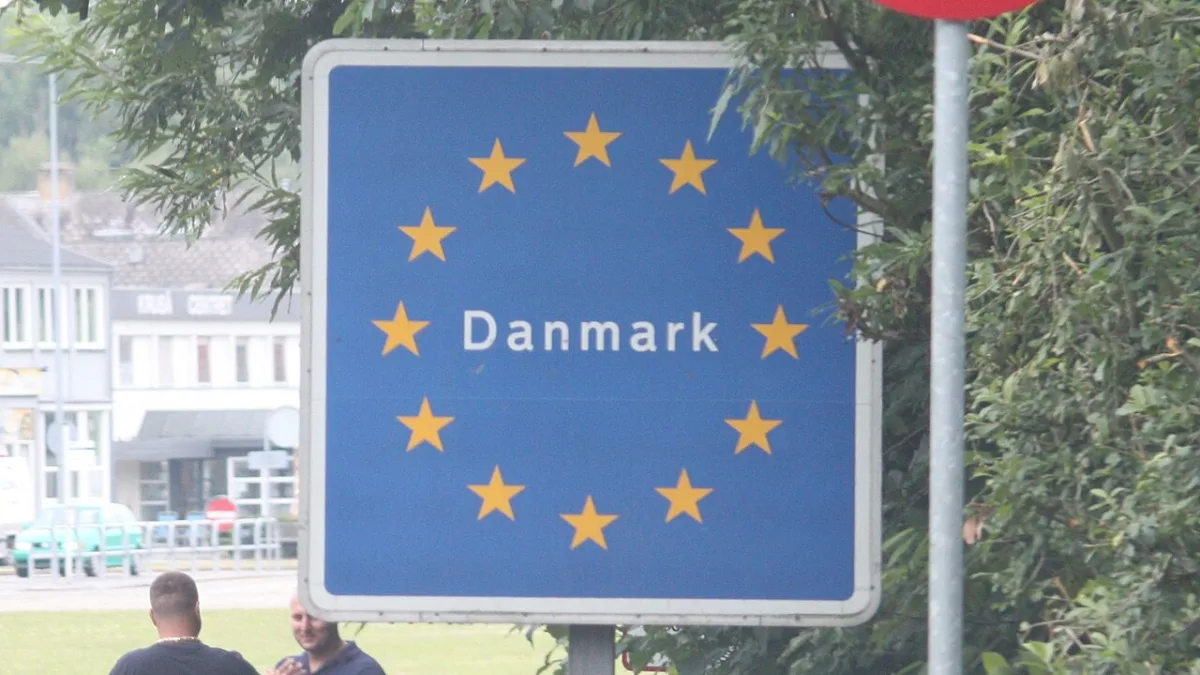
Until the summer of 2026, the official ETIAS page said the system would start in the last quarter of 2026. In August, that line was removed and replaced by the current notice that the system is not in operation, as The Independent reported on 13 August [5]. A European Commission spokesperson told the paper that preparations were ongoing and that, once all conditions are in place, the Commission will set a date for the start of the system [5]. The official site adds that the EU will announce the specific date several months before launch [1].
The Independent also quoted one report that expected a revised timeline after the September 2026 board meeting of eu-LISA, the EU agency that develops the system, with a 2027 launch the most likely outcome [5]. That board met in Strasbourg on 23 and 24 September 2026. Its published summary says members discussed the latest developments on EES and ETIAS, including implementation planning and the next steps toward upcoming milestones, but it gives no start date [3]. The board also tasked eu-LISA with detailing the preconditions for an updated interoperability roadmap for 2027 and 2028 [3].
On 19 October 2026, eu-LISA reported that its Management Committee had set 15 priorities for 2027, and that a major focus for 2027 will be ETIAS [4]. That is a statement of work priority, not a launch date. My reading is that 2027 is now the realistic window for the system to begin, but no official source has confirmed a month or even a quarter.
| Date | Step | Source |
|---|---|---|
| 16 November 2016 | Commission adopts the ETIAS proposal | European Commission |
| 12 September 2018 | Regulation (EU) 2018/1240 adopted; in force 9 October 2018 | European Commission |
| October 2025 | Fee set at €20 instead of €7, subject to Council and Parliament review | European Commission |
| August 2026 | Last quarter 2026 launch line replaced by not in operation notice | Official ETIAS site, reported by The Independent |
| 23 to 24 September 2026 | eu-LISA board reviews ETIAS planning; no date announced | eu-LISA |
| 6 to 7 October 2026 | eu-LISA names ETIAS a major focus for 2027 | eu-LISA |
What will ETIAS require once it starts?
ETIAS is a travel authorisation for visa exempt travellers visiting 30 European countries for short stays of up to 90 days in any 180 day period [2]. It will apply to travellers from countries such as the UK, the US, Australia and Canada [5][6]. The European Commission says the fee has been set at €20 instead of the €7 agreed when the regulation was adopted, reflecting inflation since 2018 and new technical features, and that the new fee will enter into effect once ETIAS is operational [2]. Travellers under 18 and over 70 will not pay the fee, according to The Guardian, and The Independent reports that some family members of EU citizens are expected to be exempt too [5][6].
The legal base is not new. The Commission adopted the proposal on 16 November 2016, and Regulation (EU) 2018/1240 was adopted on 12 September 2018 and entered into force on 9 October 2018 [2]. The system has therefore been in law for eight years without operating. That gap is the core of the story for the travel sector.
The fee is in line with similar schemes elsewhere. The UK charges £20 for its electronic travel authorisation, which covers visits of up to six months [7]. The United States raised the ESTA fee from $21 to $40 from 30 September 2025 [8]. The Commission itself says the higher ETIAS fee brings it in line with similar programmes around the globe [2].
| Scheme | Status | Fee | Validity or stay |
|---|---|---|---|
| ETIAS, 30 European countries | Not in operation, no start date | €20 (earlier set at €7) | Short stays up to 90 days in any 180 days |
| UK ETA | In operation | £20 | Visits of up to 6 months |
| US ESTA | In operation | $40 since 30 September 2025 (earlier $21) | Visa Waiver Program visits |
Why is ETIAS linked to the Entry/Exit System?
ETIAS was planned to follow the EU’s Entry/Exit System, which registers non EU travellers with fingerprints and facial images at the external border. The Guardian reports that both systems have been postponed several times, and that problems after the EES launch, including software issues at French entry points, have kept ETIAS on hold [6]. EES is in full operation, but border authorities have been told the EU will not enforce penalties if they suspend the system at entry points when queues grow [6].
ABTA’s position is that ETIAS should not start until EES is fully operational and working properly [6]. Its surveys, reported by The Guardian, found that awareness of the new border requirements rose from 41% in 2024 to 56% in 2026. Only 46% of visitors to Europe reported full EES checks this summer, and 13% queued for an hour [6]. These are industry survey figures, not official data, and the report does not give sample sizes.
Awareness is rising before any start date
Unit: share of respondents in ABTA surveys of UK travellers, as reported on 13 October 2026. Survey figures, not official statistics. Light bar: earlier year.

Which travel flows will feel it first?
The first group is short break travel from the UK into the Schengen area. These trips are often booked weeks or days before departure, so a new pre travel step has more chance of being missed. The UK has also had its own ETA since the scheme opened to visitors, so British travellers will face authorisation rules in both directions once ETIAS starts [7]. Clear guidance at the time of booking will matter more for this group than for any other.
The second group is long haul leisure and business travel from North America and Australia. These trips are planned further ahead, and travellers from the US already know the logic of an online authorisation from ESTA [8]. For them, the main risk is confusion between official and unofficial sites rather than lack of time. The third group is multi country itineraries, such as cruises and rail tours, where a single ETIAS will cover all 30 countries [2]. That is simpler than a set of national rules, but only if the traveller applies before the first border.
For events, the timing question is the spring and autumn congress seasons of 2027. If the Commission gives several months of notice, a launch in the middle of 2027 would be announced while many delegates are already registered [1]. For organizers, this points to one update to joining instructions, rather than an assumed date or an assumed further delay.
What does it mean for the sector?
For hotels, the delay removes one source of friction for 2026 and probably early 2027 arrivals from the UK and North America. It does not remove the risk. Once a date is announced, properties that depend on short notice bookings from visa exempt markets are likely to see a period in which some guests are unaware of the new step. Clear pre arrival messages, linked to the official site only, will reduce failed trips.
For agencies, DMCs and tour operators, the main effect is on traveller information. Group programmes for 2027 face an open point: ETIAS may apply, and the official site is the only reference [1]. Agencies that offer to apply for clients will be operating in a market that ABTA and Frontex already link to scam sites and inflated fees [6]. Until the launch there is nothing to apply for, and the official site remains the reference [1].
For airlines, ETIAS will add a check at boarding, because carriers will need to confirm that passengers hold a valid authorisation before they fly. The industry learned from EES that the first months of a new border system can be uneven [6]. Airlines will want enough notice to update systems and staff training, which is why the EU’s promise of several months of notice matters [1].
For congress and event organizers, ETIAS becomes part of the attendee journey for events in Europe with delegates from visa exempt countries once it starts. As of now, ETIAS is not yet required, and its status is published on the official site. For destination management organizations, the delay leaves time before guidance in several languages is needed on the day the start date is announced.

What is my reading of the delay?
My reading is that the delay is a sign of caution rather than of failure. The EU has chosen not to launch a second border system while the first one is still being stabilised [3][6]. For travellers and the industry, that is a better outcome than a rushed start during a peak season. The cost is uncertainty, because planners still cannot put a date in their 2027 calendars.
My second point concerns the fee. At €20, ETIAS will cost roughly the same as the UK ETA in nominal terms and less than half of the US ESTA [2][7][8]. For most leisure and business travellers, the fee will not change the decision to travel. The time and attention needed to apply correctly, and the risk of using an unofficial site, matter more than the price.
My third point is about communication. The official message is short and consistent: not in operation, no applications, several months of notice [1][2]. The sector can help by repeating that message exactly, without adding dates that no official source has given. This fits the wider pattern described in tourism trends for 2027, where border processes are becoming part of the travel product.
What does this commentary cover?
What to watch next
| Indicator | What it shows | When to publish |
|---|---|---|
| Commission start date notice | The EU says it will announce the date several months before launch | Any time; check the official site |
| eu-LISA board decisions | Preconditions and roadmap for 2027 to 2028 | Next board meeting |
| EES stability at borders | Whether the parallel system runs without suspensions | Monthly |
| Fee entry into force | €20 applies once ETIAS is operational | At launch |
| Scam site warnings | Unofficial sites charging for applications | Ongoing |
The first indicator is the only one that changes plans. When the Commission announces a date, the notice period will define how long hotels, agencies, airlines and organizers have to update their guidance [1]. Until then, the official site remains the reference point for travellers. For business travel and MICE programmes, this leaves an open review point in each 2027 contract.
Analysis result
ETIAS remains a law without an operating system. The official site says it is not in operation, the last quarter 2026 target is gone, and eu-LISA has named it a major focus for 2027 without giving a start date [1][3][4][5]. The fee is set at €20 and will apply only once the system is live [2]. For the sector, the current position is that ETIAS is not yet required, the official site is the reference, and unofficial websites remain a risk for travellers. A rule that has no date yet still needs a plan.
How would this change your plans for the next twelve months?
Frequently asked questions
Is ETIAS required now? No. The official site says ETIAS is not in operation and no applications are collected at this point [1].
When will ETIAS start? No date has been set. The EU says it will announce the start date several months before launch, and the Commission will set the date once all conditions are in place [1][2][5].
How much will ETIAS cost? The fee has been set at €20 instead of the earlier €7, and it will apply once the system is operational [2].
Who will need ETIAS? Visa exempt travellers visiting 30 European countries for short stays of up to 90 days in any 180 days, including UK, US, Australian and Canadian travellers [2][5].
Should travellers apply on other websites now? No. ABTA has advised travellers not to apply, and says European authorities believe over 150 websites offering ETIAS already exist [6].
Sources
- European Union, Official ETIAS website, accessed October 2026
- European Commission, Migration and Home Affairs, European Travel Information and Authorisation System, page dated 6 October 2025
- eu-LISA, Management Board reviews implementation of key EU IT systems, 24 September 2026
- eu-LISA, eu-LISA sets strategic priorities for 2027, 19 October 2026
- The Independent, Etias travel permit delayed again, launch date removed from official website, 13 August 2026
- The Guardian, Britons travelling to EU countries told not to apply for delayed Etias visa waiver, 13 October 2026
- GOV.UK, Get an electronic travel authorisation (ETA) to visit the UK
- Federal Register, CBP immigration fees required by HR 1 for fiscal year 2025, 28 August 2025