Contents
Google began rolling out hotel booking in AI Mode on 27 August 2026, in the US and in English. Travelers choose a room and pay with Google Pay through a Continue on Google option, while the hotel or booking platform remains the merchant of record. Ten partners were named: five online travel sites and five hotel chains.
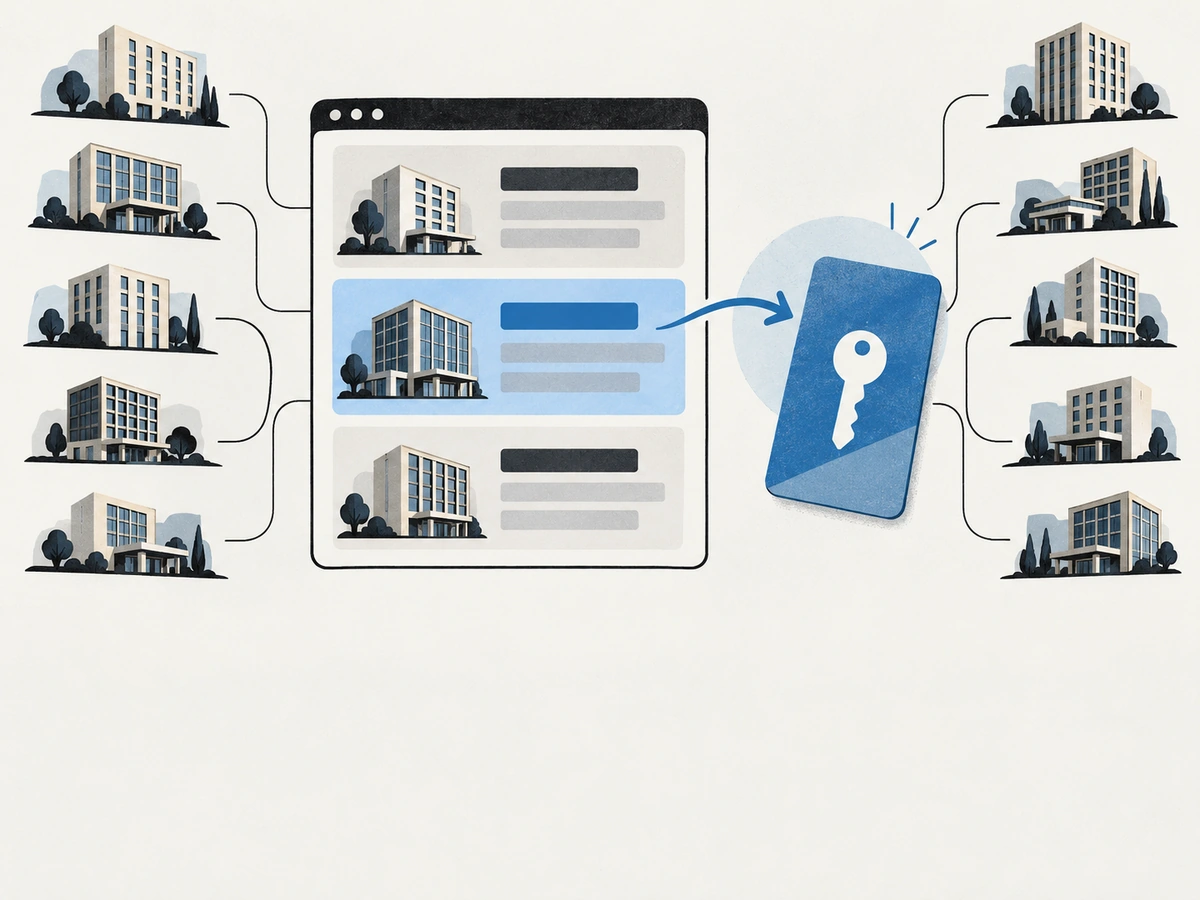
Picture a traveler in the United States who types a few lines into Google: three nights in a city, near the river, with a gym and free cancellation. A list of hotels appears with reviews and key facts, and next to some of them is a button that says Continue on Google. A few taps later, the room is booked and paid with Google Pay, without a visit to the hotel’s own website. That, in outline, is the flow Google describes for the hotel booking it began rolling out in AI Mode in late August 2026 [1].


What happened with hotel booking in Google AI Mode?
On 27 August 2026, Google announced three travel features for AI Mode, the chat style mode of its search engine [1]. The first is hotel booking. A traveler describes the trip and preferences, receives a visual list of options with guest reviews, and can choose Continue on Google next to any integrated partner [1]. From there, the traveler picks a room type, reviews details such as the cancellation policy and pays with Google Pay [1]. Google says the hotel or booking platform acts as merchant of record and handles customer service [1].
Hotel booking began rolling out in the US in English, with ten partners over the following weeks [1]. Five are online travel sites: Booking.com, Expedia, Hotels.com, Priceline and Trip.com [1][4]. Five are hotel chains: Choice Hotels International, Hilton, IHG Hotels & Resorts, Marriott International and Wyndham Hotels & Resorts [1][4]. No independent hotel or smaller platform was named [1].
Ten launch partners, split evenly
Unit: number of integrated partners named by Google at launch. US, English only.
The other two features concern flights and loyalty. Flight price tracking from Google Flights moved into AI Mode, with prices from more than 300 partner airlines and travel sites, in more than 180 countries and territories [1]. Tickets are still bought on the airline’s site or a booking platform [1]. AI Mode can also show the cost of flights and hotels in points or miles, a feature Google says is available globally, starting with Alaska Airlines and Hawaiian Airlines, American Airlines, Choice, Hilton and Wyndham, with Accor, Flying Blue, Hyatt, LATAM and Lufthansa Group to follow [1][5].
Google first said on 17 November 2025 that new AI features in Search would help turn travel plans into bookings, alongside a travel planning tool called Canvas and a wider rollout of Flight Deals [2]. Skift notes that the hotel feature arrived about nine months after it was first teased, and that some observers compare it with Book on Google, an earlier hotel booking tool that Google closed [3]. Search Engine Journal adds that Google linked hotel booking to its Universal Commerce Protocol at Google Marketing Live in May, but the August announcement did not say whether all partners use it [4].
What does it mean for the sector?
The central fact for the trade is the merchant of record. Google does not sell the room. The hotel or the online travel site charges the card, sends the confirmation and handles changes and support, Skift reports [3]. Google positions itself as the place where the choice and the payment step happen.
Its role sits between a search engine and a booking site. Skift reports that Google calls itself a transaction facilitator, not an online travel agency [3]. Google also stresses that the AI does not book on its own: the traveler chooses the room, reviews the terms and approves the payment [3].
| Feature | Status | Where |
|---|---|---|
| Hotel booking with Continue on Google and Google Pay | Rolling out | US, English |
| Merchant of record and customer service | Stays with the hotel or booking platform | All bookings |
| Flight price tracking | Live | More than 180 countries and territories, EEA excluded |
| Points and miles prices | Live, with link out to redeem | Supported locations; some features not in the EEA |
| Flight booking inside AI Mode | Not live; tickets bought on airline or booking sites | None |
| Data shared with partners | Only what is needed to complete the booking, per Skift | Not detailed by Google |
| Ranking of options and partner reporting | Not explained | Not detailed by Google |
For hotel chains, the feature is a new entry point that keeps the booking in their own systems. A chain that is an integrated partner gets the reservation as a direct booking, without an online travel site in between, if the guest chooses the chain’s own option. Whether Google charges partners for these bookings, and how, has not been published in any source [1][3][4]. That is the first question any hotel group not yet in the program would ask.
For online travel sites, the picture is mixed. Booking.com, Expedia, Hotels.com, Priceline and Trip.com are all partners, so they can sell inside AI Mode [1]. Yet the guest’s journey now starts in Google’s chat, not on their own apps. Skift reports that Google passes partners only the minimum data needed to complete a booking, such as the name, payment, occupancy and property, and withholds the wider chat context and decision signals, even in aggregate [3]. For companies that live on customer data, that is a real loss of visibility.


For independent hotels, the launch offers nothing direct for now. None was named among the partners, and Google has not said how others can join [1][4]. An independent hotel can still appear through an online travel partner, but then it pays that partner’s commission. In my experience, independents already spend a large part of their marketing effort on Google, and this feature adds one more layer they cannot yet reach on their own.
For agencies and DMCs, AI Mode competes with the planning part of their work. A traveler who can compare hotels in a chat and book in a few taps may not ask an agent for simple trips. What does not change is complex travel, such as groups, incentives and multi stop itineraries, where AI Mode offers no booking. For agencies that rely on simple hotel sales, the indicator is whether the feature spreads beyond the US.
For airlines, the change is smaller than for hotels. Flight booking is not available inside AI Mode, and tickets are still bought on airline or booking sites [1][4]. Price tracking and points pricing keep Google in the early stage of the journey. Airlines in the points program gain a new place to show award prices, with a link to redeem on their own sites [1].
For congress organizers and destination management, the issue is visibility in a new format. Delegates and visitors may start their hotel search in a chat that chooses which options to show. Search Engine Journal notes that Google has not explained how options are ordered or what reporting partners receive [4]. Without that, a destination cannot tell why some hotels appear and others do not, which weakens the use of search as a source of destination data.
What is my reading of hotel booking in AI Mode?
My reading is that Google has chosen a cautious model on purpose. By leaving the merchant role to hotels and online travel sites, it avoids taking on payments, refunds and service, which are costly and risky [1][3]. It also avoids competing head on with its largest travel advertisers. The partners, for their part, accept a loss of data in exchange for access to Google’s audience.
The second point is about who is left out. The ten launch partners are among the largest companies in lodging and online travel [1]. Independent hotels, regional chains and smaller online travel sites can only take part through those partners for now.
If AI Mode becomes a main entry point, the cost of being outside the program will rise. This is a distribution question more than a technology one. Skift describes hotels as the first real test of whether travelers will let a search assistant move from planning to booking [3]. If the test succeeds, flights and other products could follow, but Google has given no date for that [1][4].
The third point concerns Europe. Google announced hotel booking for the US only, and Search Engine Journal notes that some AI Mode travel features are not available in the European Economic Area [1][4]. For hotels and agencies in Türkiye and Europe, the feature is not yet a direct factor. It is, however, a preview of the model that could arrive, and it shows that model before it arrives.


The fourth point concerns supply. Expedia Group’s new onboarding feature, launched on 20 October 2026, names AI agentic bookings and emerging AI travel partnerships among the channels that newly connected hotels can reach [9]. The release does not name Google or any specific assistant [9]. That suggests the large platforms see AI Mode and similar tools as places where their supply must appear. In my reading, the contest is now about who supplies the inventory to the assistants and on what terms.
The fifth point is about evidence. Everything about how the feature works comes from Google and from reporters who spoke to Google [1][3][4][5]. There are no public figures on how many bookings are made in AI Mode, which partners win them, or how prices compare with other channels. Until those exist, any claim that AI Mode is changing hotel distribution is a forecast, not a finding.
What does this commentary cover?
What to watch next
| Indicator | What it shows | When to publish |
|---|---|---|
| Alphabet third quarter results | Any comment on AI Mode use and commerce | 28 October 2026 |
| Expedia and Booking Holdings results | Whether AI Mode bookings are material | 4 and 3 November 2026 |
| New partners or markets | Entry of more chains, OTAs, or markets outside the US | Not announced |
| Ranking and reporting rules | How options are ordered and what partners can measure | Not announced |
| Flight checkout in AI Mode | Whether airlines face the same model | No date given |
Alphabet reports its third quarter results on 28 October 2026, with a call at 1:30 p.m. Pacific Time, which is 23:30 in Istanbul time (UTC+3) [6]. Booking Holdings follows on 3 November and Expedia Group on 4 November, and both may comment on AI channels [7][8]. Beyond results, the signals to watch are new partners, new markets outside the US, any rules on ranking and partner reporting, and a date for flight checkout, which Google has not given [4]. Each of these would show whether AI Mode is becoming a real sales channel.
Analysis result
Google began rolling out hotel booking in AI Mode on 27 August 2026, in the US and in English, with ten large partners [1]. Travelers pay with Google Pay, while the hotel or booking site remains the merchant of record and handles service [1][3]. Partners receive only the data needed for the booking, and Google has not explained ranking or reporting [3][4]. Flights can be tracked but not booked, and the feature has not been announced for Europe [1][4]. For hotels and online travel sites, the main question is no longer whether to appear in AI tools, but on what terms.
If a guest booked your hotel without ever seeing your website, what would you still want to know about them?
Frequently asked questions
Can you book hotels in Google AI Mode? Yes, in the US and in English, through a Continue on Google option for integrated partners, with payment by Google Pay [1]. The rollout began on 27 August 2026 and was due to extend across partners over the following weeks [1][4].
Which partners support hotel booking in AI Mode? Booking.com, Choice Hotels International, Expedia, Hilton, Hotels.com, IHG Hotels & Resorts, Marriott International, Priceline, Trip.com and Wyndham Hotels & Resorts [1].
Is Google the seller of the room? No. Google says the hotel or booking platform acts as merchant of record and handles customer service [1]. Skift reports that the hotel or online travel site charges the card and sends the confirmation [3].
Can you book flights in AI Mode? Not inside AI Mode. Travelers can track prices and build an itinerary, then buy tickets on the airline’s site or a booking platform [1][4].
Is hotel booking in AI Mode available in Europe? Google announced it for the US only [1]. Search Engine Journal notes that flight price tracking excludes the European Economic Area and that some features are not available there [4].
Sources
- Google, 3 new ways to plan and book travel in Search, 27 August 2026
- Google, Explore new ways to plan and book travel with AI in Search, 17 November 2025
- Skift, Google’s agentic hotel booking tool comes to AI Mode, 27 August 2026
- Search Engine Journal, Google starts rolling out hotel booking in AI Mode, August 2026
- 9to5Google, Google AI Mode adds flight price tracking and more travel tools, 27 August 2026
- Alphabet, Alphabet Announces Date of Third Quarter 2026 Financial Results Conference Call, 6 October 2026
- Booking Holdings, Booking Holdings to Webcast Third Quarter 2026 Financial Results on November 3, 6 October 2026
- Expedia Group, Expedia Group to Webcast Third Quarter 2026 Results on November 4, 2026, October 2026
- Expedia Group, Expedia Group Launches AUTONOMOUS ONBOARDING, 20 October 2026