
Contents
Cardiff is the only Welsh council so far to adopt the visitor levy, at £1.30 or 75p per person per night for stays from 1 April 2027. On 24 September 2026, Conwy deferred its decision, Anglesey decided not to introduce a levy at present, and Gwynedd asked for a full report first.
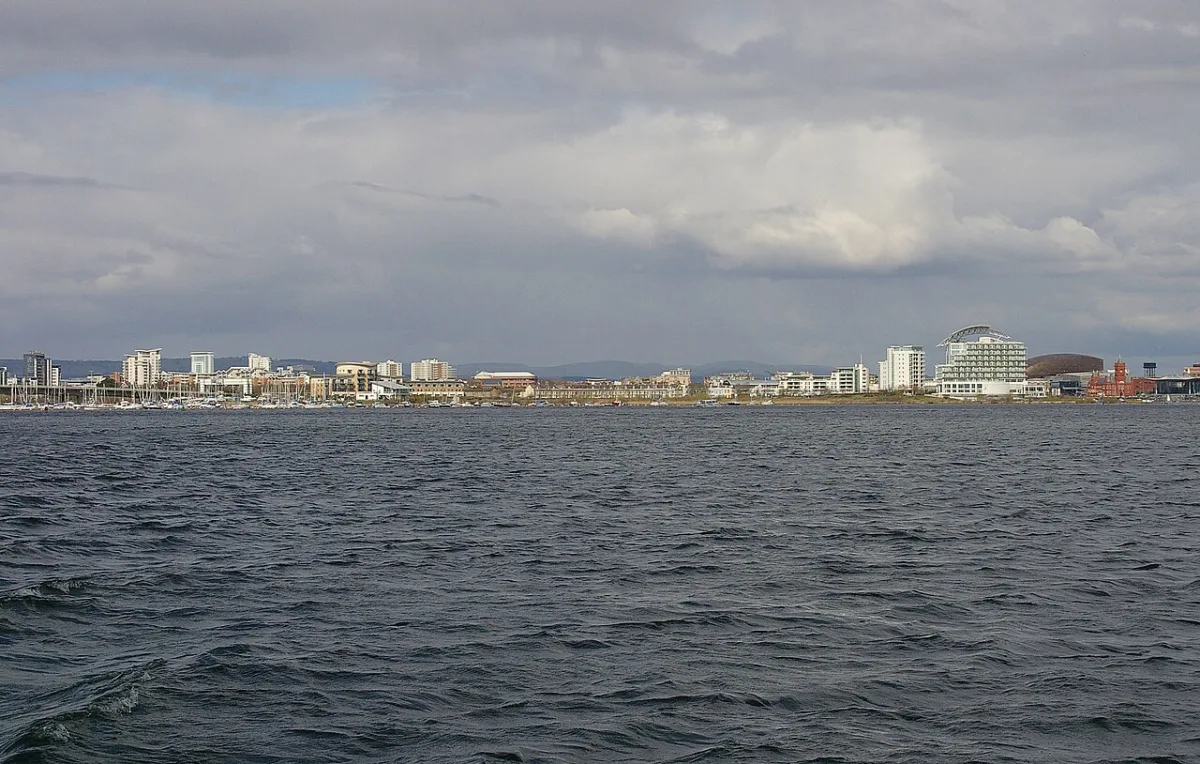
On the same Thursday in late September, three councils in north Wales met to decide whether their visitors should pay a small charge for each night they stay. None of them said yes. In Cardiff, by contrast, hotels, hostels and campsites had already started to account for the levy on bookings for next spring [4]. Wales now has one national law and two very different answers to it.

What happened with the visitor levy in Wales?
The Welsh Government’s visitor levy law received Royal Assent in September 2025 and allows councils to charge overnight visitors from April 2027 [1]. Councils can only introduce a levy after consulting residents and local businesses [3]. The national rates are 75p per person per night for shared rooms in hostels and for tent pitches, and £1.30 for all other accommodation [3]. The lower rate does not apply to under 18s, and VAT applies where a provider is VAT registered [3].
Cardiff Council approved its levy at full council, after a consultation with almost 2,000 responses [1][2]. Cardiff reports that 62% of respondents were in favour, 33% opposed and 5% neutral, and that 91% were aware of the proposal [1]. The council estimates the levy will raise about £3.5 million a year, paid by providers to the Welsh Revenue Authority and passed on to the council [1]. It plans a Visitor Levy Partnership Forum and a Memorandum of Understanding with UKHospitality, the hospitality trade body [1].
The Welsh Government’s checker lists Cardiff as the only council charging the levy, from 1 April 2027 [4]. It says Cardiff providers must start accounting for the levy from 28 September 2026, and it lists no council as consulting [4]. WalesOnline adds that this applies to new bookings for stays from April 2027 and to extra nights or guests added to existing bookings [9].
| Item | Rule |
|---|---|
| Rate for hostels, shared rooms and tent pitches | 75p per person per night, plus VAT |
| Rate for other overnight stays | £1.30 per person per night, plus VAT |
| Under 18s | Exempt from the 75p rate only |
| Long stays | Stays of more than 31 nights in one booking are excluded |
| Who pays the authority | The provider pays the Welsh Revenue Authority, and may absorb or pass on the cost |
| Notice | A council must give 12 months notice before a levy starts |
On 24 September 2026, three north Wales councils took their own decisions. Conwy’s full council voted to defer any decision until more evidence and practical experience are available [5]. Isle of Anglesey County Council decided it will not introduce a levy at present [6]. Cyngor Gwynedd accepted a report and agreed to receive a complete report before deciding whether to introduce a levy, by 38 votes to 3 with one abstention [7]. Gwynedd had received 6,856 consultation responses, far more than its neighbours, and legal advice said a decision in September was not possible [8].
The councils explained their choices in their own words. Conwy’s cabinet member for the economy said any decision must rest on robust evidence, and that the strongest message from the consultation was the need for more evidence first [5]. Anglesey’s leader, Councillor Gary Pritchard, said tourism is hugely important to the island and that the evidence indicates now is not the right time [6]. Anglesey’s economic impact assessment noted that effects could vary, especially if neighbouring destinations do not introduce similar charges [6]. These are council statements, and they set out reasons rather than measured results.
| Council | Decision | Date | Earliest stays covered |
|---|---|---|---|
| Cardiff | Approved by full council | 26 March 2026 | From 1 April 2027 |
| Conwy | Decision deferred until more evidence is available, 29 votes to 9 | 24 September 2026 | None planned |
| Isle of Anglesey | Will not introduce a levy at present | 24 September 2026 | None planned |
| Gwynedd | Report accepted; full report to come before a decision, 38 votes to 3 with 1 abstention | 24 September 2026 | Had aimed for October 2027; no new date |
What does it mean for the sector?
Before looking at each part of the sector, one point applies everywhere: the levy is a charge on the accommodation provider, not a ticket for the visitor [3]. That makes it a matter of booking systems and contracts more than of visitor behaviour. Whether a guest sees the charge depends on the provider’s choice to pass it on. In my experience, that choice is where most of the early friction with guests appears.
For hotels and other accommodation in Cardiff, the levy is now an operating task. Providers have to set up accounting, show the charge on bills and pay the Welsh Revenue Authority [3][4]. They may absorb the cost or pass it on to guests, which is a commercial choice [3].
The scope is broad. The levy applies to paid stays of 31 nights or less, in hotels, hostels, guesthouses, short term lets, campsites and temporary event accommodation [1]. Some guests can claim a refund from the Welsh Revenue Authority after their stay, such as carers looking after a disabled person or people fleeing harm, and the authority will publish more guidance before April 2027 [3]. Front desk teams will need a short, clear answer for guests who ask why the charge appears. For a hotel room with two adults, the levy is £2.60 a night before VAT, a small sum beside the room rate but a visible line on the bill. What does not change is the price competition with nearby areas, since Cardiff hotels compete mainly with each other.
In north Wales, the picture is the reverse. Conwy, Anglesey and Gwynedd providers will not charge a levy for now [5][6][7]. Self catering operators, caravan parks and campsites, which form a large part of rural supply, have no new system to install. PASC UK Cymru, the association of self catering providers, welcomed the decisions, according to WalesOnline [9]. For these businesses, the immediate effect is relief from cost and paperwork.

For agencies, tour operators and DMCs, the main change is in contract wording: for packages that include Cardiff nights from April 2027, whether the levy is included or paid locally becomes a contract point. Coach tours and school groups that use hostels or shared rooms will pay the lower rate for adults, while under 18s are exempt from that rate [3]. Tours in north Wales see no change for now, but they may face a levy later if a council revisits its decision.
For airlines, the effect is close to none. A charge of £1.30 a night is too small to change flight demand, and most visitors to Wales arrive by road or rail. What matters for air travel to Cardiff is the event calendar, not the levy.
For congress and event organizers, Cardiff is the case to watch. The city hosts large sports and music events, and respondents in its consultation said a modest charge could help deal with the impact of major events [1]. The levy also applies to temporary event accommodation, so festival campsites and pop up lodging are included [1]. Event budgets for 2027 in Cardiff now carry the levy for every delegate or guest night, much as organizers in Europe already do for city taxes. This is also a chance to link levy revenue to the economic impact of events.
For destination management, the forum model is the most important part. Any council that charges the levy must set up a Visitor Levy Partnership Forum with local tourism organisations, which advises on how the money is used [3]. Cardiff’s consultation showed a strong call for the income to be ring fenced, with clear accountability, so it is visibly reinvested in tourism [1]. Whether the forum delivers that will decide how the trade sees the levy in its first year.
What is my reading of the decisions?
My reading is that the councils split along the line of their tourism model. Cardiff is a city with hotels, events and business travel, where a nightly charge is a familiar idea from other European cities [1]. Conwy, Anglesey and Gwynedd are coastal and rural areas where much of the supply is small, seasonal and self catering. Their reports named the pressures on tourism businesses, competitiveness and the lack of robust data as reasons to wait [5][6].
The consultation figures fit that split, but they need careful reading. Opposition among respondents ranged from 33% in Cardiff to 62.1% in Conwy, 68.5% in Gwynedd and 70.8% in Anglesey [1][8][9]. These are self selected responses, not polls, and the councils asked different questions. Gwynedd said its consultation was meant to identify potential impacts, not to measure who was for or against [8]. Even so, the pattern is clear: where businesses and visitors responded in large numbers, opposition was high.
Opposition in four consultations, not four votes
Unit: share of respondents opposed or tending to oppose. Self selected consultation samples, not opinion polls.
My second point concerns residents. In Gwynedd, 48.7% of residents who responded supported the levy and 43.5% opposed it, while businesses and visitors were strongly against [8]. That gap between residents and the visitor economy is common in debates on tourism carrying capacity. The final Gwynedd report will need to weigh both, and the council has said it will return with a full analysis [7][8]. Gwynedd had aimed for a start in October 2027, and with 12 months notice required, that date now looks hard to keep [8].
My third point is about evidence. Conwy said it wants to watch how levies work elsewhere in Wales before it decides [5]. Anglesey asked its chief executive to write to the Welsh Government calling for a review of the law, to address the issues raised in its consultation [6]. My reading is that Cardiff’s first year will become the main source of evidence for every other council. Clear reporting on receipts, costs and use of funds from Cardiff would help all sides.

What does this commentary cover?
What to watch next
| Indicator | What it shows | When to publish |
|---|---|---|
| Gwynedd full report and vote | Whether north Wales gets its first levy | Not yet scheduled |
| Councils listed on the gov.wales checker | Which councils have given formal notice | Updated by the Welsh Government |
| Cardiff first returns to the WRA | Actual receipts against the £3.5 million estimate | After stays from April 2027 |
| National accommodation register data | The evidence Conwy said it was waiting for | As the register fills during 2026 and 2027 |
| Cardiff Visitor Levy Partnership Forum | How the revenue is allocated and reported | Once the forum meets |
The next decision point is Gwynedd’s full report, which has no date yet [7]. The Welsh Government checker will show any council that starts consulting or gives formal notice [4]. Cardiff’s first returns after April 2027 will test the £3.5 million estimate [1]. Conwy and Anglesey have both said they will keep watching levies elsewhere in Wales, so their positions may change [5][6]. For the trade, the practical signal is simple: Gwynedd has to give 12 months notice before it imposes a levy, so even a positive decision there could not take effect until late 2027 at the earliest [8].
Analysis result
Wales has one national visitor levy and, so far, one council that will charge it [3][4]. Cardiff starts on 1 April 2027 at £1.30 or 75p per person per night, with about £3.5 million a year expected [1]. On 24 September 2026, Conwy deferred, Anglesey declined for now and Gwynedd asked for a full report [5][6][7]. Consultation responses were more critical in the north, especially among businesses and visitors [8][9]. Cardiff’s first year will now shape the debate for the rest of Wales.
If your region could add £1.30 a night to every stay, what evidence would you want first?
Frequently asked questions
How much is the visitor levy in Wales? The national rates are 75p per person per night for shared rooms in hostels and for tent pitches, and £1.30 for all other accommodation, plus VAT where it applies [3]. The 75p rate does not apply to under 18s [3].
Which councils charge the visitor levy? Only Cardiff, for stays from 1 April 2027 [1][4]. The Welsh Government checker listed no other council consulting on the levy at the time of writing [4].
What did Conwy, Anglesey and Gwynedd decide? On 24 September 2026, Conwy deferred a decision until more evidence is available, Anglesey decided not to introduce a levy at present, and Gwynedd agreed to receive a full report before deciding [5][6][7].
Who pays the levy to the authorities? Accommodation providers pay it to the Welsh Revenue Authority, and they may absorb the cost or pass it on to guests [3].
How much will Cardiff raise? Cardiff Council estimates about £3.5 million a year, to be used for its visitor economy with advice from a Visitor Levy Partnership Forum [1].
Sources
- Cardiff Council, Visitor levy will be introduced for overnight stays in Cardiff following approval, Cardiff Newsroom, 2026
- Cardiff Council, Printed minutes of the meeting of Council, 26 March 2026
- Welsh Government, Visitor Levy in Wales, accessed October 2026
- Welsh Government, Check if your council charges the levy, accessed October 2026
- Conwy County Borough Council, Council defers decision on visitor levy, 24 September 2026
- Isle of Anglesey County Council, Anglesey will not introduce visitor levy at present, 24 September 2026
- Cyngor Gwynedd, Decisions of the Council, 24 September 2026
- BBC News, Tourism tax plans delayed after thousands respond to consultation, 20 September 2026
- WalesOnline, Three Welsh councils refuse to bring in tourism tax, September 2026