Contents
- Scope and method
- What are the key facts?
- How the cost grew
- The village decision
- What the economic model says
- Four accounts, kept apart
- The visitor’s time budget
- Operations: accommodation, transport and protocol
- Residents, legacy and the environment
- What it means for multi sport hosts
- Analysis result
- Frequently asked questions
- Sources
The 20th Asian Games ran in Aichi and Nagoya from 19 September to 4 October 2026, with about 11,000 athletes, 469 events and 55 world records by the organizers’ count. Total costs were estimated at about ¥370 billion, around 3.7 times the ¥100 billion bid estimate. A December 2025 model by Aichi and Nagoya estimates ¥3.68 trillion of national production induced effects from 2016 to 2036, two thirds from legacy programmes, without counting negative effects.
On the last night in Nagoya, a horseman carried the flag of the Olympic Council of Asia past Japan’s athletes at Mizuho Athletic Stadium, while parts of the stands stayed empty during the parade of nations. Earlier that day, the head of the organizing committee had apologized. Both images belong to the same Games.
The main point of this report is that Aichi Nagoya 2026 was planned as a low cost Games and became an expensive one with a lean operation. Total costs reached about ¥370 billion, around 3.7 times the bid estimate, while the savings made by dropping a permanent athletes’ village moved the pressure onto accommodation and transport [6][7]. The sporting results were strong, and the economic case rests on a model that counts benefits up to 2036 and leaves negative effects out [5].
Scope and method
This report covers the 20th Asian Games, held from 19 September to 4 October 2026, using four kinds of source kept apart. The organizing committee (AINAGOC) and the OCA supply organizer figures on results, tickets and audiences [3][4]. Aichi Prefecture and Nagoya City supply a model estimate of economic ripple effects [5]. Japanese and international media report costs, funding and operations [1][2][6][7][8]. The Asian Para Games, held in October, appear only where cost figures combine both events. No ex post economic study exists yet, three weeks after the closing ceremony.
What are the key facts?
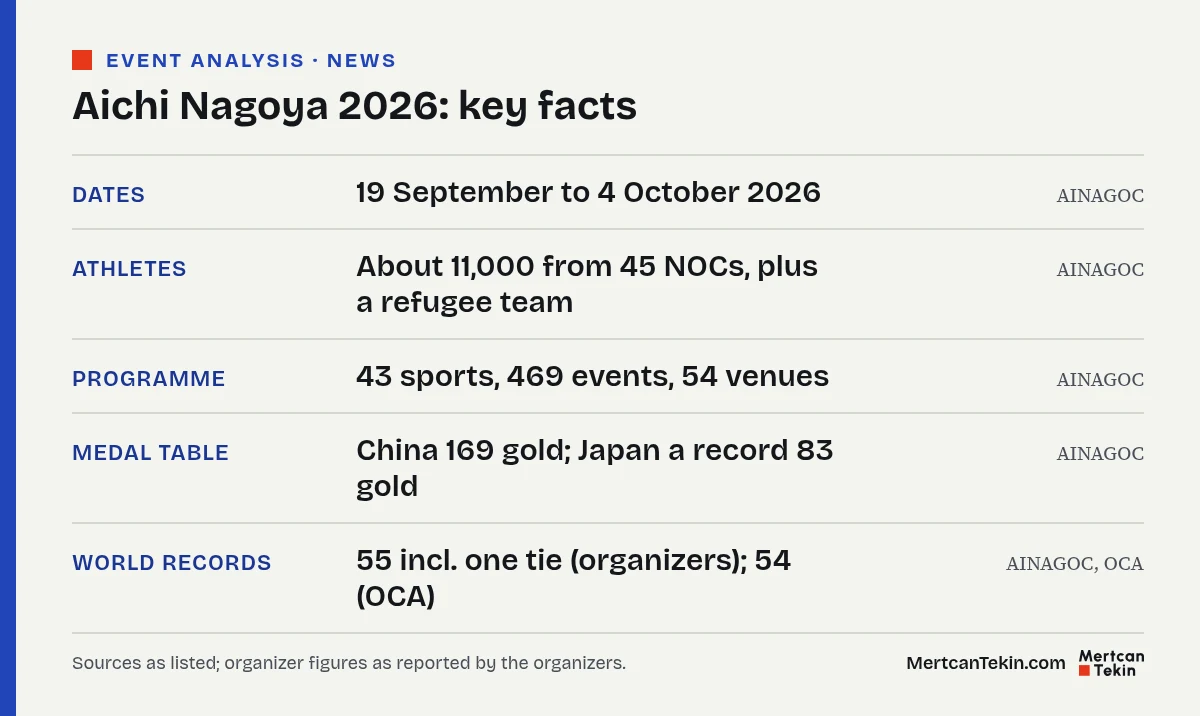
According to AINAGOC, the Games were the first in Japan in 32 years. About 11,000 athletes from 45 National Olympic Committees took part, together with the first refugee team in the Games’ history, competing in 43 sports and 469 events across 54 venues; 1,568 medals were awarded [4]. China topped the table with 169 gold medals, and Japan won a record 83. Xinhua and CNA report more than 50 world records; the organizers count 55, including one tie, while the OCA puts the figure at 54 [1][2][3][4].
Gold medals, top ten teams
Unit: gold medals. Final table, 4 October 2026. Ranked by the organizers on gold, then silver.
| Team | Gold | Silver | Bronze | Total |
|---|---|---|---|---|
| China | 169 | 89 | 83 | 341 |
| Japan | 83 | 95 | 91 | 269 |
| Korea | 39 | 43 | 68 | 150 |
| India | 21 | 27 | 37 | 85 |
| Uzbekistan | 21 | 25 | 24 | 70 |
| Iran | 19 | 18 | 15 | 52 |
| Thailand | 18 | 13 | 21 | 52 |
| Kazakhstan | 12 | 24 | 48 | 84 |
| Hong Kong, China | 11 | 19 | 24 | 54 |
| Bahrain | 11 | 5 | 6 | 22 |
Records set, as counted by each body
Unit: records. AINAGOC counts include ties (1 world, 3 Asian, 3 Games).
| Record type | AINAGOC | OCA |
|---|---|---|
| World | 55 (1 tie) | 54 |
| Asian | 91 (3 ties) | 89 |
| Games | 219 (3 ties) | 212 |
How the cost grew
When Aichi and Nagoya bid, the combined budget for the Asian Games and Asian Para Games was estimated at around ¥100 billion. On 22 December 2025, Governor Hideaki Omura, who chairs the organizing committee, said expenditure had reached about ¥298 billion [7]. TV Aichi reported that a further ¥70 billion or so would be needed for infrastructure and promotion, bringing the total to about ¥370 billion, and that the combined burden on Aichi and Nagoya, after sponsorship and ticket income, would rise by ¥110.5 billion [7]. The Mainichi gives the same ¥370 billion total and describes it as more than triple the initial estimate [8].
From bid estimate to total cost
Unit: ¥ billion, Asian Games and Asian Para Games combined. Estimates, not an audited final cost.
| Item | Amount | Source |
|---|---|---|
| Bid estimate | About 100 | Inside the Games |
| Organising committee expenditure, December 2025 | About 298 | TV Aichi |
| Related infrastructure and promotion | About 70 | TV Aichi |
| Total | About 370 | TV Aichi; Mainichi |
| Expected Aichi contribution | About 180 | Inside the Games |
| Expected Nagoya contribution | 90 to 110.5 | Inside the Games |
| National grant approved in 2025 | 13.6 | Inside the Games |
Inside the Games, citing Japanese media, attributes ¥55 to 60 billion to inflation and labour costs, a further ¥60 billion to additional OCA requirements, and more to the weaker yen and a programme that grew from 36 to 43 sports [6]. It reports that Aichi was expected to contribute about ¥180 billion and Nagoya between ¥90 and ¥110.5 billion, while the national government approved ¥13.6 billion under special legislation, against about ¥40 billion requested [6].
The village decision
The organizers first planned a village for 15,000 athletes and officials. The Mainichi reports that material costs doubled its projected cost from an initial ¥30 billion, and that after the committee considered hotels, the OCA insisted on a central accommodation hub. The compromise was a cruise ship used as a floating hotel and accommodation built from converted shipping containers [8]. Omura said in December 2025 that cancelling the village was "a major point" in cutting more than ¥100 billion across the Games [8].
The headcount then moved the other way. Organizers had planned for about 15,000 athletes and officials; more than 17,000 arrived [6]. AINAGOC Secretary General Satoshi Murate apologized on 26 September for accommodation and transport errors and said the higher than expected numbers had made adequate service harder to provide [6].

What the economic model says
In December 2025, Aichi and Nagoya published an estimate of the Games’ economic ripple effects for the period from 2016, the year the Games were awarded, to 2036, ten years after them [5]. It puts production induced effects at ¥3.68 trillion nationally and ¥1.82 trillion within Aichi. An earlier 2022 estimate gave ¥1.94 trillion and ¥1.09 trillion.
What the economic model counts
Unit: ¥ trillion, production induced effect, 2016 to 2036. Model estimate; negative effects not considered. Aichi is included in Japan.
| Component | Amount | What it covers |
|---|---|---|
| Construction | 39.9 | Temporary venues and athlete accommodation |
| Games operations | 258.1 | Organising committee operating costs |
| Spectator and participant spending | 135.2 | Spending by spectators, athletes and officials |
| Other Games related | 79.9 | Host city promotion and other costs |
| Direct total | 513.1 | |
| Legacy: sport | 350.6 | Sport related spending by participants and spectators |
| Legacy: society | 5.4 | Exchange and culture programmes |
| Legacy: environment | 94.1 | Hydrogen and green infrastructure programmes |
| Legacy: urban | 318.5 | New and renovated facilities |
| Legacy: economy | 342.7 | Visitor spending, inbound promotion, industry |
| Legacy total | 1,111.3 |
Three features of the model matter for reading the headline. First, two thirds of the national figure, ¥2.46 trillion, comes from "legacy effects": programmes in sport, environment, urban facilities and the economy that the prefecture and city link to the Games, built partly on targets and unit prices from plans rather than spending already made. Second, the direct effect includes the organizing committee’s own operating spending of ¥258.1 billion as new demand, so the cost of the Games forms part of its measured impact. Third, the authors state that negative economic effects of the Games are not considered, and that because spending inside and outside Aichi could not be separated, all demand was treated as arising within the prefecture [5].
None of this makes the model wrong. It makes it a gross estimate of activity, not a net gain, and it cannot be set against the ¥370 billion cost as a return. The national and Aichi figures overlap, so subtracting one from the other gives no meaningful figure.
Four accounts, kept apart
| Account | What it measures | Figure | Status |
|---|---|---|---|
| Organiser | Organising committee budget | About ¥298bn | Estimate, December 2025 |
| Public spending | Local and national funding, plus related costs | Total about ¥370bn; national grant ¥13.6bn | Estimates; no audited final figure |
| Economic impact | Gross production induced effect, 2016 to 2036 | ¥3.68tn Japan; ¥1.82tn Aichi | Model; negative effects not considered |
| Social cost benefit | Welfare gains against full public cost | None | Not produced |
The organizer’s account is the committee’s ¥298 billion budget, funded by the prefecture, the city, sponsorship, tickets and a smaller national grant [6][7]. The public account adds the related ¥70 billion and the local share of operating costs. The economic impact account is the 2025 model. No social cost benefit study has been published, and nothing in the record weighs the benefits against the full public cost.
The visitor’s time budget
AINAGOC reports that more than 1.1 million tickets were sold, a sales rate above 70%, and that the ONE ASIA WORLD festival site drew 363,000 visitors over the 16 days [4]. It also reports an OCA estimate of more than 3 billion viewers across 23 broadcasters, with more than 1 billion for the cricket final between India and Pakistan, about 10,000 accredited media and daily audiences of 10 to 15 million on TBS terrestrial television in Japan [4]. Audience figures are organizer estimates.
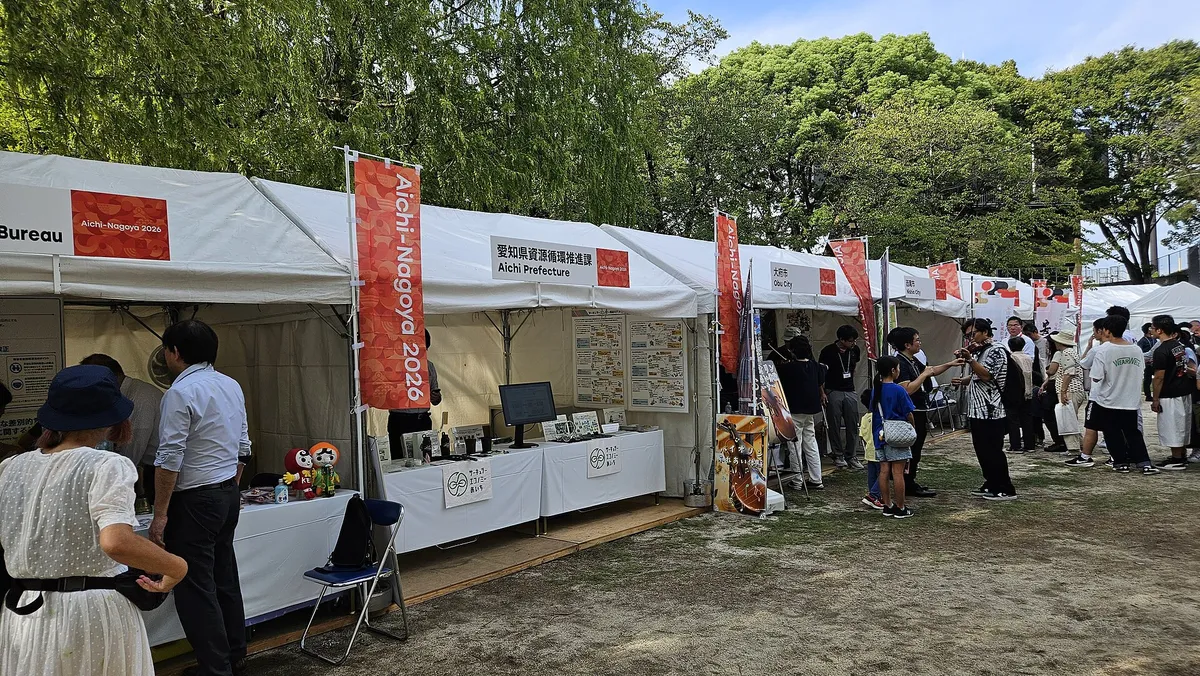

CNA noted sections of empty seats during the parade of nations at both the opening and closing ceremonies [2]. A 70% sales rate leaves room for visible gaps; I have not seen venue level data that would show where they were. Before the Games, the Mainichi reported low public interest, partly because Olympic qualifying events kept some of Japan’s top athletes in volleyball and judo away [8]. For a visitor, the Games offered many venues spread across the prefecture, and the festival site was the main place where competition and city life met.
Operations: accommodation, transport and protocol
Xinhua reports that the event was troubled by a shortage of beds and transport failures during the 16 days [1]. Inside the Games adds protocol errors: North Korea’s anthem was played before South Korea’s hockey match against Bangladesh on 18 September, and anthems were missed before a women’s handball match the next day [6]. Omura apologized on the final day for logistical problems, including delays in accommodation check ins [1].
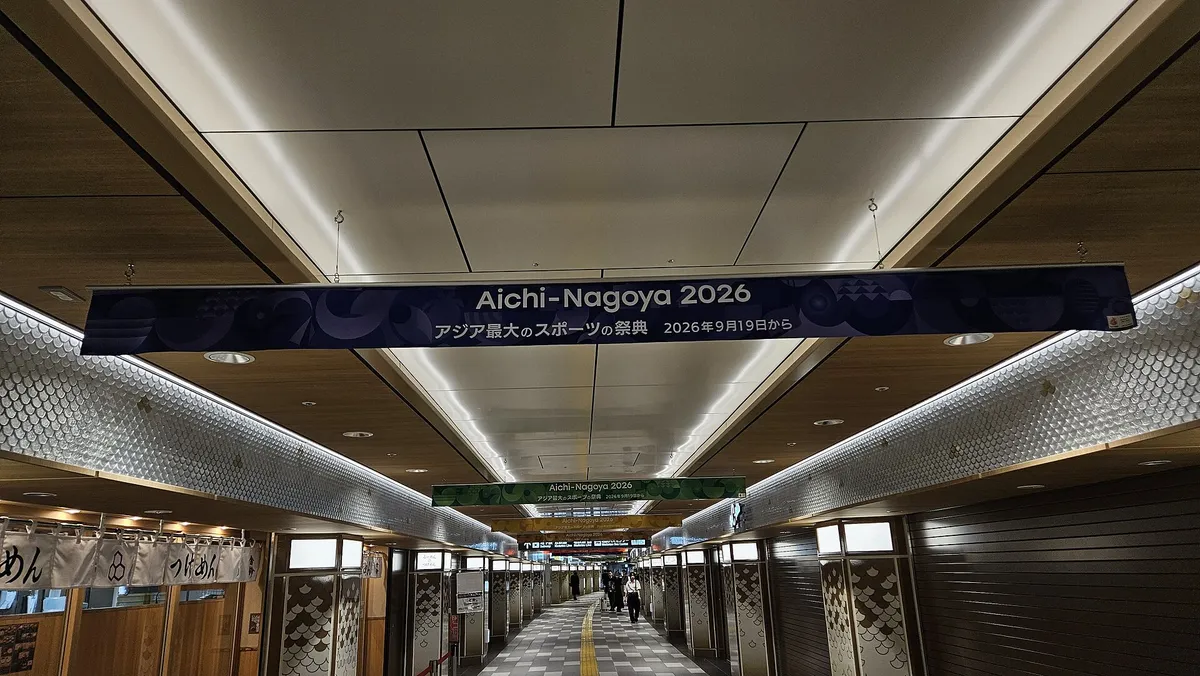

The OCA acknowledged operational problems but said athletes had the conditions they needed to compete. "There is no Games without challenges," said Mohammad Tayyab Ikram, chair of the OCA Coordination Committee. On the accommodation model he was openly positive: "Maybe other Games will look at it" [3].
Residents, legacy and the environment
The record on residents is mostly about money and interest. Aichi and Nagoya carry most of the cost, and Omura asked residents for their understanding, pointing to the ¥1.8 trillion estimate for Aichi [7]. I found no published resident survey. On legacy, the Games used existing venues and avoided a single use village, which matters for event legacy; the model’s legacy budget includes ¥318.5 billion of demand linked to new and renovated facilities [5]. On the environment, the model includes ¥94.1 billion of demand for hydrogen and green infrastructure programmes [5], but I found no published carbon footprint for the Games.
What it means for multi sport hosts
Nagoya tested a question many cities are asking: can a multi sport event run without a permanent village? The answer from 2026 is a qualified yes. The model avoided a large single use build, but it moved risk into check in desks, buses and timetables. Distributed housing turns athlete welfare into a question of visitor flow management, and the mega events guide leaves open how transfers at peak hours and contingency for growing headcounts are covered. For sports tourism planners, scope growth from the rights holder is a cost line of its own; here it added an estimated ¥60 billion [6].
| Indicator | What it shows | When to publish |
|---|---|---|
| Audited final cost | Games and Para Games costs by funder | Within 12 months |
| Ex post economic study | Measured spending and net effects, with displacement | Within 18 months |
| Legacy programme delivery | Spending and targets for the five legacy areas | Annually to 2036 |
| Venue use | Events and visitors at venues used for the Games | Annually |
| Accommodation and transport review | Causes of check in and transport delays | Within 6 months |
| Ticketing by venue | Sales and attendance by session | Within 3 months |
| Carbon footprint | Emissions by source, including the cruise ship | Within 12 months |
| Resident survey | Support, disruption and cost perception | Within 6 months |
Analysis result
On the sources available, Aichi Nagoya 2026 delivered a full sporting programme with 55 world records by the organizers’ count and Japan’s best medal haul [4], at a cost of about ¥370 billion against a bid estimate of ¥100 billion [7]. The distributed accommodation model reduced construction but met a larger headcount than planned, and the operation showed strain in beds, transport and protocol [1][6]. The ¥3.68 trillion economic estimate is a gross, model based figure that runs to 2036 and leaves negative effects out [5], so the economic case remains open until Aichi and Nagoya publish an audited cost and an ex post study. The balanced conclusion is that Nagoya showed a Games without a village can work for the competition, and that it still needs the logistics and contingency of one. Doha now inherits that example.
Frequently asked questions
When were the Aichi Nagoya Asian Games held? From 19 September to 4 October 2026, centred on Aichi Prefecture and Nagoya, according to the organizing committee [4].
How many world records were set? Xinhua and CNA report more than 50. The organizing committee counts 55 world records, including one tie; the OCA’s figure is 54 [1][2][3][4].
How much did the Games cost? About ¥370 billion including the Asian Para Games and about ¥70 billion of related costs, against a bid estimate of about ¥100 billion. These are estimates, not an audited final cost [6][7][8].
What is the ¥3.7 trillion economic impact figure? It is a model estimate by Aichi and Nagoya of production induced effects across Japan from 2016 to 2036, ¥3.68 trillion, of which about two thirds comes from legacy programmes. Negative effects are not considered [5].
Why was there no athletes’ village? The Mainichi reports that the village’s projected cost doubled from an initial ¥30 billion, so organizers used a cruise ship and container accommodation after the OCA asked for a central hub [8].
Where will the next Asian Games be held? Doha, Qatar, received the OCA flag. CNA reports the Games will be held in 2030; Xinhua quotes Doha organizers saying the date remains undecided [1][2].
Sources
- Xinhua, Aichi Nagoya Asian Games close, 4 October 2026
- CNA, Nagoya Asian Games closing ceremony, 4 October 2026
- Olympic Council of Asia, OCA and AINAGOC hold Asian Games wrap up press conference
- AINAGOC, 20th Asian Games summary of results (Japanese, PDF)
- Aichi Prefecture and Nagoya City, Economic ripple effects of the Asian Games and Asian Para Games, December 2025 (Japanese, PDF)
- Inside the Games, Aichi Nagoya austerity gives way to chaos, 30 September 2026
- TV Aichi, Asian Games costs rise to about ¥298 billion, 22 December 2025 (Japanese)
- The Mainichi, Asian Games return to Japan after 32 years amid soaring costs, 17 September 2026